I can’t help but think that those who read gossip rags must have the most pathetically boring lives. Or that those who own iPads have a mental inability to entertain themselves. There are times where distractions are positive, but they are undoubtedly negative when moments of awareness are less than those of blind entertainment. A distracted population is easy to manipulate. Like when a child asks his mother if he can play with matches and she just says yes because she is busy with two other kids, supper, the phone, laundry. Then he burns down the house and when she is tending to her melted flesh, she admonishes him. Except we were so busy sifting through the internet on our phones, cheering for a football team, or shopping for seasonal gifts that we didn’t even bother to give an answer. So we’ll have no place to admonish later.
-
Aggressive Tendencies And What To Do With Them
Riding my bicycle. The very thought of my mother’s ten year old Rialto Torago that I took from their garage and ride regularly makes me want to put an axe in the hood of every single mid-nineties family mini-van in Regina. It’s not the bicycle—though it only has three gears, shoddy breaks, a back wheel mechanism that slips, and ten-dollar used winter tires that have studs for nothing else but good conscience and show. It’s not the winter—riding a bicycle in -40 weather is warmer than the thigh-chafing that comes with walking, or sitting on your lazy ass and driving. What brings about the rage is being surrounded by morons and assholes who are too goddamn impatient to drive less than fifty kilometres per hour for five blocks, too uneducated to know that their fossil fuel addiction will be the death of their children, and too goddamn ignorant to know the legal way to ride a bicycle in the city. I’ve been honked at or called a ‘piece of shit’ this winter on an almost daily basis. My skin is only as thick as the tread on my used, ten-dollar, likely pilfered bicycle tires.
Sitting in the basement. Sitting alone in the basement is either the greatest moment of my day or the worst part of my week. It is either the absolute peace of smothered sounds through a pair of earplugs, blocking out the painfully moronic television show blaring above me as I read stories by men able to harness their aggression into a productive means of communication. Or it is the loneliest place in the entire world. Lately it has been both, but when I finally achieve a thoughtful focus, it is interrupted by none other than the local armed forces. Checking up on me two months after my curfew has been amended, three hours before my curfew was actually supposed to be imposed. Three times. Thoughtful focus taken. Hateful rage instilled. Fair trade.
When two things that you usually take pleasure in become two things that make you want to get drunk and belligerent and aggressive, then the rest of your daily activities will be difficult to enjoy. When the same two things that are usually a receptacle for aggression become the cause of it, there is a surplus. I have not yet taken to drink. I have instead taken to listening to more aggressive music, cursing at full volume, partaking in more asinine activities such as television and human interaction. But liquor works better.
I no longer have an adequate way to release my aggression, if I ever did. Sports only worsen it. Live music in this town is as rare as a three-teated horse. Crokinole makes me swear more than most things. New writing is overshadowed by hellish edits and cover letters that need to be finished in a certain amount of time to follow a set of unattainable goals which were set to convince myself that I’m not wasting my life.
I constantly think about what Darren told me. About being a kettle. And I just hope that I have the strength to control it when it finally does want come to surface in a series of accusing, friendship-ruining, damaging outbreaks. If I am unable, this is my apology.
And no, writing this didn’t seem to help.
-
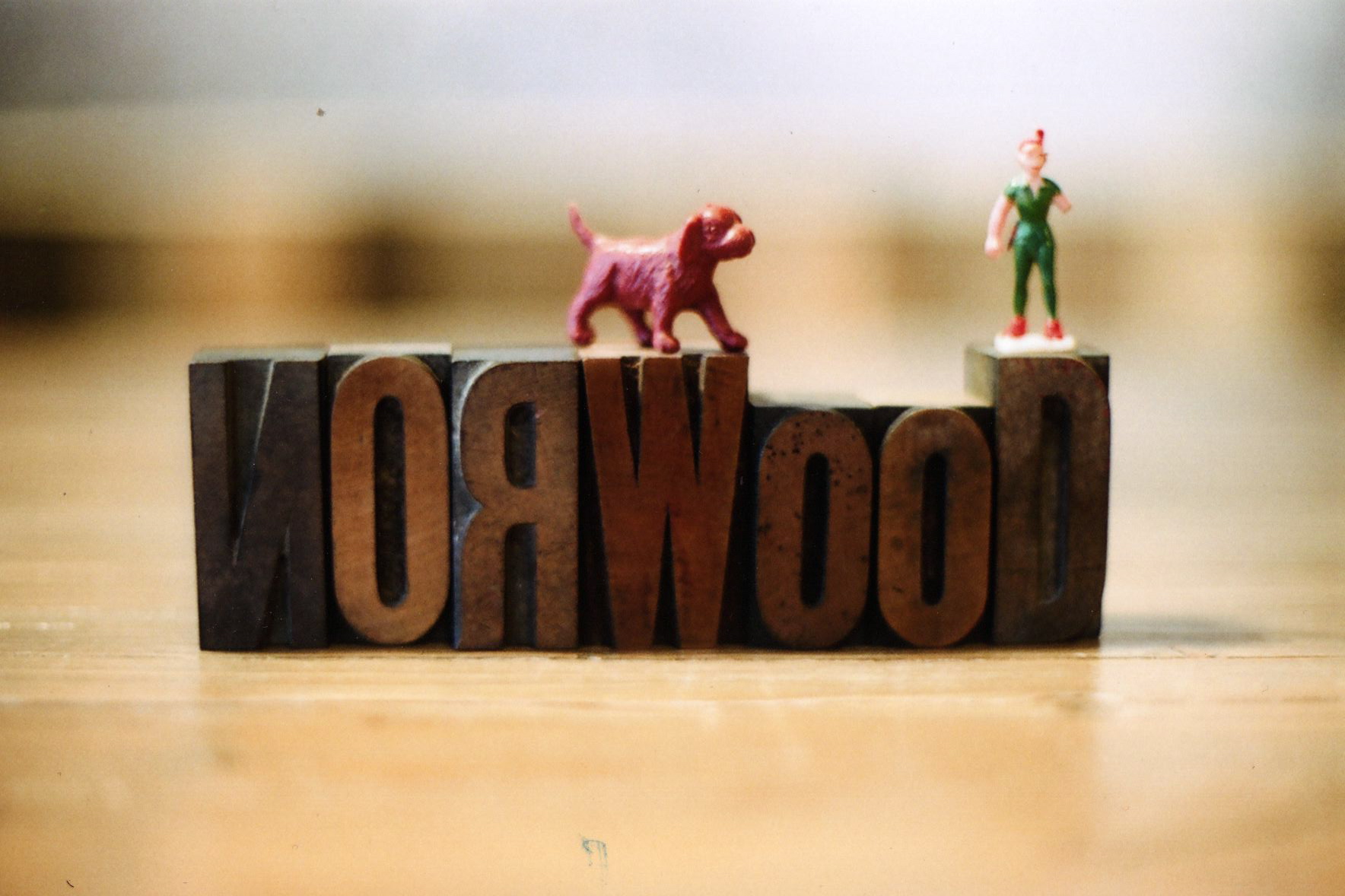
Norwood KnowMag Spotlight
A version of the following article was released in the Volume II Issue II edition of the KnowMag. An online version of the magazine can be found here.

Also check out NorwoodShop.ca, Hansen Leather Goods, Norwood Tumblr, Norwood Instagram, Benedict Moyer, Norm Rockwell.
If you were to take a step out of the door at 2401-11th Avenue in Regina, Saskatchewan, turned left to face west, and walked until you reached a rise or fall in elevation greater than a metre, you would likely arrive in the Rocky Mountains. If, instead, you were to walk directly north on Smith Street, the cross-street of 2401-11th Avenue, you would end up walking for three straight days until you reached a heavily forested area with naturally growing trees, as opposed to the wind-breaking hand-planted farm trees in the south. It is in the flat and the barren where real strength is gained. Extreme meteorological conditions can (and will) lift and drop a human being’s spirit daily. When you come from a place where you must walk a minimum of several days to reach the luxuries of natural shelter provided by trees or elevation, you will become innovative and resourceful in many ways. You will because you have no choice. Some born into these conditions take to building structures, some learn an instrument, some read books. Some collect antiques and vintage trinkets to fill the voids. Others sit in basements drilling holes through pressed-steel handsaws to make display cases. The latter is Norwood. A softly-lit amalgam of pine, fir, and birch that brings back warm memories of your grandparents’ basement, or the family cottage at the lake when the leaves have fallen off the trees.
When Noel Wendt, proprietor of the staple Canadian skateshop the Tiki Room, asked me to help him brainstorm names for the new shop he was opening, I was living in Montreal. I hadn’t seen the space and hadn’t been back to Saskatchewan in nearly a year. I didn’t understand his vision. So my list included generic gems such as The Cabin, The Workshop, as well as moronic suggestions such as Grime and Punishment, The Brothel, or Blown Hips (it has recently been given the nickname the Gnarbar, or Gnarburator by the few workers that spend too much time there). For some reason, none of my brilliant suggestions caught wind. Instead, just weeks before the shop opened, someone noticed a rusted iron cap with the diameter of a pasture fence-post inlayed in the concrete at the corner of Smith and 11th. The cap read ‘Norwood’, an old Canadian iron foundry that buried their caps in the sidewalks of cities across the prairies. The name fit the aesthetic. Norwood was born.
The 1000-square-foot storefront is filled with household and industrial items from the days of old, when purchasing something meant a life-long commitment. When objects were built well, with proper materials, and purchased only upon necessity. Norwood carries brands that reflect this mentality. Simplicity, quality craftsmanship, responsibility. Pendleton pillows and blankets sit upon a modified bakery rack against the building’s eastern-most column. Belts, lanyards, and accessories from local leather-maker, Hansen Leather Goods, adorn a vintage hand dolly. Ray Ban sunglasses boast their attractiveness from the previously mentioned glass-case made up of six rusty handsaws. Red Wing Shoes stand proudly under the spotlight on a massive chopping block. Mens coats hang from a coat rack salvaged from a church foyer, and another rack created and designed in-shop, made up of one-inch iron pipes threaded and fitted for the space. Norse Projects hats and sweaters rest comfortably on wooden milk crates and wooden toboggans next to the door. The Levi’s denim decorates the west wall, hanging from a John Deere truss taken from a torn down barn at a sheep farm in Cupar, Saskatchewan. The barn was an acquisition specifically for the creation of the shop–an ad was posted on the internet that Wendt would pay $50 if he could tear down a barn and keep the lumber–the weathered planks from the prairie structure are the appropriate backdrop to the hand-drafted map of Regina from 1957 that hangs as a centrepiece to the entire shop. The barn was torn down in the middle of February in the unforgiving winters of Saskatchewan. The pine floor was milled in Love, Saskatchewan, and the counter top is made of reclaimed fir beams of an old swimming pool, both made and installed with the DIY-values upon which Norwood was founded. The creative balance between product and prop makes for a relaxing visit, no matter the mood you’re in, the time of day, or the type of weather you may see out the North and East windows. An honest, agrarian cabin in the core of a prairie city.
And that’s only half of the space. When the hand-made drawbridge (yes, there is an actual drawbridge) is drawn, one can meander downstairs, into the workshop-dungeon where so much of the work was done for the upstairs shop. A miniature woodworking shop, a small photo studio, a desk made of plywood and paint cans, and soon to be a darkroom for the developing and printing of film photography, the basement is the creative workspace where artistic ideas come to life, where the skeleton of Norwood is pieced together, joint by joint, limb by limb.
In just over one year of existence, Norwood has grown into its own as a fine vendor of classic goods to serve the growing city with increasingly diverse demands. As it gains notoriety and evolves in its design, and as it grows into a community of people committed to quality, Norwood will only become greater through the strength of many, staying true to the motto of the province in which the shop was proudly established.
Small cities may not possess the attractions and allure of larger metropolises. In small cities the pace is slower, the streets are quieter, the people are usually friendlier. Norwood Shop cozies right in with the themes and values of a prairie town, but boasts the ability, know-how, and craftiness to contend with any shop in any major city.
If you were to walk directly south on Smith Street past the windows of Norwood, past the city limits, and through the farmers’ fields, stepping over newborn calves, hurdling barbwire fences, again you would not soon reach a change in elevation that would make your legs ache. If you were to walk straight east on 11th Avenue until you found a shop that better embodied the values of the people whom it serves, you’d likely end up chin deep in the salty Atlantic Ocean.
-
Lyrics of the Month: January 2013 – SNFU
Sometimes my mind’s just like a door
it’s open night and day always open to suggestion
Don’t want to throw a good idea away
Sometimes my mind’s just like a door it’s closed
So no one can get in
Too afraid to leave it open afraid a stranger might come in
Sometimes my mind’s just like a door
It’s made out of the thickest wood
And you may try your best to kick it down
But that won’t do you any good
Sometimes my mind’s just like a door
and I lose the key, I find myself locked outside
Trying to break back in so desperately -
Jazzy Darren
 A slightly shorter piece on Darren Sanguais can be found at the Carmichael Outreach blog.
“I’m no fan of Justin Bieber, but–uh, haha!” If there is anyone I know that could be described as jazzy, it would be Darren Sanguais.
Darren is a shortish man of forty-eight years, but looking at him you would think he may be ten years younger than that. This is likely due to his laugh, his work ethic, and his hair. His hair is jet black and always well-groomed—short and styled on top with a long strip that rolls down his back—usually loose, occasionally in a braid. His sharp hairstyle is undoubtedly inspired from his days studying at Richard’s Beauty College in Regina, where he learned dyeing, cutting, and all other men’s and women’s esthetics. When it isn’t too cold, Darren will wear his hand-beaded leather jacket with tassels. When the temperature dips, he wears his fur coat and fur hat. Darren is a sharp-dressed man.
Two months ago, Darren was living in the back of a truck. From January to September he curled up in what he called ‘Hotel Darren’, the cab of an old pickup, heated only by two tea-light candles, with only a few old blankets and the clothes on his body. The first time I met Darren was one of my first days at Carmichael, and was one of his first days out of Detox. He and I were commissioned to clean out the Carmichael Community Garden. It was late September and frost had already set in, but the red fruits were covered up by the bowed stalks and the fallen leaves, thus untouched by the cold. We took a few boxes of tomatoes back to the office, pulled several bundles of hand-painted garden signs and closed up the garden for the year, which Darren had helped tend throughout the growing season. From the first time we talked, walking down the alley from the garden next to Souls Harbour on Halifax to Carmichael on Osler, he told me that the hardest part about changing, about sobering up, was the people around trying to bring you down. Friends, family, acquaintances drinking everything, everywhere. Giving him shit for thinking he is better than them. Wanting to fight if he doesn’t join in with their drinking. And even two months down the road while we sat down for a burger and fries he said:
“I’m like a kettle, man. I just throw it in the back, throw it in the back, but it’s gonna boil sometime. It hurts, man. The people, talking shit. It’s hard.”
“But in the back of my mind I keep thinking, I’m a survivor, man. I’m a survivor.”
When he says things like this, I cannot offer any advice—he is twice my age. He has seen more than I ever will. He is tougher than I will ever know how to be. When he tells me about people giving him shit, I can only tell him what I know for certain: that I am always around to hang out, and that even if the doors are closed for the day, there is always someone to talk to from Carmichael. And that Carmichael always has work to keep him busy. He is twice my age but has seen far more than twice the things I have, and is twice as wise as I expect to be at forty-eight. I asked him if it was ok if I wrote a bit about him for the Carmichael site. He often uses the word ‘jazzy,’ and he might’ve in this case.
“Really? For sure, for sure, that’s cool. I’m not ashamed of where I come from. I’m not. I want people to know where I come from. I’ve got lots of stories.” And he told me a few thereafter.
Darren was born in Grenfell, Saskatchewan. Most of his family was born on the reserve in Sakimay First Nation, but being maybe his mother’s eighth child they went to town for his birth. One winter night on the reserve as a child, his step-father kicked him out of the house for being a nuisance. He wandered outside during a blizzard and nearly froze to death until a pair of dogs found him, he told me. A few of his fingers still show the damage from the relentless bite of a Saskatchewan winter.
He has lived in and around Regina most of his life, spent five years in Edmonton, part of that time incarcerated. He figures he has had over one-hundred convictions on his record, one of attempted murder—he was jumped one night when he was drunk, fought back, stabbed a guy, all while he was blacked out. This got him three and a half years in federal prison—the last sentence of a fifteen-year stretch where he wasn’t out of jail for more than three months at a time. If they picked him up for anything now, he’d have no chance because of his previous record, he says.
After listening to a half-dozen of his stories, I felt like I needed to create a balance and tell him something of myself. So I told him of my recent legal battles, childish and non-serious, but a story nonetheless.
“That’s stupid. Don’t they have bigger fish to fry? I mean, come on. They’ve got bigger fish to fry here, and they’re frying me, haha.”
Instead of walking the streets or hanging out at home alone, Darren comes to Carmichael. He makes sandwiches. He shovels the seemingly endless Carmichael parking lot. We bond over the breaking down of cardboard boxes. (Whenever I go out back to start on cardboard, he joins in without hesitation. I always make sure to say “thanks,” and he says, “Shit yeah, man.”) He can often be found at the back food-window, taking orders for burgers and fries when we are serving macaroni, singing choruses of old rock ballads. And he is almost always laughing. He now has casual employment with a local construction company, and when he is not there, he is at Carmichael. He has an apartment of his own, a bank account for the first time in a decade. He gets to see his grandkids. He has a support group of peers and staff at Carmichael.
Darren is the reason that Carmichael exists—friendship and accountability, food security and assistance with daily necessities, housing help and employment opportunities—an open door with available programs and services to help, no matter a person’s living arrangements, family situations, financial circumstances, health issues, or addiction battles. Darren is also why Carmichael is a joy to go to on a daily basis. His commitment and determination is inspiring. His joy of life is contagious. The reason that Darren seems like the fountain of youth, is because his heart is young. And because he is a self-proclaimed jazzy man.
-
Hard Drugs of the Brain
A scientist somewhere along the line decided that our bodies are run by a brain that uses chemicals to transmit data from neurons to target cells which cause a physical reaction. When you are sick, the chemicals in the brain get screwy, and data gets changed.
This explains why I killed someone. Or at least why I had the feeling that I killed someone, on three separate occasions on Wednesday, December 26. At least, that is the only way I can possibly explain the feeling. The feeling that someone gave me speed unknowingly, that I blacked out for a moment, and that I when I realized what I had done, with the voices of hundreds of thousands of consciences yelling at me at once, the world was travelling exponentially faster. Depth and depth of field are altered exaggeratedly. Purposefully slowing my breath and my movements yields nothing. Fever-caused hallucinations will be the only ones for me. The brain has its own chemicals.
And it all starts with a feeling. The softest material in the world, woven in infinite length, clear as angels hair. Someone attempts to cut it, box it, distribute it. And I am jolted with blood on my hands.
None of this makes sense to you, I am sure. Four-day sweats and dreams about building and efficiency and waste, dreams made hellish with searing anxiety. It doesn’t make much sense to myself, but I can feel it. We once assumed these hallucinations were directly related to an allergy to nighttime cold medicine. Now I am moved to believe that it is just the hard drugs of the brain.
Several years ago I tried explaining this hallucinatory phenomenon in an essay for my book. It was juvenile. When talking with a reformed friend recently about hard drugs, she said not to even bother trying them, not that I had even planned to. Call me a prude or call me a square. I can see the world at a new angle by taking a step forward. Or by tripping on my body’s own hard chemicals. I can enjoy myself as myself, by myself.
Being sick for a week has given me a new focus. One that demands slowness, even less shits-given, and more security in personal time. Most of these seem to be out of resignation and the tiring of effort. Because more and more I see that the only person I can affect is me. And if I can’t even take the time to do that, then I might as well start taking hard drugs because my brain wouldn’t be worth anything anyhow.
-
Books of the Year: 2012
The following five books were my best reads of the past year, only Days of Destruction Days of Revolt being released in 2012.
Read these or your brain will fall out.
Michael Christie – The Beggar’s Garden 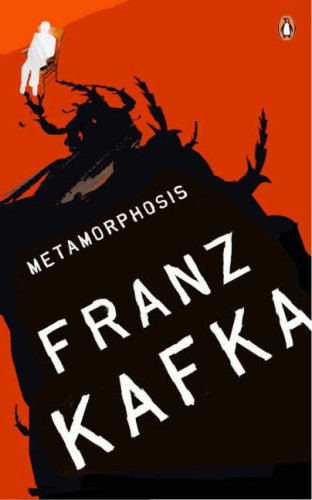
Franz Kafka – Metamorphosis 
George Orwell – A Clergyman’s Daughter 
Chris Hedges and Joe Sacco – Days of Destruction Days of Revolt 
Kurt Vonnegut – God Bless You, Mr. Rosewater Honourable Mentions:
Franz Kafka – The Trial
John Steinbeck – Grapes of Wrath -
Albums of the Year: 2012

Tim Barry – 40 Miler 
Propagandhi – Failed States 
Andy Shauf – The Bearer of Bad News 
OFF! – S/T 
Title Fight – Floral Green 
Leonard Cohen – Old Ideas In no particular order, these were the albums that mattered most this year. Top Ten lists are usually a crock, since there isn’t actually that much good music out there. Or at least that much different music out there. If it isn’t interesting, it isn’t in my ears. Other significant mentions: Fugazi. This band took up a lot of my time this year, I was only maybe a decade or two behind.
One of my picks was also a pick by The New York Times. Who the hell is Frank Ocean?
-
Youth (Me) and Why I Hate Them (Me)
Santa called me at work. The recording of his voice seemed as if he cared less about Christmas than I do. Painfully forced. Knowing full-well that he hated his life. His voice brought forth images of a forty-nine year old male drinking from a 40oz of bad whiskey on the day before his birthday which also happened to be Christmas, wearing a vomit-stained cotton beard, just after calling his ex-wife about when he’ll pick up his sixteen-year-old over the holidays. A slouch. All the recording told me was that I need to be good so that he would deliver a present in my chimney this Christmas. Not even a promise of a free cruise. Just a pre-solicitation for something that may or may not include the loss of my anal virginity. This is Christmas.
And children love him. They love the undoubtedly alcoholic, morbidly obese. The kids that cry at Santa photos are the ones with natural instincts to stay away from the downfall of mankind.
But who am I to judge this digitally-recorded Santa? I have become that lonely old man who sits alone, thinking about the one(s) that got away, smelling the various disgusting parts of his body throughout the day. The man who constantly wonders what happened to the younger generation. Who loathes technology, the things considered as viable entertainment, many forms of social interaction. At twenty-four, I am that man. Different, but no better than the inebriated Santa robo-calling the nation with threats of gift-giving. But, I don’t know what previous generations were like, so I can’t responsibly say that I can see a cultural and intellectual decline. And saying that the world is worse off than it has ever been is history-ignoring naiveté.
And when I’m thinking of points to my argument of why youth are despicable and why I don’t want to be a teacher or have a child, I have to check my email three times, look up the writer to an episode of television. My attention span has been shortened thanks to constant interruptions in my pocket and the ability to get any information that I ever wanted at any time.
In the thirties, Evelyn Waugh’s characters of ‘Vile Bodies’ seemed to constantly critique the younger generation.
‘Don’t you think,’ said Father Rothschild gently, ‘…[t]hey won’t make the best of a bad job nowadays. My private schoolmaster used to say, “If a thing’s worth doing at all, it’s worth doing well.” My Church has taught that in different words for several centuries. But these young people have got hold of another end of the stick, and for all we know it may be the right one. They say, “If a thing’s not worth doing well, it’s not worth doing at all.” It makes everything very difficult for them.’
‘Good heavens, I should think it did. What a darned silly principle. I mean to say, if one didn’t do anything that wasn’t worth doing well–why, what would one do? I’ve always maintained that success in this world depends on knowing exactly how little effort each job is worth…distribution of energy…And, I suppose, most people would admit that I was a pretty successful man.’
-Evelyn Waugh, Vile Bodies, p111
The slight shift in the adage, and the youth become defeatist, single-use, one-task brains. Instead of attempting at excelling at many things—like how your dad can fix the car, build a bathroom, design a power plant, and your mom can fix jeans, bake the greatest pies known to man, know so much about health and the world—the youth decide that they will attempt to perform a single task adequately, while being useless at everything else. Because they can.
The wise adults of this book then talk of success being the bare minimum with maximum profit and high efficiency. Success. Suddenly moronic youth with one skill-set and the inability to focus sound pretty reasonable. Like the success-hunting adults, but with a sense of humour.
If Santa calls me back, I would like to talk to him. Not just listen to his nightmarish recording. He has seen the youth and he has seen them grow up. They have sat on his lap for the hundred years that he has existed, and he has seen them grow up into these success-hunting adults, placing their new children on his lap, and so on, and so on. He would know. He’d be able to tell me if the youth are getting dumber. If technology is ruining our ability to focus, or ability to give a shit, or ability to be shocked, or ability to learn and retain. I mean, he is the one making most of these toys and giving them to our kids. And at that revelation, Santa’s drunk voicemail message seems more threatening than before. Not only does Santa want to deflower my anus, he also wants the be a part of the plague of idiocy in our children. The dumber the children become, the more they need his gifts. The more they need his gifts, the fatter he becomes. The fatter he becomes, the more women he gets.
Don’t call back, Santa. I’m already plenty dumb.
-
Losing Faith

I recently received this in an email from a friend in India:
Do you still remember my youngest sister Nenem, you may take her to be your wife if you have any interest. But it would depend upon your choice only though I say anything. Actually young girls needs a trustworthy, abled man for husband and they should be loyal. A lot of marriages are broken causing a lot of problems consquencly.
Directly after receiving this email, I booked a flight, moved to India, and took Nenem as my first wife. She is currently cooking rice and tending to our Kama-Sutra-conceived children while I sit in a mango tree, my feet being massaged by jewelled monkeys, my scalp being pampered by one hundred barbershop gurus.
And just now, as the basement furnace powers up and blows cold air at my feet, I am transported back to my cobwebbed corner in my hole in the frozen ground—left only to the gurus of daddy-long-legs and head lice that pamper my once routinely- and professionally-kneaded head.
Sweet India. Land of many faiths, land where I lost my own.
The last time I returned from India a new man. It wasn’t I-lived-in-an-ashram changed, nor I-tried-forty-kinds-of-marijuana changed, or even I-was-almost-raped-three-times changed. I came back with a newly-filled gap in my mind. I came back with no interest in the functioning church in which I grew up, and which I partially went to support. I lost complete interest in proselytization or evangelism. I lost my faith and replaced it with a set of values. I became so fed up with the culture of organized belief, the culture of changing people’s beliefs, and the language of faith that inhibits people to speak in the realm of reality—reality, where suffering occurs but where nothing is done because of often blinding visions of a possibly non-existant afterlife utopia—that I handed it in and haven’t really looked back. My friend, Nenem’s brother, was unable to speak of anything but the Glory of Our Lord and the financial support he required to live and to preach. I didn’t write a list of for and against. It wasn’t an immediate disbelief in the resurrection that made me never return to church. It was part of a constant evolution of the mind that peaked while travelling alone, as it tends to do.
It is a mysterious thing, the loss of faith—as mysterious as faith itself. Like faith, it is ultimately not rooted in logic; it is a change in the climate of the mind.
-Orwell, A Clergyman’s Daughter, p249
Propagandhi’s Supporting Caste coincidentally came out during my last trip in India, and I somehow managed a minor miracle to download the album off of Indian iTunes. It was my only friend while travelling. One night, after calling home on my prepaid Indian cellphone, sitting on the beaches of Cochin at night, after four months of solo-travel, I finally realized that the greatest moments in life are better when shared. I have been able to enjoy things alone, but having the ability to acknowledge the greatest things with someone else, is the creation of joy. Joy isn’t a seasonal shopping opportunity at the Victoria Square Mall. Joy isn’t a faith-only feeling. I realized this again over the last few nights when watching my favourite band of all time. I enjoyed parts of the set alone, but the moments I was most elated were those when I sang aloud in the arms of good friends. Imagine the everlasting joy I would have if I actually just took part in arranged marriage to a conservative Christian girl in a village in India. Never-ending, tantric, yogic, conservative joy.
My faith was replaced with something else. Something no less powerful. It was replaced with some sort of logical desire for decency and equality in the real and tangible world, both rooted in my Christian upbringing and my love for socially-conscious punk rock. Not that values didn’t exist in my life beforehand, they just sat at the back on my brain, washed out by uncertainty and contentedness. And as much as it pains my father to hear it, my faith was partially replaced with many of the tenets of a Winnipeg punk band. Neither the band nor the church would quickly agree that (what I would identify as) their basic doctrines line up—absolute equality, that the “unifying principle of this universe is love” (Propagandhi, Duplicate Keys Icaro). I connected my early life in the church basements in which I had grown up, to the realities of poverty, inequality, and hypocrisy that I had seen while travelling, and filled that gap with a set of discernible values that I seemed to lack previously. A serious respect still exists in the utmost for people who adhere to systems of faith, as it is another means to the end I am constantly seeking, and it helped mould my values to what they are now.
The smell of glue was the answer to her prayer. She did not know this. She did not reflect, consciously, that the solution to her difficulty lay in accepting the fact that there was no solution; that if one gets on with the job that lies to hand, the ultimate purpose of the job fades into insignificance; that faith and no faith are very much the same provided that one is doing what is customary, useful, and acceptable.
-Orwell, A Clergyman’s Daughter, p295
A man of faith is the same as a man of no faith, as long as both are acting positively in regard to humanity. Both are inevitably flawed. One puts hope in the unknown, one puts hope in something else—science, humans, another form of the unknown. Perhaps I put my hope in myself, not in a self-righteous, superiority-complex kind of way, but in the way that I am the only thing that I know can make an absolute change in, and hope things can move on from there.
This is no where near the first time I’ve been proposed to, or propositioned, by someone in India, but it has been some time. Though I am flattered, though I wish I could get fifty-cent haircuts in India once a week, and though I think it could potentially work out better than a love-marriage, I will not take him up on the offer. This man, Nenem’s brother, is still a friend. And though many of his thought-processes irritate me as anti-productive or misdirected, I do not see my new vague set of values as greater than his faith. Mine will waver and transform as does anything philosophical. I merely lost my faith a while back, replaced it with something new. If he forgets his ultimate purpose, and I realize that I don’t have an ultimate purpose, and we work together to help those we know need it, then we can be mutually productive. The fact that he offered me his sister without her even knowing it, or likely even speaking English, is another issue that we’ll have to sort out after the marriage. Curry feast to follow.
 Balls of Rice