Category: Work

  • A No Hope Guarantee

    Everyday, bylaw officers, police officers, and other city employees confiscate and destroy the sentimental and survival belongings of people who are forced to shelter outside across North America. In Canada, people’s internationally recognized human rights are generally enshrined in the Canadian Charter. Tens of thousands of (billable) hours and hundreds of millions of dollars have been spent by governments on lawyers trying to convince old (generally white) judges that their laws are compliant with the Charter, uphold people’s human rights, and are necessary to the functioning of a liveable society. Seemingly, the discussion of general decency is generally ignored and not a consideration in the legal profession.

    For my final paper in law school, I wanted to practice writing an argument that could be put in front of one of those judges that one law in one municipality that allows the confiscation and destruction of people’s belongings violates people’s Charter right to be free from cruel and unusual punishment. It was later published by the school’s student journal. If you’re super bored, you can read it here. Below is the summary of the paper:

    Since the inclusion of section 12 in the Canadian Charter of Rights and Freedoms (the “Charter”), much has been written about cruel and unusual punishment. However, relatively little attention has been paid to the issue of cruel and unusual treatment. As society becomes increasingly regulated and individuals interact with government through administrative bodies with broad discretion, clearer protections against cruel and unusual treatment are necessary to fully realize the intent of the Charter right. Over the past two decades, the City of Victoria has progressively restricted the use of public spaces by individuals experiencing homelessness. While these restrictions have been challenged under various Charter provisions, section 12 has rarely been considered. The 2023 amendments to the City of Victoria’s public space bylaws offer a timely opportunity to consider the application of section 12 in the context of non-punitive administrative decisions that amount to government treatment. Although the test for cruel and unusual treatment requires further clarification, Victoria’s bylaw scheme underscores the need for section 12 analyses to more explicitly address government treatment, or risk neglecting the Charter’s dignity-centred focus.

  • White Van Privilege

    White Van Privilege

    White Van Privilege follows the life of one white passenger van from conception to death: first roadtrip to final sale.

    White Van Privilege is a collection of poems that considers the views from the front driver’s seat of a 2008 Chevy Express 15-Passenger van, and from standing next to a tent in a homelessness and drug-toxicity crisis made worse by a global pandemic. Turns out, the views are pretty similar.

    All proceeds go towards my law school education with which I will use to rapidly dismantle the drug war and systemic racism, law by law, regulation by regulation. And/or authenticate your last will and testament. Either way.

    Order today and there’s chance you’ll get it before December 25, but I doubt it.

    ballsofrice.bandcamp.com/merch

  • Homeless Encampments: Connecting Human Rights and Public Health

    “The COVID-19 pandemic is exacerbating long-standing issues related to homelessness, including lack of affordable housing, unemployment, poverty, wealth inequality, and ongoing impacts of colonization. Homelessness is often accompanied by narratives rooted in individual blame, criminalization, and reinforcement of substance use and mental health related stigma. Visible homelessness, in the form of encampments, are manifestations of government policy failures that neglect to uphold the human right to housing, and demonstrate eroding investments in affordable housing, income and systemic supports. Encampments make visible that some in our community lack basic determinants of health such as food, water, sanitation, safety, and the right to self-determination. In order for public health to effectively and equitably promote health and enact commitments to social justice, we argue that public health must adopt a human right to housing and homeless encampments. Embracing a human rights perspective means public health would advocate first and foremost for adequate housing and other resources rooted in self-determination of encampment residents. In the absence of housing, public health would uphold human rights through the provision of public health resources and prohibition on evictions of encampments until adequate housing is available.”

    See the entire article as a PDF here.

  • Fighting For Space

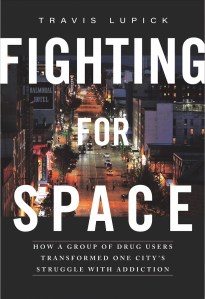
    The following book review of Travis Lupick‘s book Fighting For Space first appeared in Briarpatch Magazine‘s Prairie Edition, and online.

    In 2002, a group of residents and advocates met at the intersection of Main and Hastings in Vancouver holding a 100-foot-long hypodermic needle made out of a giant cardboard tube, stopping traffic. They were protesting the forced closing of a needle exchange on the corner of Main and Hastings in the Downtown Eastside. Earlier, in 2001, front-line workers had distributed clean needles in a trailer outfitted with washrooms, and ensured those using in bathroom stalls didn’t overdose. Affectionately known as “the Thunder Box,” the trailer became one of North America’s first unsanctioned supervised injection sites.

    These stories are among countless actions detailed in Travis Lupick’s Fighting for Space, which tells of the struggle that led to the implementation of Canada’s first official safe-injection site in Vancouver in 2003. The history of the harm reduction movement is one of direct action and protest – an “act first, ask second” attitude that was the only reasonable response to an outbreak of preventable disease and a crisis of premature deaths. Lupick focuses on the Portland Hotel Society (PHS), the groundbreaking housing non-profit that offered low-barrier housing to the city’s most vulnerable, and the Vancouver Area Network of Drug Users (VANDU), the advocacy group that pushed for accessible health care and decriminalization of drug use. The two worked in tandem, with VANDU often willingly taking the heat for direct actions to protect the more diplomatic and funding-restricted Portland Hotel Society.

    The history of the harm reduction movement is one of direct action and protest – an “act first, ask second” attitude.

    The 1990s saw a dramatic spike in overdose deaths and high rates of HIV diagnoses in Vancouver – not unlike the current fentanyl crisis playing out across Canada. But this time the human cost is much higher, with 2017 being the deadliest year on record for overdose deaths in B.C. The strategies used by advocates on the West Coast, honed over decades of persistent work, can provide guidance for similar struggles being newly waged in neighbouring Prairie provinces like Saskatchewan, where fentanyl has killed over 40 people since 2015.

    While revealing the staggering numbers of diagnoses and deaths is key to understanding the scope of the problem, it is the stories of the people who’ve lived through the harm reduction movement that makes this history real. By telling the accounts of people struggling for dignity against politicians and a public determined to dehumanize them, Lupick reinforces two basic claims of the harm reduction movement: people who use drugs are human, and all people deserve safety and health.

    In one of their first organized meetings, members of the newly formed VANDU agreed that they wanted somewhere safe and healthy to spend time, a space that was free of police harassment. The Portland Hotel Society’s first residence was known as the “Hotel of Last Resort.” Simplifying their message to one of “health and safety” – one that politicians and the public couldn’t reasonably reject – has grounded all of their actions and successes in the harm reduction movement. Lupick concludes the book with an epilogue about a family — Mary, Molly, and Mikel — in a quietly triumphant story of three generations living in the Portland Hotel Society, all experiencing stability in their health and housing.

    Lupick reinforces two basic claims of the harm reduction movement: people who use drugs are human, and all people deserve safety and health.

    Lupick does not deify Vancouver’s advocates or their process – rather, he shows them to be people offering the simple necessities of safety and support, while working toward inclusive public health policy. He demonstrates a proven way to effectively build low-barrier health care and housing systems: through persistent action coupled with advocacy, and building partnerships with sympathetic policy-makers. Without this infrastructure, the number of overdose deaths in B.C. last year would have been much higher.

    The current situation on the Prairies is nearly as dire as the one Vancouver faced in the 1990s. Saskatchewan’s HIVAIDS rates are the highest in the country, and with 79 per cent of the people newly diagnosed as HIV-positive self-identifying as Indigenous, programming must prioritize consultation with Indigenous communities. Meanwhile, harm reduction programs have been heavily stigmatized by a predominantly conservative public and openly scrutinized by political leaders. In 2009, former premier Brad Wall said his government would limit the number of clean needles handed out, despite a Saskatchewan Ministry of Health report proving the success of needle exchange programs. In 2017, The Sask. Party threatened community based organizations with a 10 per cent funding cut that would hit operations deemed not to be “core services,” like needle exchanges. Though the party eventually opted against the funding cut, when harm reduction programs are routinely among the first to be threatened, the work being done by those of the front lines is delegitimized and destabilized.

    When harm reduction programs are routinely among the first to be threatened, the work being done by those of the front lines is delegitimized and destabilized.

    For years, doctors, front-line workers, and advocates in Saskatchewan have been pushing for the province to declare a state of emergency regarding rising HIV rates. But if we continue to wait for a provincial government to take necessary action – especially as two newly elected party leaders wade in slowly, in a province where the health of First Nations people is systematically neglected — it may never happen. Prairie activists and front-line workers struggling through those bureaucracies must instead act upon their values and conscience to build systems of equitable health care and human services, regardless of whether they have been granted permission by the state.

    Nicholas Olson is the author of A Love Hat Relationship, a photobook of collectable prairie hats; and a series of illustrated zines with accompanying audiobook narrations. More can be found at ballsofrice.com. He lives in Treaty 4 Territory.


  • Advocating for Alcohol Harm Reduction Policy in Regina, Saskatchewan

    Advocating for Alcohol Harm Reduction Policy in Regina Saskatchewan
    Understanding Chronic Addiction and Responsible Public Health Practices
    Nicholas Olson – Housing Support Worker – Carmichael Outreach

    Background

    Severe alcohol dependence is common in individuals experiencing or at risk of homelessness in Regina, Saskatchewan. For individuals who have experienced violent or psychological trauma, alcohol is often used as a way to cope with the mental and physical pain that comes when this trauma is left untreated. Aboriginal populations overrepresent those experiencing homelessness in Saskatchewan and Canada, and many of the traumas they have experienced are directly related to unstable family settings caused by the lasting effects of residential and public schools and other programs created under colonial policy. Homeless populations have a high rate of alcohol dependence and for this reason face significant barriers to stable and safe housing, and are often unable to access shelter systems. In Regina, the few housing support programs that are willing to work with individuals with severe alcohol dependence are finding that the Housing First model is not always enough to keep individuals housed, healthy, and stable. Alcohol harm reduction is the next clear step to support Regina’s most vulnerable.

    What is Alcohol Harm Reduction?

    Alcohol Harm Reduction aims to reduce the harms associated with the use of alcoholic substances in people that are unable or do not desire to stop (International Harm Reduction Association). Harm reduction functions under the idea that all individuals deserve the dignity and respect to be treated in a manner that best supports them as a whole person, not just as an addict, and to be treated medically in a way that is understanding, empowering, and compassionate to their specific needs as a person experiencing an alcohol addiction. For many, the traditional abstinence model is unrealistic and does not take into account the desires of the individual who may not want, or be able, to discontinue use. Alcohol Harm Reduction aims to support the individual to live a healthy life regardless of whether they intend to become abstinent. This may be done by assisting them to consume healthy forms and volumes of alcohol through different programs tailored to the individual, supporting them to be safe during and after consumption, and working with them to maintain good health and, if desired by the individual, to reduce their alcohol consumption overall.

    Alcohol Treatment

    The development of Alcohol Harm Reduction through a Managed Alcohol Program (MAP), Alcohol Swap Program, Beer Co-op, and/or Prescription Alcohol is the best practice in supporting the addictions of a marginalized population in Regina primarily between the ages of 30-55. Since individuals experiencing or at risk of homelessness often have fixed or no incomes, beverage alcohol is unaffordable due to the high cost of controlled substances in Saskatchewan. This, coupled with the marginalization of individuals experiencing poverty, addiction, and mental health, has made beverage alcohol even more inaccessible because these individuals are often not permitted to enter establishments that sell beverage alcohol, and in many cases are unable to even access basic health and emergency services. Non-beverage alcohol (NBA) purchased in grocery stores, convenience stores, and pharmacies including mouthwash, hand sanitizer, hairspray, and rubbing alcohol is being consumed in large quantities because of its potency and availability.

    Non-beverage alcohol can be any form of alcohol that is not fit for human consumption. Ethanol, or ethyl alcohol, is found in beverage alcohol and is safe to consume in moderate amounts. Denatured ethanol, or alcohol denat, found in products such as mouthwash, hairspray, and some hand sanitizers, is ethanol with chemical product added to make the alcohol unfit for human consumption. The chemical additives also allow the producer to avoid the product being designated as a controlled substance. Methanol, or methyl alcohol is toxic and has caused death when consumed through hand sanitizer (CBC). Isopropyl alcohol, found in rubbing alcohol and some hand sanitizers, is toxic if ingested as well. While it is often stated that the extremely high alcohol content in non-beverage alcohol is the most toxic ingredient, with sustained use and high dosage, serious risks are present from the other toxic ingredients in each solution. Hairspray, for example, can have long term effects such as internal bleeding, kidney and liver damage, respiratory problems and death (CBC). Each receptacle of non-beverage alcohol clearly warns of the risks of consumption and strongly advises to contact poison control if consumed in any volume (Pauly 10).

    Alcohol Contents and Types
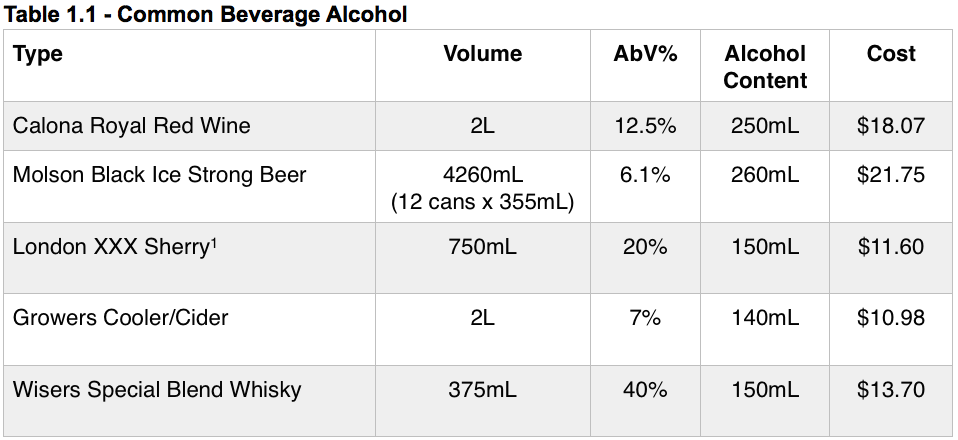
    Table1.1
    (costs listed are based on saskliquor.com)
    (approximate calculations were done at http://www.cleavebooks.co.uk/scol/ccalcoh4.htm and should not be used as a substitute for medical advice)
    1 The LCBO is recalling four brands of sherry (LONDON XXX SHERRY INCLUDED) that tested positive for a potential carcinogen. “This is not like E. coli or botulism where you’re acutely affected. To be affected by something like this, you would have to consume it for a long time for many years, so there is no risk at all,” he said. “It’s very, extremely difficult for anyone to get cancer from this type of chemical, unless you’re consuming it on [a] daily basis and you’re drinking large amounts of it.” (http://www.cbc.ca/news/lcbo-recalls-sherry-for-carcinogen-risk-1.619474)
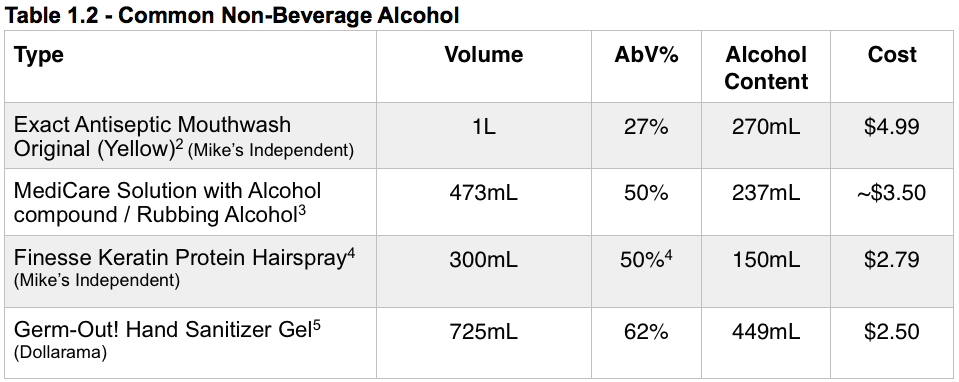
    Table1.2
    (costs listed based on retail prices at given locations)
    (approximate calculations were done at http://www.cleavebooks.co.uk/scol/ccalcoh4.htm and should not be used as a substitute for medical advice)
    2 Medicinal Ingredients: Eucalyptol (Eucalyptus Clobulus-Leaf) 0.092%W/V, Menthol 0.042%W/V, Methyl Calicylate 0.060%W/V, Thymol 0,064%W/V
    Notice: If more than used for rinsing is accidentally swallowed, get medical help or contact a poison control centre right away.
    3 Ingredients: Aqua, Ethyl Alcohol, Denatonium Benzoate, Camphor
    Notice: For External Use Only, Poison, Inflammable. If swallowed, do not induce vomiting. Call a physician immediately. If patient is unconscious, give them air. Danger: Harmful or fatal if swallowed.
    4 Ingredients: Alcohol denat, water (aqua), acrylates copolymer, aminomenthyl propanol, fragrance, octylacrylamide/acrylates/butylaminoethyl methacrylate copolymer, PEG-12 dimethicone, tritely citrate, hydrolyzed silk, hydrolyzed keratin. Alcohol content TBD but could be between 50-70%.
    5 Medicinal Ingredient: 62% Ethyl Alcohol. Non-Medicinal Ingredients: Aqua, polysorbate 20, carbomer, aminomethyl propanol, glycerin, tocopheryl acetate (vitamin E acetate), denatonium benzoate.
    Warnings: For external use only, do not ingest. In case of accidental ingestion contact your physician or a Poison Control Centre.

    Limiting availability of these products has proven to be an ineffective means of managing the consumption of the toxic forms of alcohol, as many or all of those accustomed to drinking non-beverage alcohol regularly travel to the suburban areas of the city to purchase from larger box stores and centres where they haven’t yet been banned. When individuals don’t have to spend their energy finding their next source of alcohol and managing their withdrawal symptoms, it allows them to begin to spend that energy on developing life skills, focusing on housing, setting goals, and working on improving their overall health.

    The only responsible, healthy, and compassionate way to support those who consistently consume non-beverage alcohol is to understand that in these cases abstinence is potentially a dangerous, unhealthy, and unrealistic treatment, and that reducing the harm they are causing to themselves means assisting them with the consumption of safe forms of alcohol. This can be done with Managed Alcohol Programs where individuals are given a regulated amount of alcohol at regular intervals during the day to help them deal with withdrawal symptoms and feel normal and well, Alcohol Swap Programs where individuals not necessarily receiving comprehensive housing supports can swap out certain quantities of non-beverage alcohol for beverage alcohol, a Beer Co-op where individuals are trained in proper and safe ways to brew their own alcohol for safe consumption, and Prescription Alcohol, which like a MAP, would regulate volumes and quantities based on medical assessments and administered in similar harm reduction models such as methadone. These programs, specifically MAPs, have been implemented across Canada and the US to reduce both the harms inflicted upon alcohol-dependent individuals, and the subsequent costs upon the health and justice systems.

    While other potential treatments for alcohol dependence include medications such as benzodiazepines, which include diazepam, or Valium, the lifestyle and the desires of the patient must be taken into account, and for many, discontinuing alcohol use is not desired and is not a possible solution. Using diazepam as a treatment for alcohol withdrawals does not respond to the fact that many individuals would rather not discontinue alcohol use, and even with regulated and prescribed diazepam treatment, many individuals will continue to drink different forms of alcohol when it is presented to them. This would lead to an increased risk of addiction to diazepam, and a “high risk of overdose, loss of consciousness, coma, and death.”(American Addiction Centers) Benzodiazepines are also used as a short term treatment option, with only 1-2 percent of adults continuing treatment for 12 months or longer, and carry substantially higher risks of dependence and misuse in populations with a history of substance abuse (Longo). When supporting an individual living in community, monitoring all the substances that enter the home is impossible, therefore it is best to prescribe that which reduces the most risk and harm to the individual.

    The harm reduction framework aims to support individuals to make healthy choices and this begins with offering assistance in managing quantities of beverage alcohol, and accessing beverage alcohol in a cost-effective manner, while at the same time being careful not to perpetuate the stigma of using non-beverage alcohols that is often present in community supports and medical services. Many populations are stigmatized even within social circles for drinking non-beverage alcohol, and this stigma is magnified in many professional health settings. Following the harm reduction framework means focusing on the needs and desires of the individual, not reducing addictions to a moral or ethical choice, and understanding the barriers that have led to less-safe alcohol consumption. It is important that harm reduction treatments are in place and practiced by health professionals, as professional knowledge is needed to create public health policy that can be safely and confidently administered by community entities.

    Understanding

    Each individual receiving alcohol harm reduction support will consume a different variety, style, and amount of beverage and non-beverage alcohol each day. It is important to understand what the approximate quantities of non-beverage alcohol are to ensure that the proper volume of beverage alcohol is supplied to each individual. Having a set schedule of beverage alcohol consumption would ensure that a moderated amount of alcohol is consumed, which, ideally could be lessened over time based on the desires of the individual. Clinical medical advisement through a MAP or prescription may be required to ensure that the individual is getting a safe dosage, and that an understanding of the individual’s history with addiction and their personal and traumatic history is taken into consideration. In an evaluation of a MAP in Vancouver, BC, alcohol consumption did not necessarily decline in six months for all of the participants, however the consumption of non-beverage alcohol did decline, and most participants reported improvements in mental health, social connectedness, and general well-being, and consumed alcohol in a safer setting with less harms that come from drinking large quantities at one time (Stockwell 6,7).

    Below are some comparisons of alcohol contents. Though it is clear that the ethanol present in beverage alcohol is different than the types of alcohol present in non-beverage alcohol (denatured alcohol/ethanol, isopropyl alcohol) and the “high” achieved through using non-beverage alcohol would therefore be different, the comparisons below are a guideline for quantities consumed knowing that the denatured alcohol and isopropyl alcohol have added chemicals that are toxic for human consumption.

    For example, as shown in Table 2.1, one litre (1L) of Antiseptic Mouthwash has an alcohol content of 270mL, which is equivalent to 12.5 cans (4.4L), of strong percentage beer, or nearly two bottles of a strong sherry wine. Similarly, as shown in Table 2.2, it takes nearly 10 times as much strong beer to equal the same alcohol content of 449mL that is obtained through 725mL of Hand Sanitzer Gel. While the point of alcohol harm reduction isn’t necessarily to meet the alcohol content that an individual would consume drinking non-beverage alcohol, it is important for service providers and community supports to understand just how much beverage alcohol it takes to help cope with withdrawal symptoms.
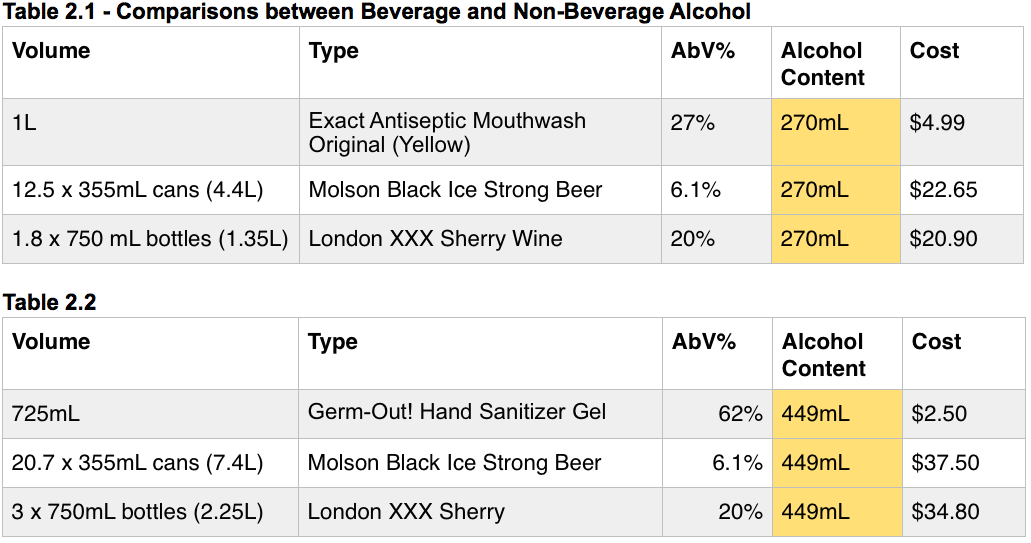
     

    Table2.1-2.2

    Conclusions

    It is clear both to the uneducated outsider and to the affected individual that the consumption of non-beverage alcohol is extremely damaging to one’s physical and mental health. By offering support to individuals in their addiction through alcohol harm reduction programs, the dignity of these individuals is upheld as they are receiving compassionate medical treatment that views them as a whole person. Through these programs, these individuals would be able to access supports that are often only accessible to less-stigmatized populations, including detoxification programs that in Regina are inaccessible to many with reduced mobility and high physical needs.

    Access to inexpensive, clinically regulated and adequately strong forms of beverage alcohol is key to the physical and mental health and well-being of the individual. Regulated quantities of alcohol must be customized to each individual based on their own personal symptoms and histories. While having professional medical advice involved is clearly the best practice, disallowing access to safe forms of alcohol because of lack of confirmed policy is irresponsible and lacks the compassion necessary in the human services sector and in a responsible community.

    Policy driven by the Regina Qu’Appelle Health Region, monitored and planned by medical professionals, delivered by community organizations, and tailored to the needs of the individual are imperative to the success of an alcohol harm reduction program, and the timely nature of its implementation is extremely important to ensure the safety, health, and survival of a large population of vulnerable people. A responsible community and health region would not allow the continued consumption of controlled poison when clear, simple, and practical alternatives exist.

    Sources
    International Harm Reduction Association, What is harm reduction?, http://www.ihra.net/what-is-harm-reduction
    CBC News, Hand sanitizer ingestion linked to 2 Ontario deaths, Oct 25, 2013, http://www.cbc.ca/news/canada/toronto/hand-sanitizer-ingestion-linked-to-2-ontario-deaths-1.2252046)
    CBC News, Hairspray abuse plagues northern town, Feb 16, 2001, http://www.cbc.ca/news/canada/hairspray-abuse-plagues-northern-town-1.293513
    Pauly, B., Stockwell, T., Chow, C., Gray, E., Krysowaty, B., Vallance, K., Zhao, J. & Perkin, K. (2013) Towards alcohol harm reduction: Preliminary results from an evaluation of a Canadian managed alcohol program. Victoria, BC: Centre for Addictions Research of British Columbia.
    Carnahan RM, Kutscher EC, Obritsch MD, Rasmussen LD. Acute ethanol
    intoxication after consumption of hairspray. Pharmacotherapy. 2005 Nov;25(11):1646-50. PubMed PMID: 16232026.
    http://www.ncbi.nlm.nih.gov/pubmed/16232026?report=docsum
    American Addiction Centers, Dangers in Mixing Valium and Alcohol or Drugs, http://americanaddictioncenters.org/valium-treatment/dangers/
    Longo LP, Johnson B., Addiction: Part I. Benzodiazepines–side effects, abuse risk and alternatives. Am Fam Physician. 2000 Apr 1;61(7):2121-8. Review.,
    http://www.aafp.org/afp/2000/0401/p2121.html
    Stockwell, T., Pauly, B., Chow, C., Vallance, K., Perkin, K. (2013). Evaluation of a managed alcohol program in Vancouver, BC: Early findings and reflections on alcohol harm reduction. CARBC Bulletin #9, Victoria, British Columbia: University of Victoria
    http://www.uvic.ca/research/centres/carbc/assets/docs/bulletin9-evaluation-managed-alcohol-program.pdf
  • Season of the Badlands

    IMG_5565

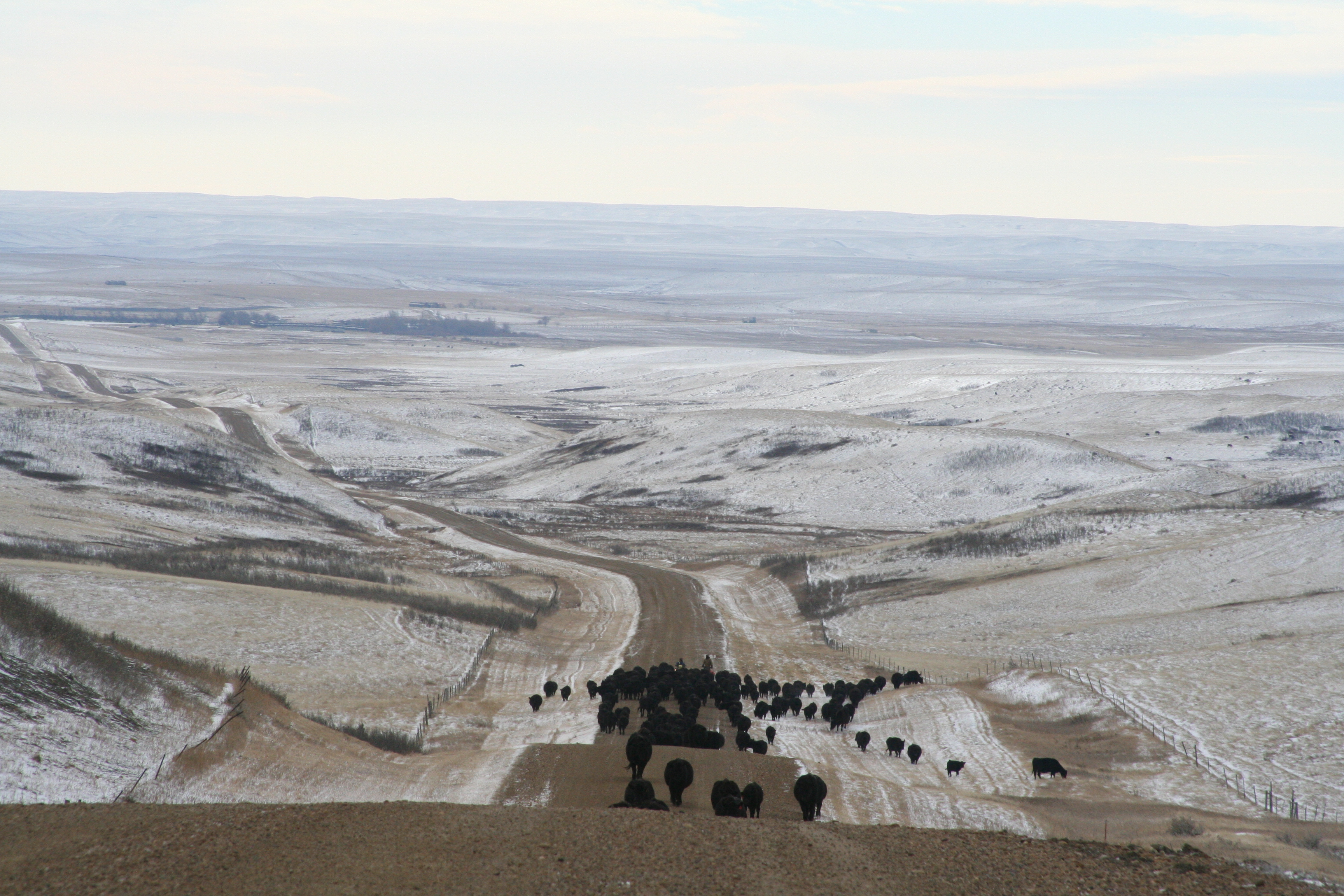
    The following was originally published with photos in Of Land & Living Skies: A Community Journal on Place, Land, and Learning. For more interesting content and events, consider becoming a Sask Outdoors member at SaskOutdoors.orgDigital magazine available here.

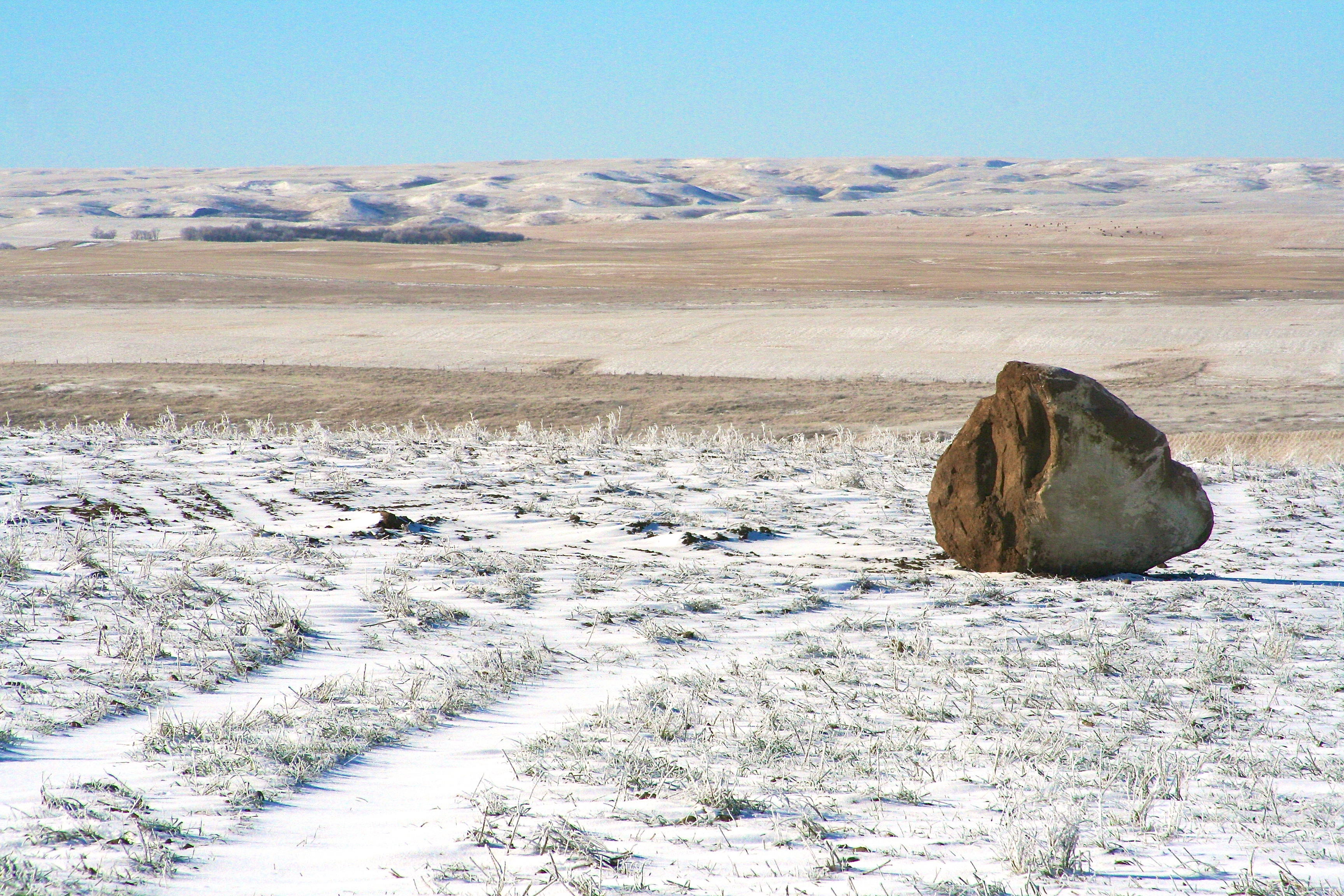
    Just west of the yard in a field of summer fallow is a rock. Its existence alone isn’t remarkable; there are a multitude of rocks in the dirt around Horse Creek. All over the prairies there are rock piles, decades or centuries of rounded stones the size of softballs or buffalo skulls or lawnmowers, stacked as monuments to the neighbouring broken earth. But the rock west of the yard, picked out of the ground to clear the way for tilling, ended up being the size of a small car. Forty paces from the road it looks substantial but unremarkable; flat and several feet high, grey brown, leaning back with a salute to the sky, the remaining clover hissing at its base. But the illusion disappears when it is approached. It juts out significantly, looking like the missing nose of the Sphinx. A nearly immovable object, even with all the trucks and tractors around, because of its size and the damage it would do to the road and the ditch. It would look good in the garden but the force needed to move it is a force we do not have. So there it sits.

    My grandma was born in Horse Creek. I never knew this until a week before I headed there myself. Horse Creek is located on Treaty 4 Territory, seventeen miles south of McCord, 110 miles southwest of Swift Current and just sixteen miles as the crow flies from the American border. If you look for it on a map or even the internet, you may not find it. In a time of unions and co-operatives, grandma’s father was a carpenter in Horse Creek for her first year of life. Last November, I was in Horse Creek holding tape measures and nailing boards and starting my own imaginary union to provoke my anti-union, farming friends.

    Much of that summer was spent exploring the badlands of southern Saskatchewan. The first weekend of spring meant camping with three friends at Grasslands National Park, which shares the same hill ranges as Horse Creek. In 4x4s we were guided through pastures and down ravines to Storey Lowell’s, the local folklore touting it as an early hideout for horse rustlers, when it is more modestly two adobe shacks that made the home of an old homesteader. Later we hiked in at McGowan’s Visitor Centre and camped in a coulee just steps from the moon-like landscape of dirt and cliff. Before darkness settled we walked to the highest point in sight, overlooking the crumbling badlands, with heavy clouds and bursting light advancing from the south sky. Walking back in the heavy showers we purposefully searched out the storied quicksand piles by tossing rocks on odd looking pieces of dirt, then toeing them, then stepping on them, then stomping on them, tempting our fate for a movie-like reaction from the earth. We never found any quicksand.

    Later in summer we visited Castle Butte, a massive ice-age-created structure of sandstone and clay reaching to the sky of the Big Muddy. A few miles from there we navigated to Buffalo Effigy, the flat outline of rocks which shape a buffalo on the highest hill around——a sacred site now part of a pasture, luckily fenced off and somewhat preserved. A few weeks later we camped at St. Victor Petroglyph Park, timeworn carvings on horizontal rock on the top of another highest hill in the area. These three sites of identity and significance to the First Peoples, all purposefully placed on top of the highest of hills, existed long before my maternal grandparents settled in the area——around Harptree, Brooking, Radville——and began creating their own monuments in picked rock piles and homesteads.

    IMG_5447

    In the snow-covered shortgrass prairie of Horse Creek, I attempted to experience the ranching and farming life in which my family was once rooted. I picked bales and fixed fence and tried to be useful. When on break, to bolster my writing craft, I urinated poems into the snow in cursive.

    When heading south to move lumber or check on cows it looked as though the clouds that rested on the hills that enclose the badlands were the end of the world, which in my own way, is the truth. The badlands are dead land and past them is a barbed wire pasture fence that is patrolled with drones and satellites of the American border guard. Other border-adjacent land is sold off to multinational companies scavenging for oil whose only identity in the land they own is corporate identity. The end of the world and the end of identity exists in deserts and robots and contracts.

    I have a vested interest in preserving this land from such ominous ends because I feel connected to it in some vague, flaky kind of way. My friend who has lived here his whole life and whose family has farmed it for a century offers the same. Giving up his land would be the last thing he would do, and because of his connection to the land he acknowledges that he knows to some extent what it might have felt like when the settlers came. I identify with the land that sits atop the badlands because of personal history, but this land does not identify with me any more than it identifies with the farmers or ranchers or indigenous peoples or the Queen who leases it out or that rock west of the yard.

    The connection felt from being on the land, from spending time caring for it and working it, is universal and real. I am not entitled to this land, nor is any one person or group of people. Instead the land has an entitlement to be inhabited by people who identify with it, because those who identify with the land are more apt to treat it as it ought to be treated.

    To be an asset to the land, to be the type of person that the land is entitled to, I learn as much as I can about how it works and how to live well on it. About all its intricacies of connectedness, which offer lessons of how to exist and how to relate. Like the rock west of the yard, I am not out of place standing alone on the prairie, I only look that way when I am dug up from the city and thrown naked in a field. Like the rock, my ancestral composition lies in the soil, just as everyone else.

    Each time I visit the badlands and hills adjacent I seek out the highest geographical point possible——to feel the wind’s unmitigated power or to fully realize the thunderstorm that approaches. Monuments that mark time, the carvings and effigies and buttes of the area, are locations of height for a reason. They are standing points that we revisit to watch the thunderstorm of the future steadily move in. The easiest place to keep your feet grounded for change and resistance is in community and identity. Strengthening our connection with these highest places is the only way to ensure the thunderstorm doesn’t come in and drown us all out and to ensure that when we are walking home, we see the pits of quicksand that would otherwise swallow us up.

    I drove out of the yard and left the farm behind with a year of vagrancy and foreign experiences on the horizon. The rock west of the yard sat silent with the ice fog painted low in the background. The rock will quite likely be there when I get back.

    To look just on the surface, and think that what you see from horizon to horizon is all that is needed to survive, is to misunderstand your place on the ground which you stand. To scale its heights-to learn its lessons—one must be alive to the underlying structures that support the visible and not-so-visible world around you.

    -John Borrows (Kegedonce), Drawing Out Law: A Spirit’s Guide (University of Toronto Press, 2010, p72)

  • The Carmichael Free Press

    This originally appeared at CarmichaelOutreach.ca.

    Carmichael Free Press copy2
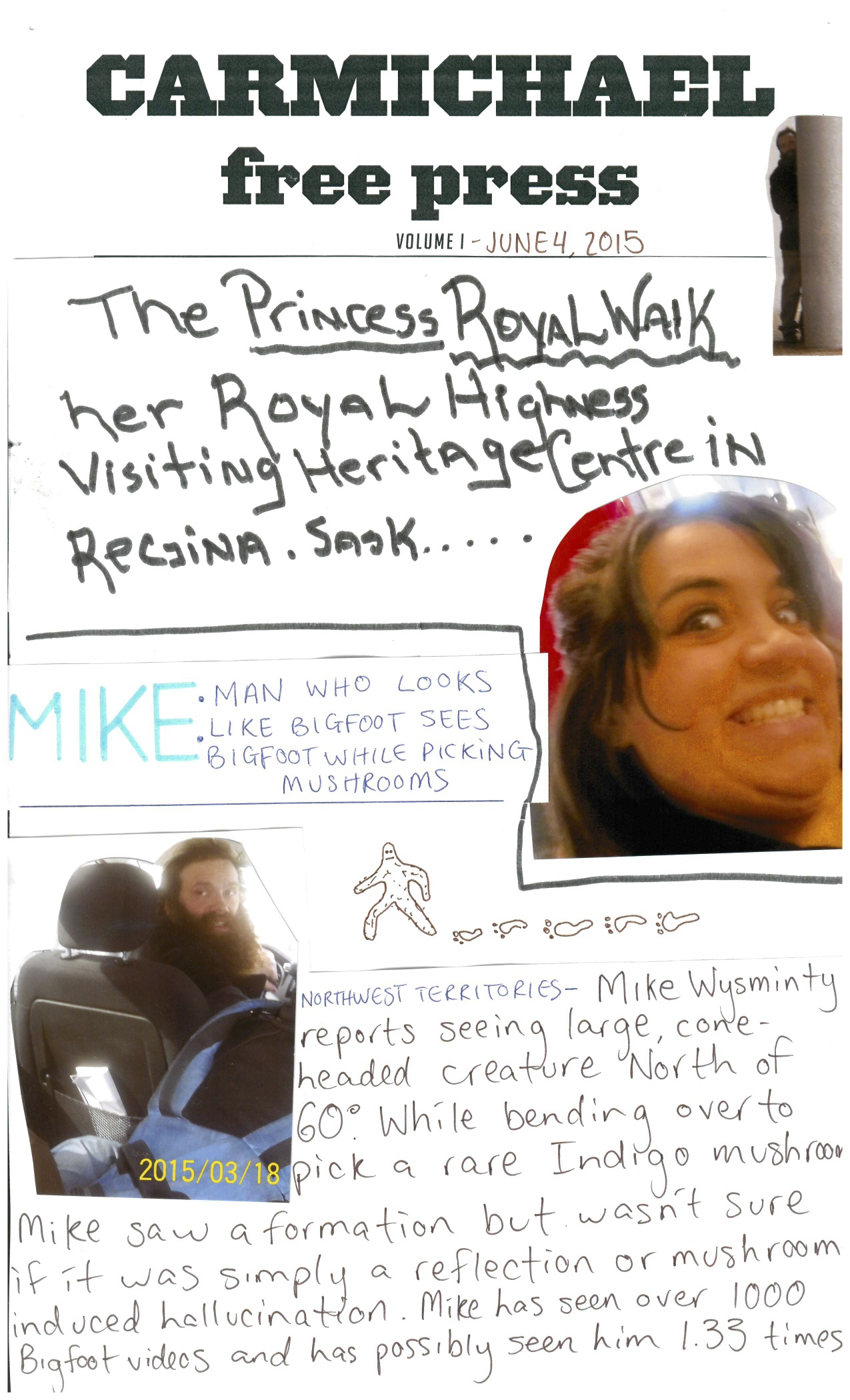
    Noel, Rocky, Mike and others sat in the coffee room on a Thursday afternoon and asked what was going on for programming that afternoon. “Art Class!” I proclaimed on my way downstairs. I brought up the box of scrapbooking supplies that former gourmet chef and art mastermind Mike Wysminity paid for with money he raised himself by selling tomato plants at the Farmers Market in pots hand-painted by Carmichael art participants.

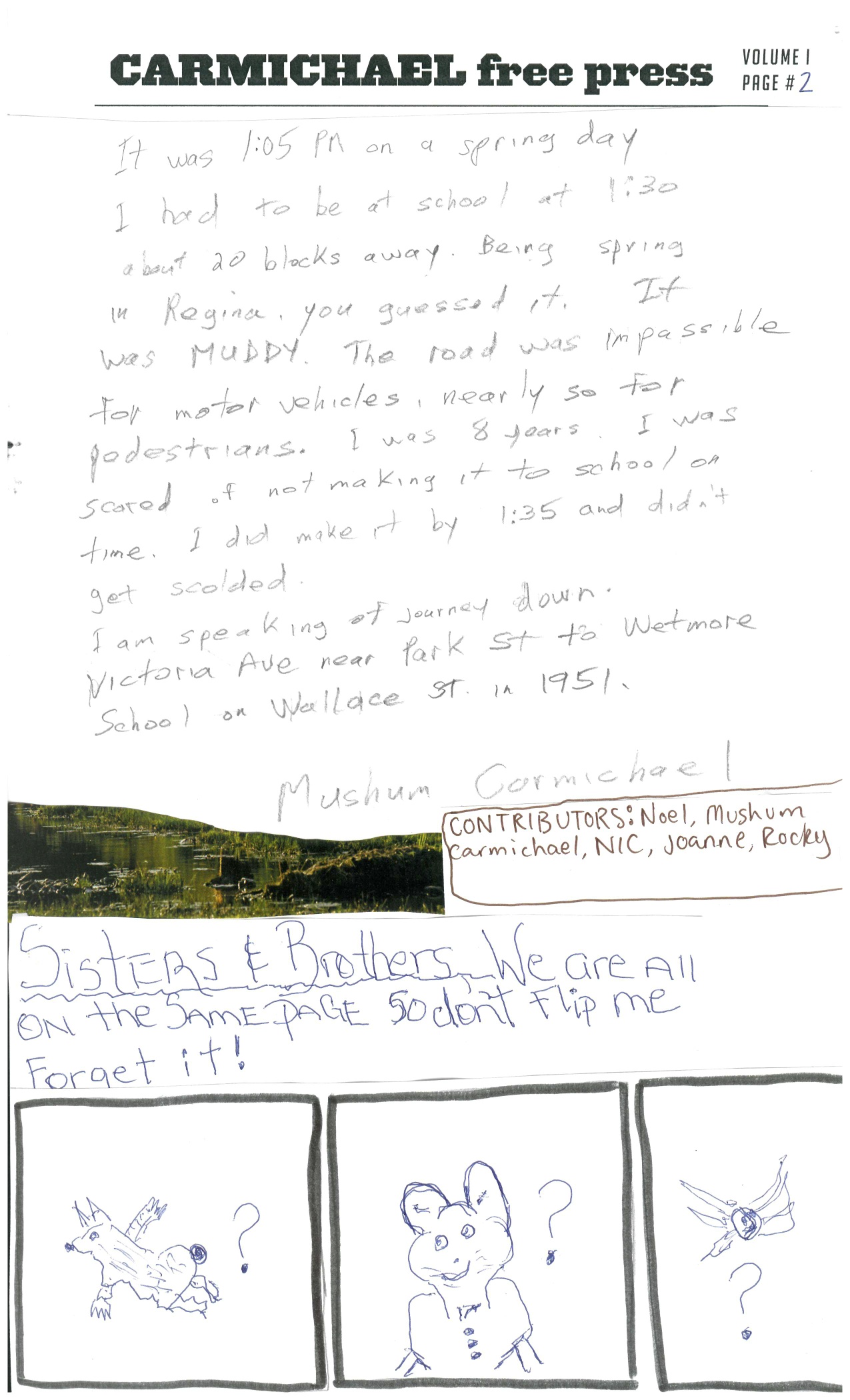
    I tossed markers, fancy-edged scissors, stickers, moon-shaped hole punches on the table and people started creating. Noel wrote an inspirational quote and drew a cartoon. Mike wrote a poem. Lisa wrote a note to her son under a picture of him taken from a previous Carmichael Hockey Day. Brian wrote a story. Then staff members cut them out, organized them, and pasted them on the template, made copies, and printed them for the masses.

    The Carmichael Free Press is a grassroots publication on it’s fourth edition so far—a zine style scrapbooking newspaper that anyone can contribute to. Not topical, always different, the Free Press is a creative home for real, not-pretentious, unknown writers, artists, painters, comics, mothers, children, and more, not only to produce something they are interested in—they are proud of, that makes them laugh—but to have it shared with their group of friends, the Carmichael staff, and the greater community.

    The first ever headline of the Carmichael Free Press was borrowed from a photograph from a previous Carmichael photography class partnered with the Heritage Community Association and Sask Arts Board.

    “Here you go!” he said, as he passed his page to me with the inevitable nervous feeling of sharing something you just created. The headline read, “The Princess Royal Walk – Her Royal Highness Visiting Heritage Centre in Regina Sask…..” with an up-close picture of a loyal volunteer. Everyone in the room laughed at the joke. Real news be damned, street news is what matters. The experiences of people in your neighbourhood who you have never met are what truly matter, not the business interests of private national media. Hailed by its creators as “The most important newspaper in Saskatchewan,” the Free Press begins its climb to the top.

    Thursday afternoon Art Class at Carmichael has evolved as necessary from painting to drawing to scrapbooking to newspaper-making to who-knows-what-next, depending on interest, on funding, and on person skills of the facilitator. The informality and drop-in style of the Art Class is what makes it a success. Peter walked into the coffee room, saw his friend sitting at the table, saw markers, scissors, empty pages of the Carmichael Free Press, and sat down for ten minutes, drew a remarkable drawing of a pipe with the smoke forming a buffalo, eagle, bear. He thanked us for the time and headed on his way.

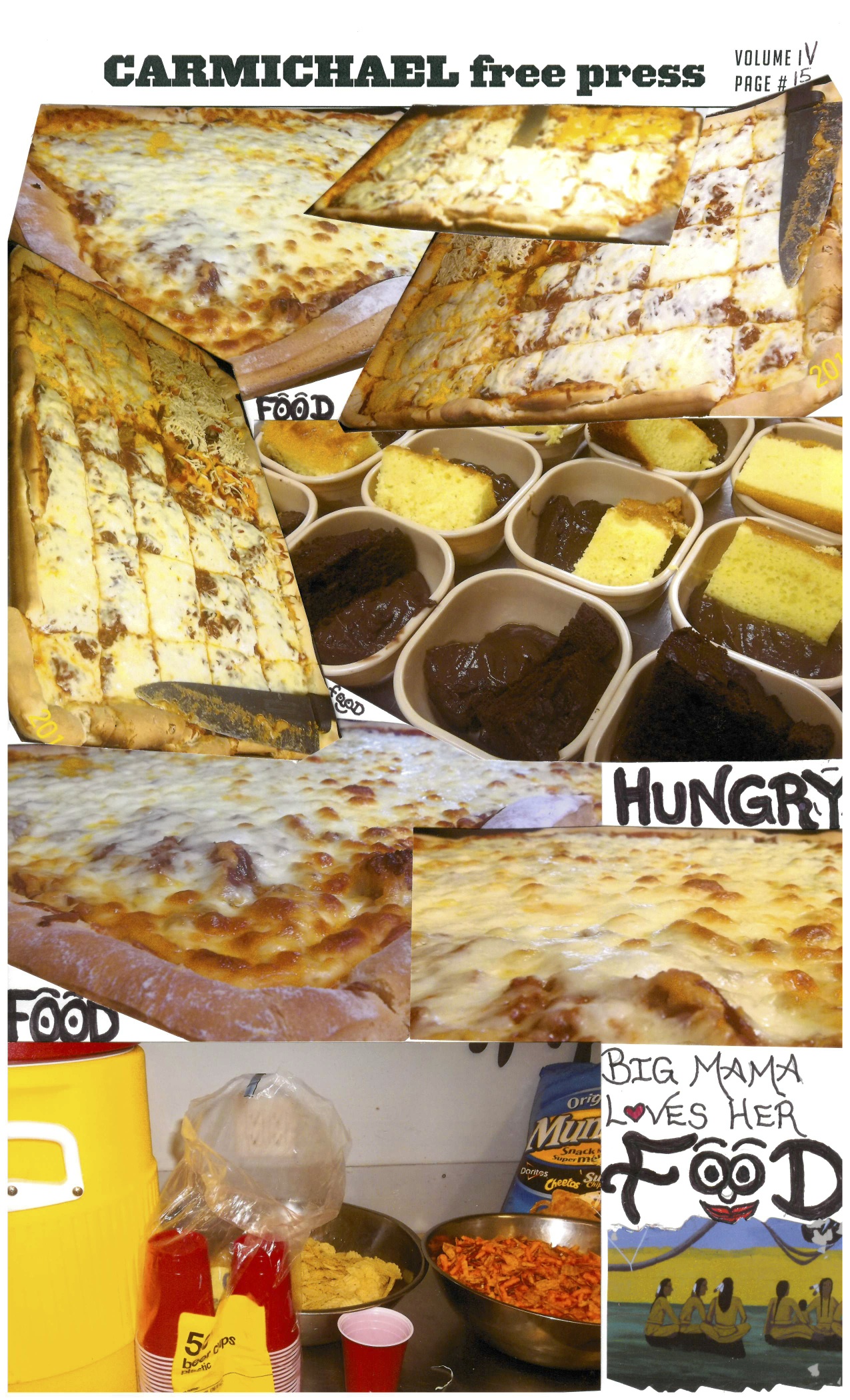
    Big Mama Page

    Every person has the right to have their voice heard, published, and distributed. People in your city are depressed, pissed off, a little bit high, lonely, in love, tired, dope-sick, or extremely happy, and they are entitled to these feelings. The power that is gained in sharing these feelings, putting them in some creative form, is invaluable. Outside of the online world of status updates and cartoon smiley faces, people need to have a forum to express themselves, and since Facebook and other online media aren’t accessible to those without internet access and aren’t really collective, the Free Press fills the void.

    Authors and artists work years to get things published or get their art hanging in a coffee shop in the over-marketed world of writing and art, but that doesn’t make the voice of the amateur any less important. If anything it makes it more significant; not being sold as a commodity or graded like a high school paper.

    The Carmichael Free Press is the perfect example of Carmichael programming—drop-in-style, no cost, inclusive to all, hilarious, frustrating, and motivating. Sober or not, published or not, practiced or not, community members can use the Carmichael Free Press as a home for personal expression, a place for injustices to be made public, love to be shared.

    The sign-off of our first edition reminds readers what the Free Press is trying to proclaim each and every edition—the importance of listening to and helping out people you have never met, and encouraging you to get to know them one way or another, possibly by participating in your local Free Press!

    “Sisters and Brothers, we are all on the same page. So don’t flip me!”

    Carmichael Free Press copy

  • HAT FARM

    Hat Farm

    HAT FARM on Instagram

    Since it’s invention, the ball cap has been the preeminent accessory of comfort and the ultimate casual lifestyle. People participating in baseball games or other leisure activities, those hiding from the harsh rays of the sun, those who don’t know how else to deal with a bad hair day, or those who don’t take themselves too seriously, wear hats. But they also wear hats simply because hats are comfortable.

    HAT FARM was born out of a desperate need for simple funds for the Carmichael Outreach Housing Program, and the regular classic hat donations received by the Clothing Depot Donation Program. Carmichael’s Housing Support Team works to remove the barriers the community has in finding adequate and safe housing, which often includes small financial obstacles that aren’t covered in other budget lines or in housing clients’ budgets. The profits made here will go towards removing those barriers and thus housing people, and keeping them housed.

     Teddy

    The hat I wear daily is one I’ve had since I was 12 years old, but only started wearing it about a decade ago. I have separation anxiety when I don’t have it for long periods of time. I have nearly lost it out the window of moving vehicles, in fist fights on the beach in Mexico, in severe gusts of prairie wind, in the rivers of Thailand, off ferries on the west coast. I’ve repaired the plastic snap three separate times, and the once body-filled hat now rests limp and tattered like a discarded pair of briefs. I have moments of panic knowing that one day it will disappear in a drunken stupor or traumatic event, some instance where losing your head and what rests upon it is possible. For that reason I began auditions for a new, future everyday hat. Like when your best friend moves away, you start flipping through your contact book dejectedly for someone that may be able to partially fill the void, if anything at least for a weekly beer.

    When I began hat auditions I happened to be working at Carmichael Outreach, a community drop-in centre downtown Regina with free food, coffee, hygiene products, housing services, needle exchange, and clothing, open to anyone in the city. Hundreds of clothing donations are dropped off to the back door weekly where they are sorted and put out for the community depending on their seasonal use and if there is room in the tiny three-rack clothing depot. Community members browse daily for clothes, dishes, puzzles, Patsy Cline CDs, used printers, children’s books, all of which are free in the clothing depot, open all day Monday to Friday. Closets from all over Saskatchewan have been cleaned out after decades of storage bringing in vintage Star Wars toys, unworn embroidered cowboy shirts, antique decorative plates, slightly malfuctioning DVD players, and much more.

    Larsen's

    One day I walked into the clothing depot to find a stack of hats six feet long, the collection of hat connoisseurs around the province. Farm industry logos, country legends, family vacation destinations, family reunions, all immortalized on the unparalleled medium of the trucker hat. Several small town hat collectors dropped off their decades-old work so that hatless men in the city could feel the dignity of cranial comfort once again. Before the hats were put on the rack, I searched through the most classic, mint condition, collectors hats from all over the world, and documented the rest which have all been put back into the clothing store.

    All proceeds from the hats collected and sold here will go towards the Carmichael Outreach Housing Program, including funds for damage deposits, carpet cleanings, new small household items, fees for money orders for rent payments or identification applications, or any other potential barriers that might keep community members from maintaining stable housing in the City of Regina. Because as much as a person needs a nice ball cap to feel comfortable, a roof over their head does them one better.

    For more information, to buy, or to donate, email thehatfarm@gmail.com

    Halfway Husky

  • Slow Code Colonialism

    The following essay was published in the Summer 2014 edition of Transition Magazine, a Canadian Mental Health Association publication. Digital copy available here.

    You are lying on the street in cardiac arrest. I am obliged to inform your unconscious, breathless body of my newly acquired First Aid training. This, for some reason, is supposed to reassure you, as if my knowledge to enter three digits on a phone grabbed out of a bystander’s pocket changes the fact that your heart has ceased. All I can do is Check, Call, Care, and call bystanders to action, but according to the brawny male firefighters who taught my First Aid course, this should be reassuring. The fewer bystanders, the better, they said. According to said firefighters, CPR and portable defibrillators are so effective that you—unconscious, vulnerable, responsibility of the provincial healthcare and social services systems—shouldn’t worry about what will happen if you don’t wake up, but rather, what will happen if you do.

    The day after I became First Aid certified, I heard a piece on public radio that spoke to the misconception of the effectiveness of CPR. When it comes to the point where a human is in cardiac arrest, known as a Code Blue, healthcare professionals are obligated to administer life-saving procedures. When doctors are confident that CPR will not save a life, or will greatly reduce the quality of life that remains, they will often fake it, for it “looks and feels like a really gruesome way to usher someone out of this world.”(1) They go through the motions of CPR without actually trying to save the life. They do it so the patient can die. Slow Code—they even have a name for it. When family and friends are watching a loved-one slip away, they cannot understand a doctor who would stand by idly and let their family member die. CPR, in this case, is a system for the conscience of the bystander, not for the person in emergency. The professionals do this because the system of resuscitation is flawed.

    A friend was recently in the hospital. He got into a fight with three men half his age, he told me. Others claim that while inebriated, he tripped, the side of his head the first part of his body that struck the ground. Skull fracture and brain swelling which led to brain damage and memory loss. I visited him regularly—I sat there as an idle bystander contributing to his deteriorating health by supplying him with cigarettes which he forgot he had, as he basked in the overwhelming nature of his life of abuse and addiction. We played cards as he mumbled through the imagined traumatic experience of being locked in a house with three family members who beat him until he bled from the ears.

    When my friend is discharged, he will leave the hospital to no home and to a family who can no longer give him the support he requires. The hospital can’t keep him forever. The rehabilitation centre says he is too high-functioning—a man who cannot remember where he put his paintbrush or the names of his brothers. The province cares not for the marginalized. An ethically responsible governing body cares for the vulnerable, but my friend will end up homeless in a week, one inevitable head injury away from complete debilitation. He has never met his social worker. The social worker in his ward blankly stated that it isn’t her problem once he is discharged. The workers search on their computers and make phone calls in vain, aiming to satisfy the bystanders, knowing that whatever they do, it won’t save his life, because, whether or not they know it, the system of resuscitation is flawed. To those within the social welfare system, this is the most receptive the state will ever be—just another case file in the colonial shell game that is the Canadian welfare state.

    Those who have not dealt with the system imagine that it works for all. They imagine that the cracks through which people slip are fairy tales told from faraway lands. They can’t imagine a circumstance where someone would be left out in the cold after a traumatic event, because, they think, this is Canada, land of universal healthcare and equal aid for all. This liberal notion of equality of opportunity fails to understand the systemic racism which is fundamental to the colonial state. The gaps exist on purpose. The system of resuscitation is intentionally flawed—it is designed to appease the conscience of the bystander. But unlike a medical Slow Code, it is flawed in its design to take resources and power out from the trained field workers through lack of programs that offer proper supports. Fifty-percent of the Saskatchewan provincial budget is devoted to healthcare and social services, totalling over $5.5 billion per year.(2) With such a significant portion of the provincial budget devoted to two departments of human services, the general populace can only assume that the dollars are sufficient and effective; however, gaps in the departments are purposeful and widespread.

    Aboriginal communities have been stunted by the implementation of provincial and federal social assistance programs, contributing “to the persistence of individual and community economic dependency.”(3) These programs run on outdated living allowances, low earning allowances making a transition to employment impossible, and lack of adequate supports for Aboriginal people living in urban centres or dealing with HIV/AIDS. These programs run on cycles of poverty and death. A growing number of Aboriginal people have been forced from reserves to urban centres, where it is exceedingly difficult to live as a traditional Aboriginal person. It is a direct extension of settler colonialism, originally performed under the mandate of pre-confederation’s Indian Affairs, whose policies to ‘civilize’ Aboriginal populations introduced the residential school system. Residential schools were decentralized into the provincially-run Ministry of Social Services, a ministry which continues to perpetuate the same exterminatory mandate. Slow Code Colonialism—neocolonial institutions created to emphasize the desires of the bystander and ignore the needs of the sick. Neocolonialism is already the disguise for cultural eradication and is further masked as the unavailability of programs due to lack of financial support. Where supports exist, resources do not. My friend qualifies for a bed in a home for those with Acquired Brain Injury, but only after sifting through a waiting list of several months, and not if he continues to battle his addiction. Fairytale cracks become real. The ministry that originally took responsibility for my friend as a young boy sent to a residential school, now waives this responsibility and deliberately leaves him to flop around on shore, their program near completion.

    I was taught to Check, Call, Care. As your consciousness flickers, as shock sets in, I brush your hair from your forehead and tell you it will be alright. I lean close to your face to check your respiration. You are not breathing. Since I do not have my recommended mouth-cover, I begin compression-only CPR. I tell a bystander to call for help. I break your ribs and bounce up and down on your sternum with my arms locked at the elbows. The paramedics arrive. They are trained in emergency and begin Slow Code CPR, feigning an attempt at revival because that is what bystanders expect of them. There’s nothing we could do, they say, but I am appeased because of their valiant attempts at resuscitation. What they don’t tell me is that they were thinking about football when they were supposed to be pumping blood through your chest. You somehow survive despite the Slow Code, but you wake up with broken ribs, brain damage and you are expected to survive when you have no place to live and no family to care for you. And the system of resuscitation wins in its purposeful defectiveness.

    “Sir John A. MacDonald’s policy of starving First Nations to death in order to make way for the western expansion of European settlers,” along with the residential school system, “meets the criteria of genocide…by omission, if not by deliberate commission,” says a letter to United Nations Rapporteur for Indigenous People.(4) The policy of nineteenth-century Canada differs from today’s policy of intentionally defective programs of social service only in thin veils of supposed goodwill. There is no greater place to hide genocidal policy than behind a department of human services. The only other difference between Canada’s previous policies of starvation and the policy of today is the time elapsed in which the extent of the genocide could be fully understood. And time will again pass.

    The only way to stop Slow Code Colonialism is through a remodel of the system of resuscitation. The Ministry of Social Services is just one of the administrative programs that force subjugation by stamping out hope and dignity through “a complex web of city agencies and institutions that [regard] the poor as vermin,” Chris Hedges explains.(5) These programs work together to perpetuate the accepted state ideology by operating under the guise of being a protective force. The police who mine for crime by making arrests in communities of lower economic status work as the frontline of the repressive arms of the state. The military who break up blockades of First Nations fighting for liberation form another wing of Slow Code Colonialism. These structures work to protect the status and wealth of white middle class Canada, while ensuring the poor Aboriginal populations live in abject poverty, utterly subordinate to those who control the state. These structures project an image, and behind this image is a bloated bureaucracy focused not on remedying social evils, but on keeping these injustices out of the field of vision of polite society.

    The system must be remodelled to one that does not look to appease the taxpayer, but rather to adequately serve the marginalized. This starts when bystanders become involved and demand that governments stop these hegemonic structures of administrative programs such as Social Assistance, the judicial system, the police and RCMP, and unregulated resource development that make up the branches of colonization. This will dismantle the less visible forms of  “a very active system of settler colonialism.”(6) It starts with education and partnership that leads to real reconciliation “grounded in political resurgence” that “support[s] the regeneration of Indigenous languages, oral cultures, and traditions of governance.”(7) The system will be reformed when the programs intended to assist people do just that, instead of control, institutionalize, and cripple. As with any cooperative and proactive social system or community network, a welfare system administered by those to whom it caters is a democratizing step to reconciliation and empowerment. Aboriginal participation in the development of such strategies and programs is necessary to eventually eliminate the economic gap.(8) These state apparatuses will require more than just reform to make them democratic, but will require revolutionary change encouraged by grassroots movements like protests at Elsipogtog and Idle No More.

    First Aid isn’t as futile as it may have seemed at first. Although I still tread in the overwhelming nature of ignorance of how to respond to an emergency more serious than hunger pangs, I at least know that the symptoms for stroke, diabetic shock, and extreme inebriation are identical. I now know that the systems they taught me are evolving and changing because their legitimacy is still highly in question. I am no longer a bystander, but a person of direct action. The fewer bystanders, the better, they told me. With fewer bystanders, Slow Code Colonialism can shift to a more balanced paradigm of moral care for all.


    1. Goldman, Dr. B, (writer). Goodes, Jeff, (producer). 2013. “Slow Code.” White Coat, Black Art. CBC Radio 1. (http://www.cbc.ca/whitecoat/2013/10/18/slow-code/)

    2.  Saskatchewan Provincial Budget Summary, Ken Krawetz Minister of Finance, Government of Saskatchewan, 2013-14 GRF Expense, p44. (http://www.finance.gov.sk.ca/budget2013-14/2013-14BudgetSummary.pdf)

    3. Report of the Royal Commission on Aboriginal People. 1996. Ottawa, Indian and Northern Affairs Canada. Volume 2, Part 1, Chapter 5, Section 2.9 (http://www.collectionscanada.gc.ca/webarchives/20071211061313/http://www.ainc-inac.gc.ca/ch/rcap/sg/sh88_e.html)

    4. Fontaine, Phil. Farber, Bernie. 2013. “What Canada committed against First Nations was genocide. The UN should recognize it.” The Globe and Mail. October 14. (http://www.theglobeandmail.com/globe-debate/what-canada-committed-against-first-nations-was-genocide-the-un-should-recognize-it/article14853747/)

    5. Hedges, Chris. 2005. Losing Moses on the Freeway. New York, NY: Free Press, Chapter 1, p17

    6. Simpson, Leanne. 2013. “Elsipogtog Everywhere.” October 20. Retrieved October 21, 2005 (leannesimpson.ca/2013/10/20/elsipogtog-everywhere/)

    7. Simpson, Leanne. 2011. Dancing On Our Turtles Back. Winnipeg, MB: Arbeiter Ring Publishing, Back cover

    8. Painter, Marv. Lendsey, Kelly. Howe, Eric. 2000. “Managing Saskatchewan’s Expanding Aboriginal Economic Gap.” The Journal of Aboriginal Economic Development. Volume 1, Number 2, p42

  • The Adirondack Haystack Still Tours

    The Adirondack Haystack Still Tours Mini Book Tour/Camping Trip

    July 12 – Kokopelli Salon w/ Son Howler, 2052 Commercial Dr, Vancouver BC, 8pm
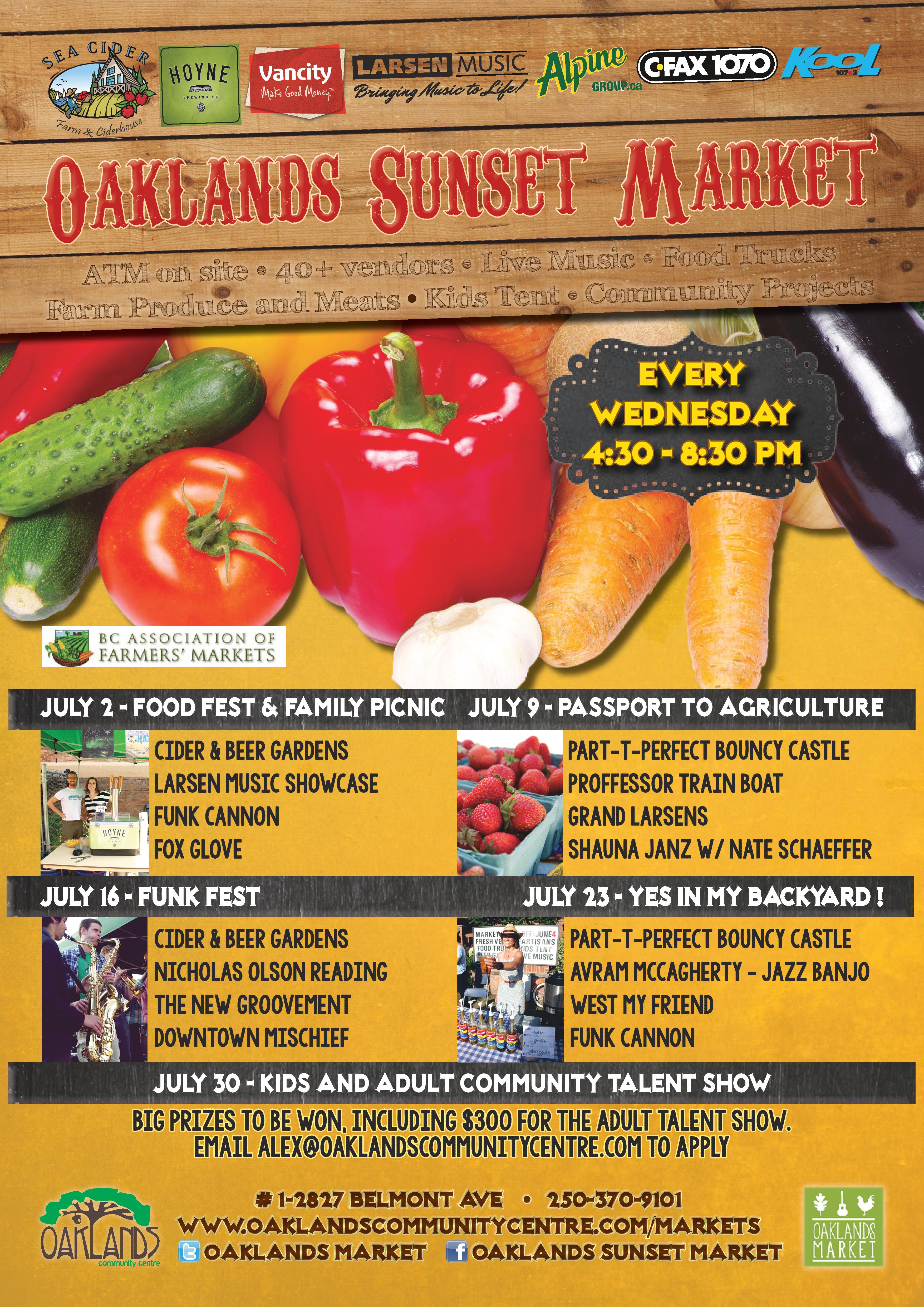
    July 16 – Oaklands Sunset Market, 1-2827 Belmont Ave, Victoria BC, 4pm
    July 18 – Pages Books, 1135 Kensington Road NW, Calgary AB, 7:30pm

    See posters below. Click below for PDF versions.

     The Adirondack Haystack Still Tours The Adirondack Haystack Still Tours Poster

    Market July-page-001

    July 16 – Victoria