
Please come out to the MEN WITH SIGNS Book Release event on Feb 21 at Spartacus Books in Vancouver BC.
Order the new book and download an audiobook from ballsofrice.bandcamp.com.
[Art by Alex Murray (atmmurray[at]gmail.com)]
Please come out to the MEN WITH SIGNS Book Release event on Feb 21 at Spartacus Books in Vancouver BC.
Order the new book and download an audiobook from ballsofrice.bandcamp.com.
[Art by Alex Murray (atmmurray[at]gmail.com)]
This story first appeared at Poached Hare. It is now available as an audiobook here, and for sale in book form, here.
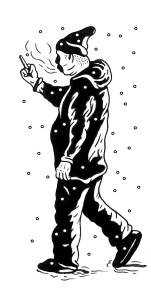
I think I’ll walk to the East End. Yeah, the East End. I got some stuff I need to get out there. I’ll come back down to Lester’s place later, ‘cause he’s got a place now. He’s not answering the door, but he’s not going anywhere. Can’t even walk. It’s only a hour and a half walk from downtown. I’ll go straight down and maybe warm up at the McDonalds. I’m already at the big trees around the hospital. Might as well keep on going.
Gotta step over that pile of snow that someone left. Just shovelled to the end of their property. Not a damn millimetre more. Give me a shovel and I’d shovel the whole block. Give me a house and I’d have a sidewalk to shovel. Give me $20 and I’ll shovel whatever you want for a hour. Give me $20 and I’ll shovel the bullshit coming outta your mouth.
…Click here to read the rest of the story…
To read a literature review on the topic of Managed Alcohol Programs, you can click the link below. The literature review was done by lead author Erin Nielsen and co-authored by Gabriela Novotna, Rochelle Berenyi, and myself.
To read CBC Saskatchewan’s coverage on it, you can click here.
The book review below first appeared in Briarpatch Magazine’s September/October 2017 edition.
Postcards from the End of America
By Linh Dinh
Seven Stories Press, 2017
Bob, a 60-year-old Safeway employee from Florence, Oregon, is counting on the store staying afloat. “At my age,” he says, “it will be hard to get hired again. I don’t want to move to the city to find another job.” Before working at Safeway, he worked 31 years in a sawmill. Bob blames environmentalists on the east coast, trying to protect the endangered spotted owl, for the death of the industry that once employed his town. “Since our logging industry is mostly dead, we have to buy lumber from overseas, from people who really don’t give a hoot about the environment.”
Bob is one of the many disenfranchised workers interviewed in Linh Dinh’s book, _Postcards from the End of America_. The book contains collected essays and observations made through several years of domestic travel, originally published in various online journals, like long, descriptive letters home from towns of crumbling infrastructure as though they were tourist hotspots.
While there was widespread controversy in the 1990s about West Coast logging, Postcards analyzes Oregon and other former industrial and manufacturing centres in the U.S. that have been hollowed out by governments and corporate rule. Rather than pitting environmental justice against economic justice, Dinh impresses upon readers that environmental and other progressive movements need to accommodate and support workers of all industries; the common cause of both economic and environmental precarity is capital, Dinh points out, not social movements.
Across the U.S., cities that were once economic boom towns are now facing unemployment, poverty, homelessness, addiction, and crime. Places such as Trenton, New Jersey, one of many visited by Dinh, is famous for the Warren Street bridge over the Delaware River adorned with the lit-up phrase TRENTON MAKES, THE WORLDTAKES; it is a reminder that Trenton was once a manufacturing hub for products used around the world. A hundred years later, the slogan reads more like a bitter homage to trade deals that have left towns like Trenton in the dust.
Dinh travels by bus and train, stopping in former and current industrial metropolises such as Osceola, Iowa; Kensington, Pennsylvania; and Williston, North Dakota, snapping photos of individuals he meets (20 of which appear in full colour in the book), to survey the social landscapes. He often wanders to the nearest bar, for no matter the size or unemployment rate of a town, there is always a vendor of cheap alcohol that carries with it a rough but undeniable sense of community. These places are often the best indicator of the health and economic state of a society. In bars and on street corners, in buses and under bridges, Dinh interviews individuals tethered to the rising and falling industries that have ruled and abandoned their hometowns. Dinh gives voice to those who are rarely heard in mainstream journalism, sharing their stories of underemployment and struggle, occasionally offering simple context for how things got to be the way they are in each particular city. Many he meets blame governments for their hardships, while others, like Misfit, a bartender in Chester, Pennsylvania, believe reports that the country is in an economic recovery. Dinh lays bare pieces of their stories, at times abruptly, without forcing too much commentary, allowing the weight of their lived experience to be felt by the reader.
Dinh never makes his way to Canada, but his portraits of urban and industrial America could easily be those of Canada’s industrial and extractive regions. With Trudeau’s Liberal government approving pipelines and maintaining their commitment to the Trans-Pacific Partnership, Canadian communities are not immune from being wholly abandoned by both government and its corporate rulers, leaving the Canadian countryside filled with towns and social-scapes like those in Dinh’s postcards; in fact, this is already happening. The resource bust in Western Canada has left thousands of people without work and entire communities struggling to meet their needs, even while political campaigns left and right hawk promises of prosperity. When the industries dry up, the companies that once put towns on the map move off to exploit the land elsewhere, leaving the communities with skeletal social supports and no means of income. One admirer of Dinh’s writing, Pulitzer Prize-winning journalist Chris Hedges, refers to these areas as sacrifice zones: places in which entire communities are permanently impaired by profit-chasing corporations that fatally ignore the effects of their decisions on human life, the environment, and communities. In selling off public assets to corporate control and privatizating once-public services, Trudeau and his provincial and municipal counterparts are in many ways propelling Canada into an economic situation mirroring the one described by Dinh.
Each entry was written in the final years of the Obama administration and the beginning of the Trump campaign phenomenon. Dinh’s purposeful portraiture of the financial ruin and the concurrent rise of Trump are not coincidental. Canada, with a shallow, amoral federal Liberal government that sold out its own citizenry to pipeline interests, and broke its own promises for economic and racial equality, is only setting itself up for a Trump-like oligarch to respond to the discontented masses whose employment situations will reflect those highlighted in Dinh’s prophetic book.
Dinh has no illusions about what has put so many Americans into unrecoverable poverty and poor health, and his exposé of the decline of the American empire is a call to Canadians to organize for real and lasting change in our own social, environmental, and economic landscape.
The following was first released online by Briarpatch Magazine, selected as Best of Regina entry in the 2017 Writing in the Margins contest.
“Hey, come over Saturday and we’ll watch the Canadiens play the Leafs. That’s my team! The Leafs,” Ivan tells me.
“Do they play each other this week?” I ask.
“They play every Saturday.”
I arrive at Ivan’s the following Saturday, ready to microwave each of us a bag of popcorn.
I turn on his tube television which sits at the foot of his single bed in the living room. Ivan lives on the main floor of an aging building across from the casino – one of those apartments where the landlord slaps on cheap laminate floors like bandaids to justify a 30 per cent rent increase. Next to the bed and in front of the TV is a recliner that I always encourage him to relax in instead of slouching on the sagging edge of his bare mattress. I’ve never once seen him sit in it. Next to the recliner is Ivan’s walker. One of the brakes doesn’t work.
Maybe when Ivan was younger Toronto played Montreal every Saturday, when there were only six teams. But it turns out they don’t play this Saturday. Instead, country music videos prattle on in the background while Ivan drinks from a bottle of port wine and I wheel back and forth on the seat of his walker.
“Oh yeah I used to play. In White Bear. We’d play in Carlyle sometimes. Home of the Cougars. White Bear versus them white kids in Carlyle, haha. You know, we weren’t half bad.” He winces at some painful on-ice memory tied to growing up in a province that is unforgivingly racist. He jokes about being a bit fat in those days, now he weighs half.
“I’ll pick you up on December 31st for Hockey Day at Carmichael,” I tell him as I leave.
“Sounds good, bro,” Ivan says. “See you then.”
“Sounds good.”
“Love you brother. Lock up behind you.”
Sheldon stands at centre ice, eyes closed, visualizing his upcoming slapshot. Noel, the goalie, affectionately known as Ken Dryden, waits with knees bent as much as his battered femur allows. The crowd heckles from the side boards.
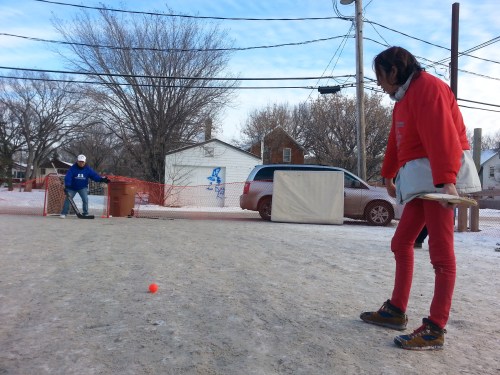
Hockey Day at Carmichael is a pick-up street hockey game played on the uneven, certainly dangerous parking lot of Carmichael Outreach, a crumbling drop-in centre in downtown Regina. On Hockey Day, members of the Carmichael family of hundreds, many of whom happen to be without homes, come to play shinny and eat a hamburger.
“Hey, Lenny! Keep your stick down, and stop saying ‘fuck.’ There’s kids around!”
Hockey Day is the only sporting event I’ve heard of where the inebriated and unskilled are encouraged to play. Where new renters can come and settle scores on-ice with their cousins who won’t stop trashing their apartment. Where those still healing from the abuses suffered in the residential school system can come and grind through their aggression. Where people who get ticketed in the mall under the city’s “unwanted guest” initiative come to forget the mall exists. Everyone is welcome to play.
Deano chases the puck into the corner, hits a patch of ice and lands on his face. He is escorted to the spectators’ bench for having one too many and is given a coffee, a smoke and a cheer from his teammates. Thirty people show up to play, another thirty to watch. The Lemieuxs and Leaches chase the ball with donated jerseys pulled tight over the five layers of jackets that are obligatory when one lives outside and sleeps at Sally Ann or Detox.
Ivan doesn’t make it as a spectator this time. He just got out of the hospital and being a spectator means sitting outside in the winter on a hard chair for three hours until burgers are ready.
“I knooow, I know. I still can’t figure out how I got pneumonia.” The week before while Ivan slept, some guests unhooked the smoke detector at his apartment and left the window open all night so they could smoke. “I never even left my bed!” Home care from the health region was supposed to start coming a month before but when he didn’t answer the door once, they permanently discharged him. When so many pieces of the health care, social assistance, and justice systems function in the same defective way, it points to the fact that these are purposeful features, rather than flaws, in the process of colonialism, designed to betray urban Indigenous people.
“I’m making breakfast. Come over!” Ivan says over the phone on New Year’s morning.
Ivan wheels himself into the kitchen, fries a pound of bacon, butters two slices of white toast and brings back our feast spread on two decorative plates on the stool of his walker.
“That’s my team!” Ivan says as the Canadiens walk from the dressing room at the NHL’s outdoor Winter Classic. We’d made a plan to watch the game, this time one that we knew was actually happening.
Ivan squints hard at the TV, at times mistaking the white and blue vintage sweaters of the Habs for the black and yellow of the Bruins. He needs glasses, he’s asked for them several times himself, but whenever he has an appointment to see any medical professional he refuses to go.
Montreal dominates Boston in a game of shinny not unlike Hockey Day at Carmichael, except the 80,000 spectators are drunk in some apparently socially acceptable way. He remarks on Carey Price, the world’s greatest goalie, who sits on the bench with a bum knee. Ivan knew the feeling. He recently had a broken upper tibia and a full-leg cast for eleven weeks, half of which he slept at Party Tree, an empty lot furnished with a plank of wood and two broken office chairs.
“You should see my grandpa’s rink in North Weyburn. Best ice in Saskatchewan,” I tell him. “Sometimes I go there to skate just to get rid of stress.”
“Oh, for sure. Weyburn, hey? The Red Wings!” he says, referencing the junior hockey club. “They’re a good team. But the Bruins, now that’s my team! Estevan. I lived there eight years. You’re my Estevan Man. I bet I know your family down there.”
He lists distinctly white surnames. I don’t have any family left in Estevan but since he found out I was born there we never stop talking about the place.
“I’d walk around with a wagon picking up empties. Ho boy, I’d make a lot, haha. No one down there doing it then. I wasn’t drinking then, could make $60 a day. Could see Boundary Dam from my place.” Ivan sits on his bed, arms crossed, blinking at the TV, wearing an Estevan 1985 Heritage hat I found him for Christmas. The coffee table next to him is littered with insulin pens, empties hiding under his bed. He’s lived in this apartment for three months. Before that he lived nowhere.
“No guests at all,” Ivan responds in agreement to my suggestion of having no guests after 11 p.m. Too many guests means noise complaints and an empty fridge. He just got out of Medical ICU.
“Whatever you want,” I say. “And the other part of the agreement is our part. We, as your support workers and friends, agree to respect your privacy, help you get groceries, do laundry, y’know, the stuff we already try to do. And we agree to take you out for coffee once a week. Get you outta your place.”
“Oh right on. That’s great, man.”
“I was thinking of getting us tickets to a Pats game. Maybe against Brandon,” I suggest. Ivan spoke of Brandon, Manitoba, another former home, on a daily basis. It was where he and his mind went when he tired of Regina.
“Ohhh hey, yeah. Alright! Maybe in that agreement put, ‘Take Ivan to a skin show.’ Haha. Jeez, I’m joking!”
It takes us a week to print the agreement — an attempt to keep his place safe and quiet and keep him housed. It takes another week to laminate it. By then he’d had guests and was in and out of the hospital again. He never did sign it.
There’s an ambulance outside his apartment as I drive past, so I stop and let myself in with my keys. A paramedic is holding an intravenous bag that runs into Ivan’s arm while Ivan sits eating his first meal in three days, microwaved by the paramedic himself.
“Heyyyy brother!” Ivan shakes my hand.
“And who’s this now?” asks the paramedic.
“That’s my counsellor.”
“Oh good,” he says to me. “He needs to make sure that he takes his insulin for sure the next day and a half, or he won’t make it. But he can’t take his insulin without eating.”
He speaks as if Ivan can’t hear. “I’m surprised he’s still kicking. Last time we saw him we were taking bets as to how long he’d last. Glad he’s got some help. If not, these kinds of guys would plug up the system.”
The health professionals place bets on his existence and call him one of ‘these guys’. Six months later the health region that employs them releases a job posting with blatantly racist language, then rescinds it and claims that racism is not an inherent issue within their institution. I begin to understand why Ivan skips every possible interaction with medical professionals.
The paramedics get him to sign a release stating that he is not willing to come with them to the hospital to get checked out.
“Ivan, do you have any other health concerns we should know about?” they ask.
“Yeah. I’ve got rabies.” Ivan says with a pause, his face earnest. The paramedics look at one another, unsure of what to say. Ivan laughs at them and they leave. Ivan finishes up his microwaved fettuccini alfredo.
“Hey bro, should we have some tea?” I say yes and go to the kitchen to find the coffeemaker topped up with teabags and the coffeepot already filled with warm tea. I grab the last mandarin orange from the counter, and he and I sit and watch the news and hockey highlights. We drink day-old tea, eat a few orange segments, and as I leave, we exchange our pleasantries one last time.
“Lock up behind you.”
I go home and grab my skates and head to the outdoor rink. I skate until my lungs burn, my legs noodle. My head still feels like there’s a bench brawl going on inside, so I skate laps until my head feels nothing. And then I skate more.
“A story has got to have a beginning, a middle, and an end,” James told me over the phone from his care home in his small city in Arkansas. “That’s it. I don’t care if it’s a song, a novel, or just a story you’re telling your friend.” He coached me even though we’d essentially known each other for three minutes.
I met James E. Harper (a.k.a. Poet) nearly four years ago with a friend in downtown San Francisco. James was introducing himself to people on the street, selling his book of poems, three or four roughly photocopied pieces of gold-coloured paper, so he could afford to grab a meal or some hygiene products for his wife. He mentioned that more of his work was available if you searched his name on the internet. In doing so, I couldn’t find any writings, so I transcribed what he sold me and posted it here. He deserves credit for his work. His poems are powerful and real. Read them.
As simple as it sounds, this is the writing advice I’ve needed for months, years perhaps. James’ advice, to simplify and be natural, speaks to why I find his writing to be worth noting. Honesty. No bullshit. I spend hours at the Bernal Heights Library, staring into the eyes of Antonio Banderas encouraging me to read, while I try to sort out the several dozen metaphors I have choking every story. When really, all the story needs is a beginning, middle, and end. I am mid-read of Crash Landing on Iduna by Arthur Tofte, a sci-fi paperback I found in a Wyoming truckstop for $2.99 with incredible cover art. In contrast to my overcomplicated way of thinking, it is the perfect example of oversimplified writing. Now to find the middle.
Comments have been posted regularly to James’ poems on Balls of Rice over the past three years by people who also stopped to chat with James and searched his name upon arriving home. A comment arrived in February stating that James now lived in a care home, and included a contact number.
“When you write something, you want to strike the chord. There’s a tuning fork in all of us, and you want it to feel like you’ve hit that,” he said. “If you haven’t lived it, you can’t write it.”
I told him that I am a writer and that I was in San Francisco to finish a few stories, which were giving me some trouble. “It sounds like you are forcing it. You heard of that song, If It Don’t Fit, Don’t Force It? Well, that’s just it.”
I hadn’t heard of the song. Now it is in my head when I need it most.
Just waiting to hear the end of the story.
If it don’t fit, don’t force it
If it don’t fit, nah, don’t force it
If it don’t fit, don’t force it
Just relax and let it go
Just ’cause that’s how you want it
Doesn’t mean it will be soI’m givin’ up, I’m leavin’
Yes, I’m ready to be free
The thrill is gone, I’m movin on
‘Cause you’ve stopped pleasin’ meI can’t stand bein’ handled
I’ve exhausted each excuse
I’ve even stooped to fakin’ it
But tell me what’s the useYou’re tryin’ hard to shame me
‘Cause you wanna make me stay
But all it does is bring to mind
What Mama used to sayI know there’ll be no changin’
We’ve been through all that before
I’m all worn out from talkin’
And now I’m a-headin’ for the doorC’mon stop your complainin’
Someone else will come along
You can start your life all over
Sing her your brand new songYou’re tryin’ hard to shame me
‘Cause you wanna make me stay
But all it does is bring to mind
What Mama used to say
-Kellee Patterson, Turn On The Lights/Be Happy, If It Don’t Fit, Don’t Force It
The following piece was featured on Ominocity.com out of Saskatoon, Saskatchewan.
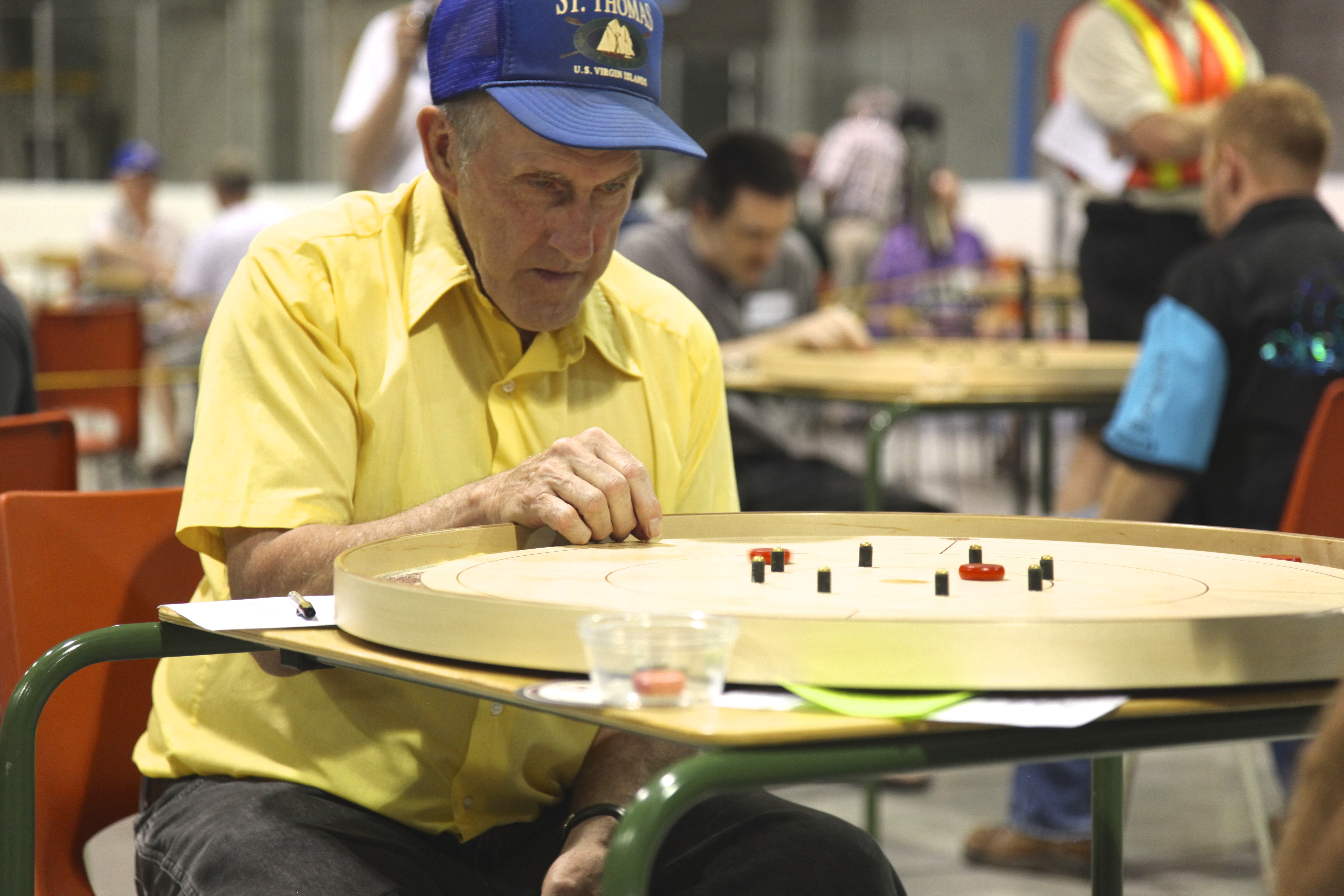
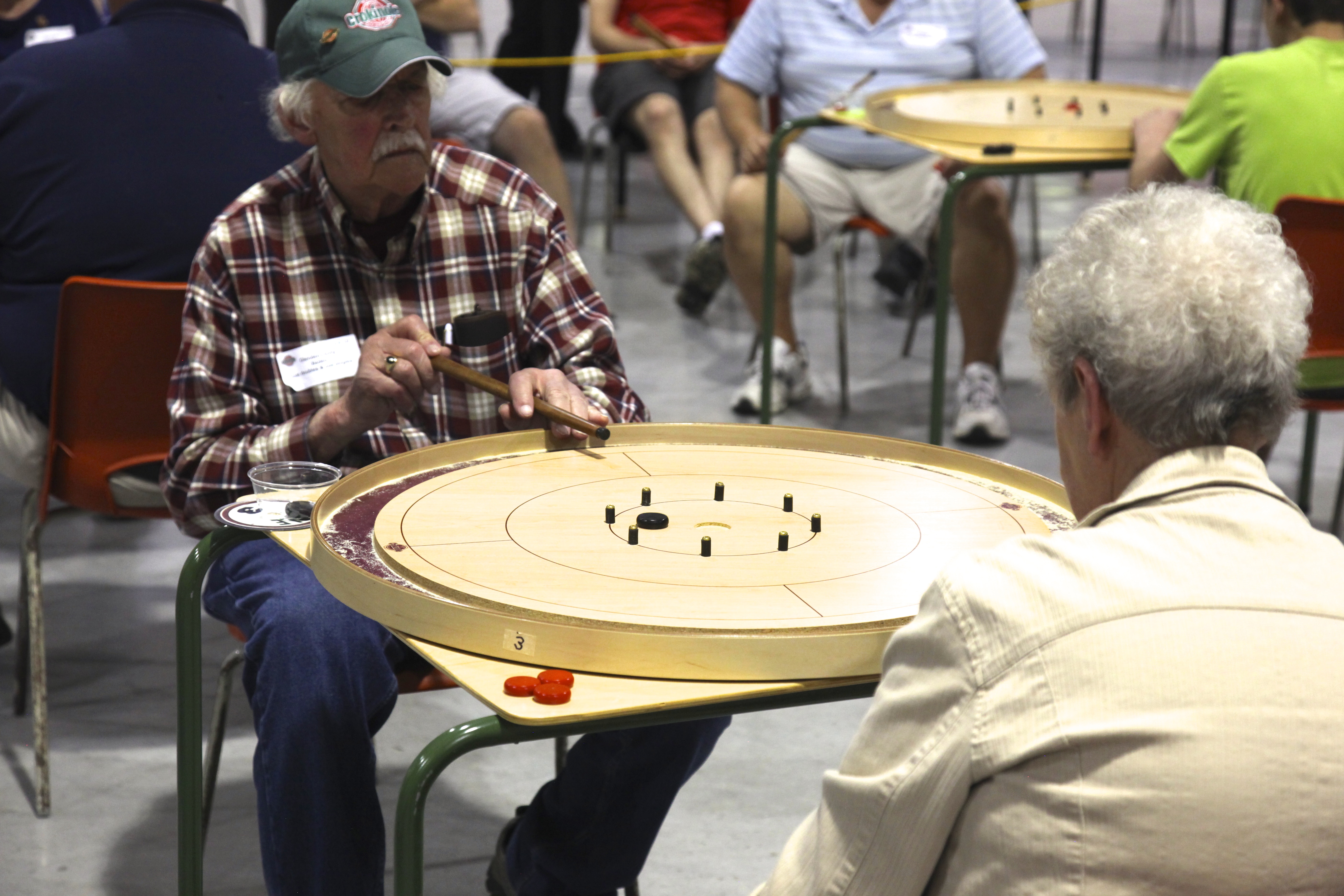
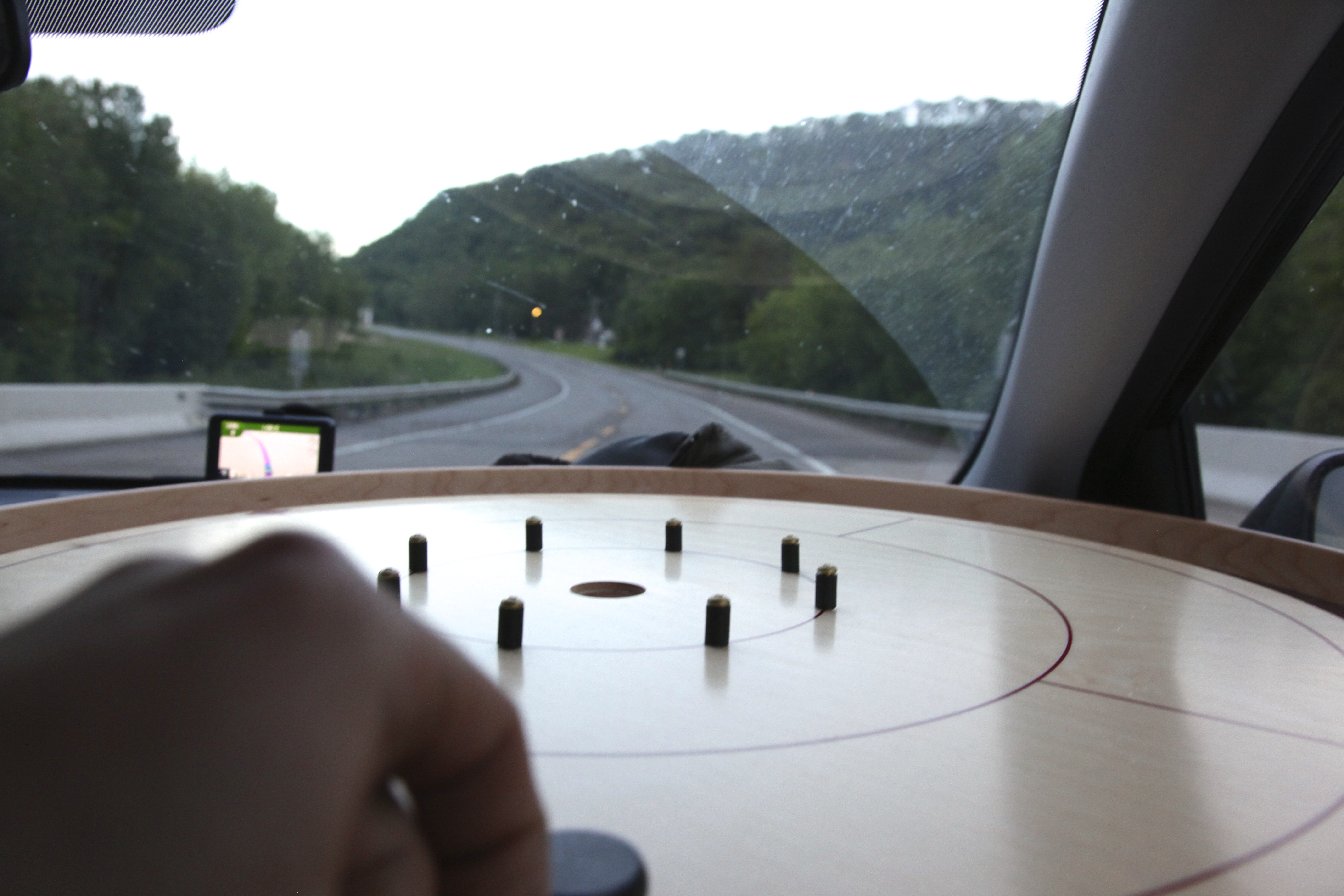
If you’ve never heard of crokinole, you’re likely not a citizen of the disintegrating Canadian countryside. If you are from the North of 49 and you still haven’t heard of crokinole, you either a) are from a city, b) didn’t grow up in a church, c) grew up with a Nintendo, or d) had unloving parents. Crokinole is a two or four person game played on a 66cm-diameter circular board, in which each player has a determined number of discs made of lathed wood. Each player purposefully flicks these buttons with a finger or wooden cue towards a hole in the centre of the board a quarter-of-an-inch deep and only slightly larger than the button itself, attempting to avoid the eight stationary pegs that guard it like pawns on a chess board.
It is a game you may have played with your loud uncle and your wrinkly aunt before Christmas dinner. A game in which your grandpa is likely indomitable in between heavy naps in a dusty cardigan on an itchy couch. It is a game you may have tinkered with not knowing the rules (of which there are perhaps three), or, as previously determined, a game you may not have ever even heard of. For myself and my father, it is the game in which we competed at the World Championship in Tavistock, Ontario on June 1, 2013. The World Crokinole Championship, widely revered as the Stanley Cup of crokinole tournaments, the Kentucky Derby of the forefinger stallions, centre stage of peculiar rural males aged 39-88, was obscurity and sportsmanship perfectly defined.
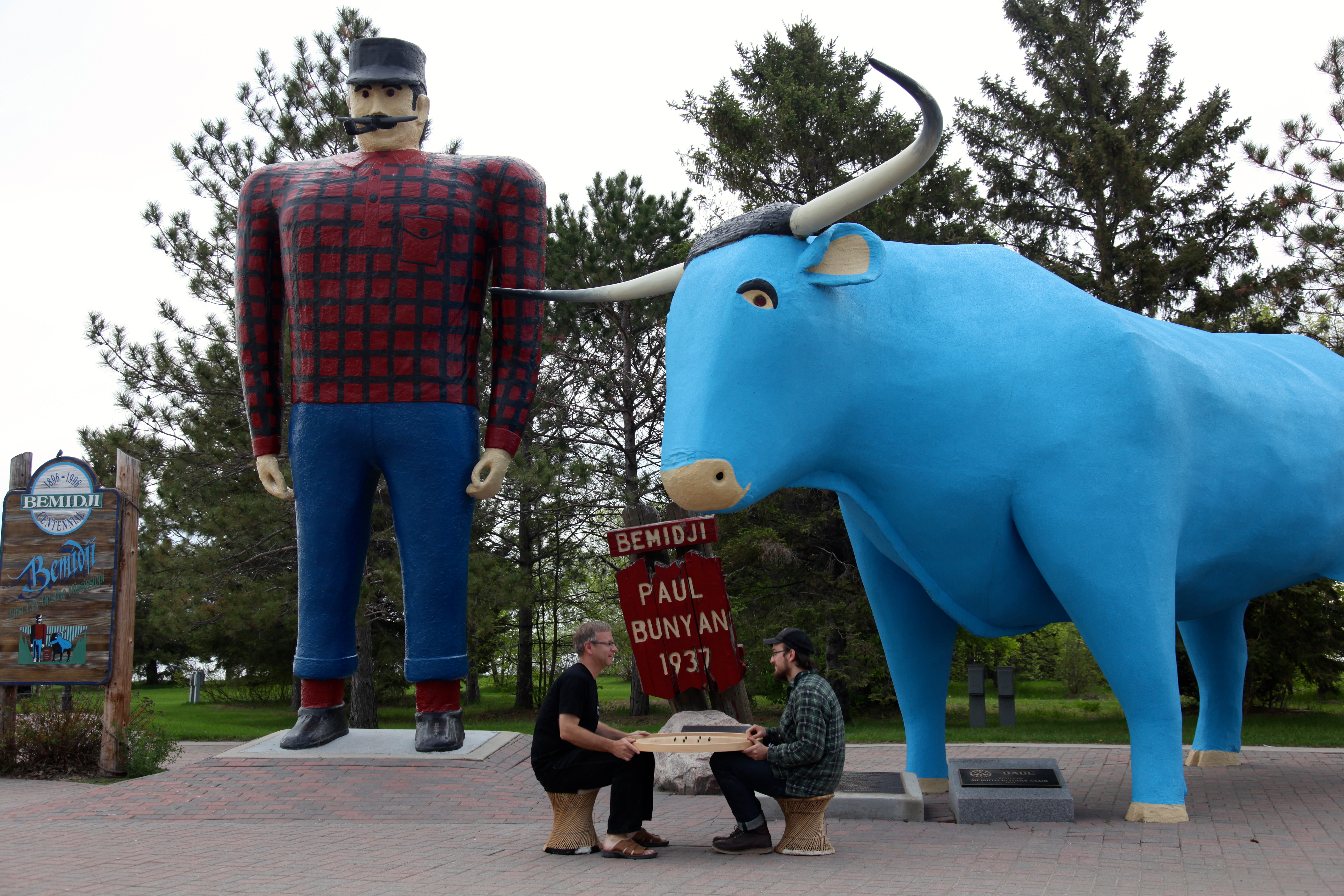
After driving straight through six U.S. states and two Canadian provinces, we pulled into Tavistock, home of the oldest known crokinole board dating back to 1876. During the drive, when our periods of silence (often reaching four or five hours at a time) were broken, we discussed religion in many contexts; traditional theology, silage and dairy production in devout farming lives, and most importantly, righteousness through crokinole techniques. We made our ecclesiastical pilgrimage, fasting from sleep and whole foods in the goal of reuniting westerly disciples with the holy land of immaculate wooden conception. We were pilgrims for the board of life. The home of crokinole was like I had dreamed it would be as a kid of twenty-four years old. An established farming community of dairy producers with a Main Street that boasted a two-decade old Chinese Restaurant, local credit union, and butcher shop. As one might expect, side streets were dotted with various forms of seniors’ homes.
Upon arrival, silence was broken by John Schultz, the bald, wiry, extremely pleasant chairman of the World Croknole Championship, asking, “Are you folks here for the crokinole tournament?” He woke us napping in the park—our first hours of horizontal sleep in two days—and it finally occurred to me what we’d done. We drove twenty-two hours for crokinole. In the same amount of time I could’ve driven to the flawless forests of northern California. I could’ve driven to Nunavut. “Holy shit,” I thought, “I could’ve just travelled an hour and played a game of crokinole with my grandpa.” But instead I drove twenty-two hours to play with all of the grandpas of southern Ontario. John Schultz continued to tell us that other folks drove in from Michigan, New York, Ohio, P.E.I.. We cleaned up, grabbed our board, and began our pre-tournament practice on a picnic table in the shade of Queens Park.
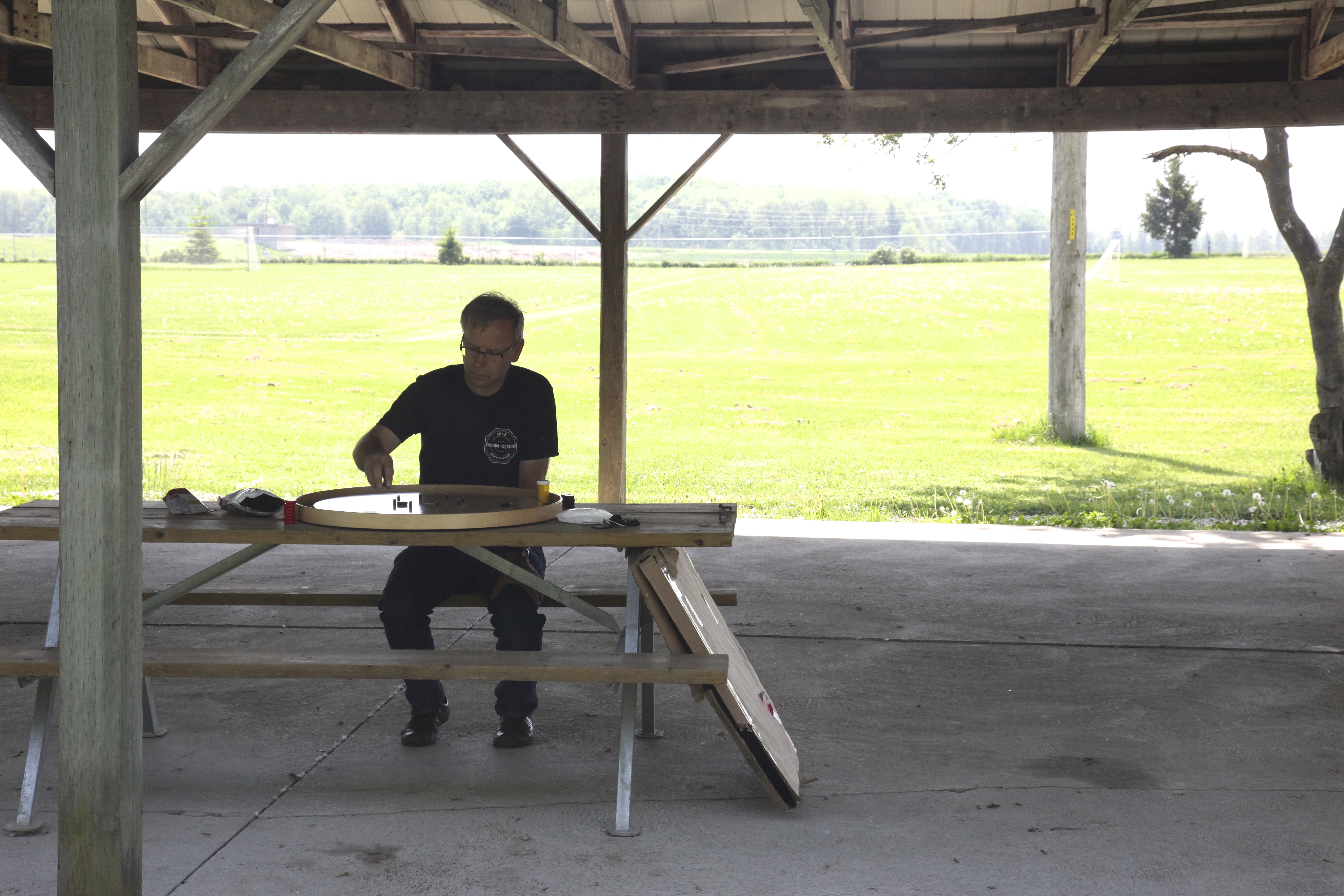
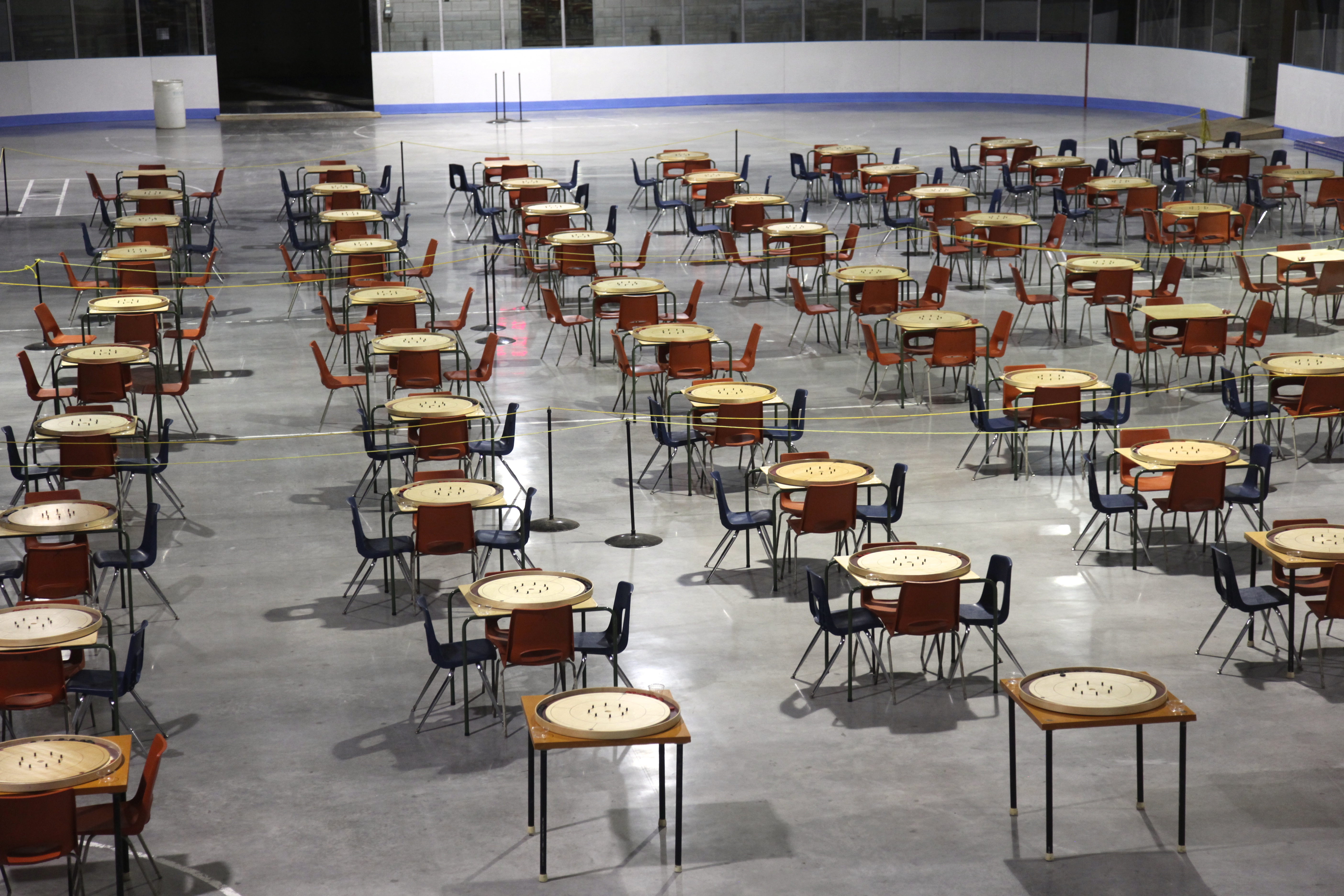
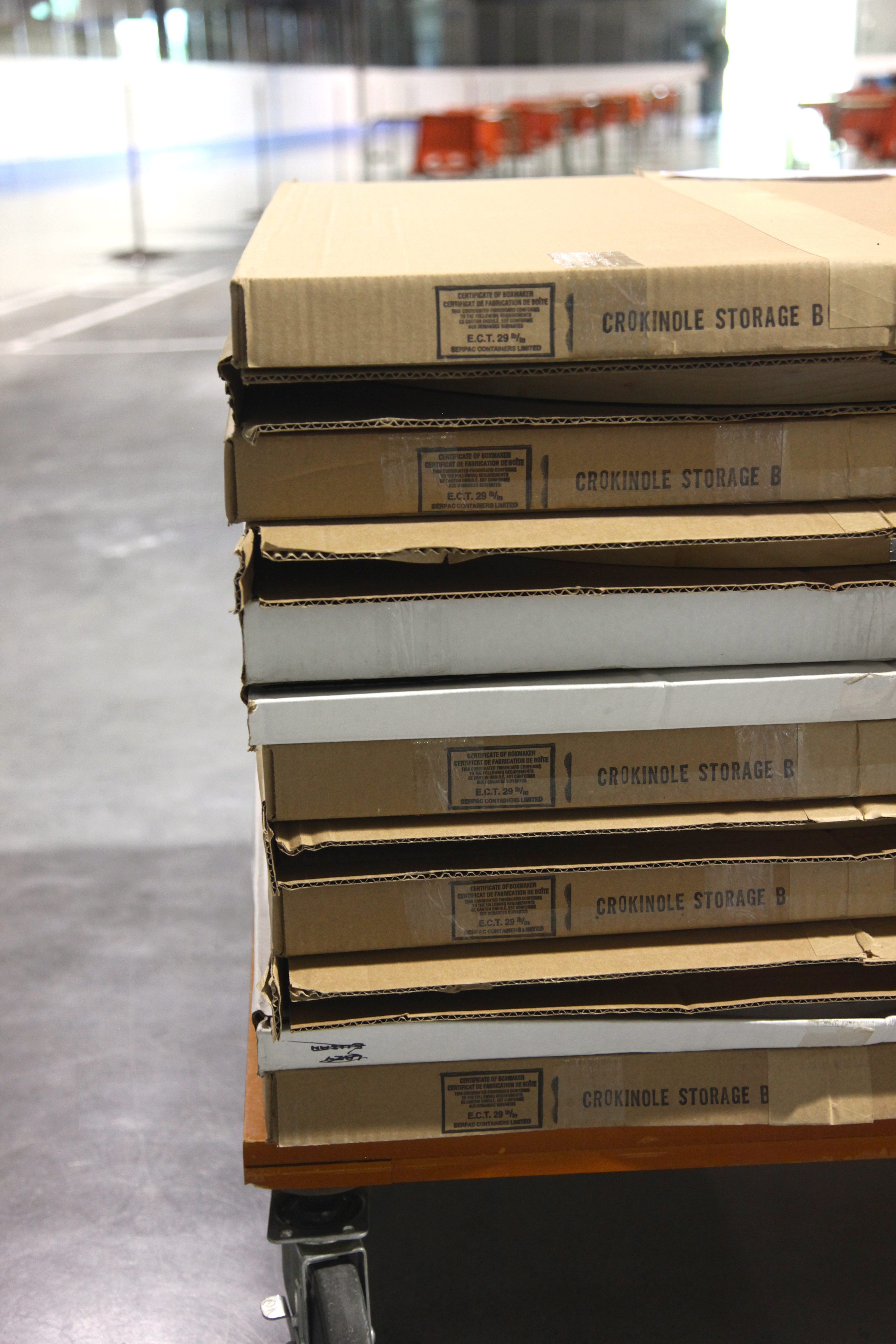
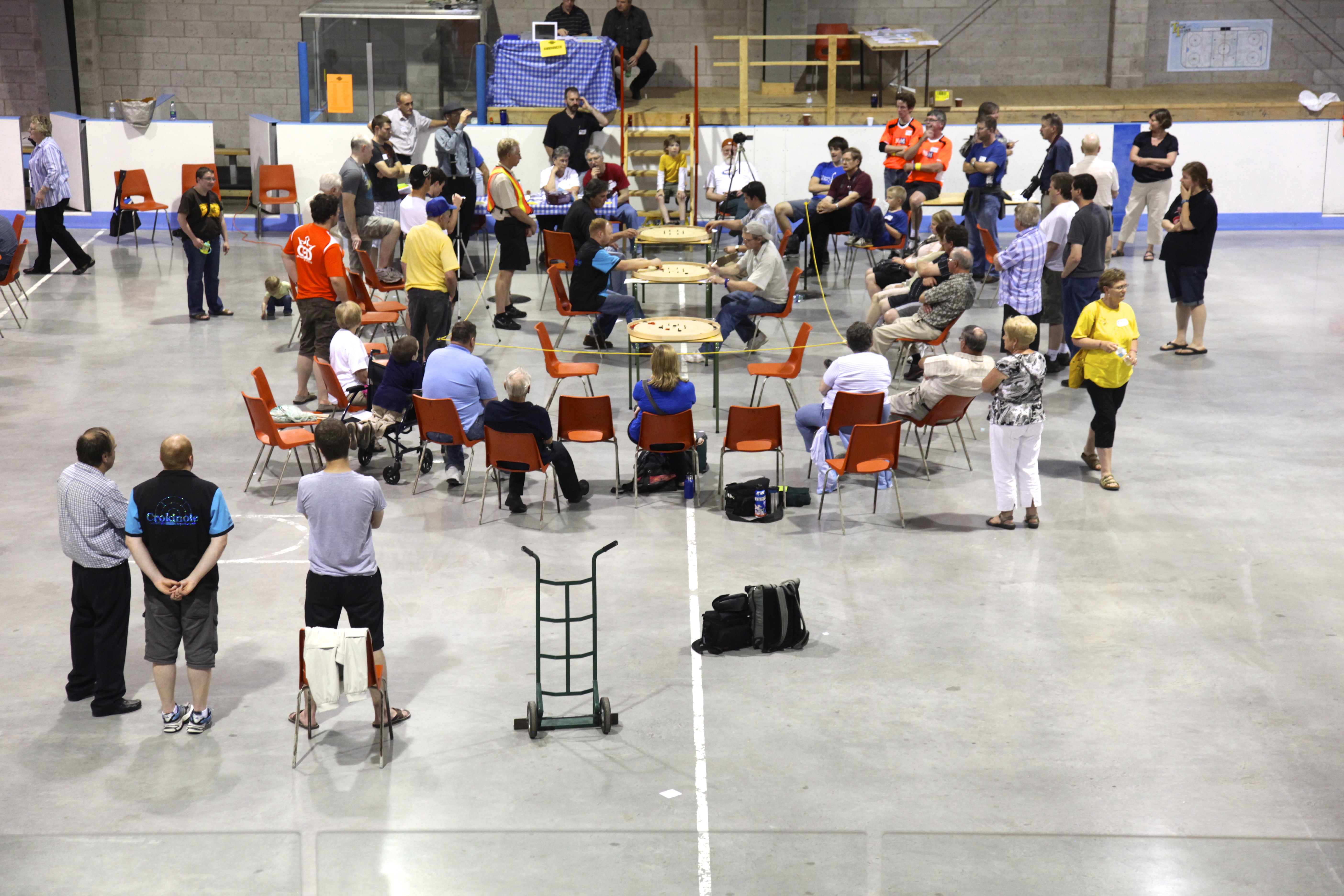
On Saturday morning when I woke up at dawn to practice before competition began at 8:30, the Ontario air was thick. The humidity weighed down the crokinole buttons as if Mother Nature rubbed each one on her sweaty chest. After a breakfast fine-tuned for finger endurance I followed my father into the arena which housed over 64 freshly waxed, previously untouched boards set up in a grid on the concrete slab of the dried up hockey ice, all partitioned by yellow rope. Competitors and spectators in jean shorts and agriculturally branded caps floated around the merchandise on the perimeter of the rink. Those keen on capitalizing on the lucrative crokinole market sold World Championship t-shirts, ballcaps, boards and board accessories. People competed in the skill shot competition and captured photos of the trophies which were handmade for the event (it is difficult to find a golden plastic figurine of a man playing crokinole to fix to the top of a regular trophy). When tournament competition began, over 280 competitors showed their masterly applied-geometry skills and muscle memory. Each competitor sat down at a table with ten strangers for eight minutes at a time until the horn sounded, shaking hands and wishing luck to people they hoped to blank eight points to zero. Saturated in Canadian politeness, if crokinole isn’t a game of true sportsmanship, it isn’t anything at all.
As for the competition, unfortunately the prophesy from aged-competitor Dave Skipper that, “people with beards and moustaches shoot better on these boards,” didn’t prove true. I, one of the few participants with a gnarly beard, didn’t even place in the top half of the draw, and the eventual singles champion, John Conrad, had the hairless face of a teenager, although he was surely approaching his golden years. My father proved to be worthy competition, scaling the ranks of eleventh of 86 participants in the main draw, making the playoff round with the true elites. The final match drew crowds upwards of forty, those who had already sweat through their crokinole team jerseys and sweat bands, groaning and whispering with the final shots of the game. Hands become shaky with such pressure. For one of his final shots, Conrad made an incredible triple take-out. Someone in the crowd said in praise, “I think that was a statement.” In the finals, fathers sat behind the yellow rope, watching sons in competition, offering familial support. My father and I participated in the great paternal experiment that is crokinole.
While discussing board consistency during the final round, a man who placed third in the doubles category, making no excuses, commented: “The heat, the humidity—we have been battling the elements all day long,” as though it were an Ironman competition, which, in a way it was. The oldest participant was 88-years old, and was celebrating his 50th wedding anniversary at the tournament. He had competed in all previous fifteen World Championships that had been held.
If it were a televised event, and if the champions were interviewed and asked to describe their feelings, I imagine that like any other world final, they would stumble and mumble in speechlessness. There is no way to properly explain a world championship of any sport, and it only becomes more grueling when it is a celebration of nearly-perfected obscurity. We travelled knowing full-well that we were participating in an antiquated parlour game that itself was competing against screen-bright technologies for space in the family room. What we didn’t know was that our hands would shake and that we would miss shots from fried nerves in a game usually as relaxing as a free massage. We didn’t know that we’d have to practice for another year to make even a dent in the crokinole kingdom.
Back to the grind. Back to the board.
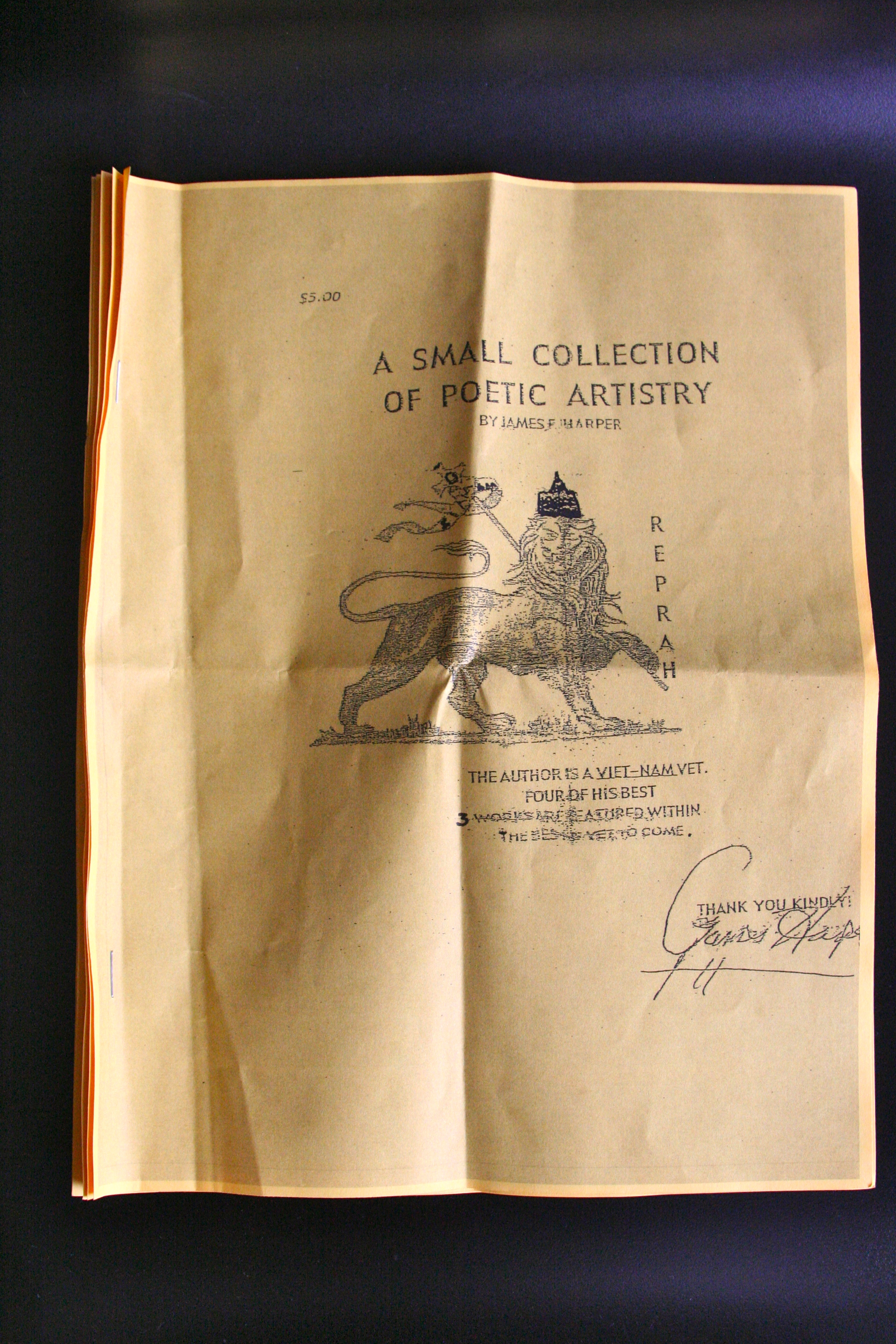 Union Square, San Francisco is characterized by elegantly well-lit buildings topped with brightly coloured advertisements that tower over the large concrete plaza below. Last night, while taking in the wet ocean air that was breathing through Union Square, a friend and I met a man named James E. Harper who was selling a small book of photocopied poems that he had written. He sold his book of poems, which he described as more like songs, that he had written about his experiences at war in Vietnam. He sold the photocopy for five dollars so that he and his wife could survive in the alleyway they lived in nearby. With the large monument lit up behind him, he humbly told us that if we google his name (he was certain to tell us that his name was James E. Harper, and not James F. Harper as it said on the copy of his booklet, likely caused by repeated photocopying) and the title of his collection, that we would find more of his works online. After a search on Google, I was not able to find any of his complete works posted online, only a small forum of other people’s interactions with him through another blog. Not everyone has the luxury of a free website to post their words, so I figured I could at least give him that. I tried to keep his poems as true as I could to the copy I was given, with emphasis, capitalization, punctuation and phrasing, but where the photocopy was difficult to read, I used my best judgement.
Here are the three poems that I received.
I was taken from home
And trained to kill
Another human being
Against my will
He fought real hard
To protect himself, and his land,
But I had no choice but to survive
And now I live with blood on my hands.
“Vietnam, is my test-a-ment”
I always had to be aware of where
I’d place my next step
Or I could find myself down
In panic, screaming, Medic Help!!!
A lot of good and brave young boys
Are now dead, and gone, Please someone
Tell me why, because we made it back
To America, but not back home.
“Vietnam, is my test-a-ment”
We were always smoking weed
And staying high
Because it helped our young minds
to get by.
Yes Vietnam is my test-a-ment for the
Way I live my life, so for all the fellows
That didn’t make it, I have no further
Respect for the Stars / and Stripes. Because
“Vietnam, is my test-a-ment”
If I was the President
I’d give everybody a ride on Air Force One,
I’d let you see all parts of the world
We’d have a whole lot of fun
If I was the President
All of the little children
Would have a home, and plenty of food to eat,
Plus, everybody would say hello – and how are you
To everyone they meet.
If I was the President
They would elect me on Friday,
Assasinate me on a Saturday,
Bury me on a Sunday,
And everyone would take their asses
back to work on Monday.
If I
Was the President
Look into my eyes
And see what life has made of me,
And see that my soul is not bound, but free
“Look into my eyes”
To know that my seed have not been fruitful
And see that my spirit is not that of untruthfulness
And realize that the hurt, and pain that my heart
Has been subjected to.
“Look into my eyes”
And for a moment know all the passionate things
I want to do to you,
Or to know the love I have to give, But no one
Yet has been worthy
Look into my eyes
To know that many of my thoughts have not
Been pure, but dirty
Or to see the old man wishing for
Much younger days.
Look into my eyes – Feel free my friend go ahead
Dare to gaze
Into my eyes.
 Balls of Rice