Category: Travel

  • Season of the Badlands

    IMG_5565

    The following was originally published with photos in Of Land & Living Skies: A Community Journal on Place, Land, and Learning. For more interesting content and events, consider becoming a Sask Outdoors member at SaskOutdoors.orgDigital magazine available here.

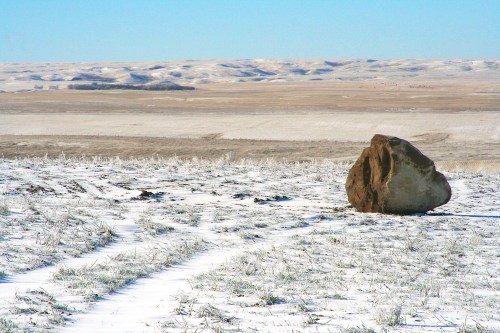
    Just west of the yard in a field of summer fallow is a rock. Its existence alone isn’t remarkable; there are a multitude of rocks in the dirt around Horse Creek. All over the prairies there are rock piles, decades or centuries of rounded stones the size of softballs or buffalo skulls or lawnmowers, stacked as monuments to the neighbouring broken earth. But the rock west of the yard, picked out of the ground to clear the way for tilling, ended up being the size of a small car. Forty paces from the road it looks substantial but unremarkable; flat and several feet high, grey brown, leaning back with a salute to the sky, the remaining clover hissing at its base. But the illusion disappears when it is approached. It juts out significantly, looking like the missing nose of the Sphinx. A nearly immovable object, even with all the trucks and tractors around, because of its size and the damage it would do to the road and the ditch. It would look good in the garden but the force needed to move it is a force we do not have. So there it sits.

    My grandma was born in Horse Creek. I never knew this until a week before I headed there myself. Horse Creek is located on Treaty 4 Territory, seventeen miles south of McCord, 110 miles southwest of Swift Current and just sixteen miles as the crow flies from the American border. If you look for it on a map or even the internet, you may not find it. In a time of unions and co-operatives, grandma’s father was a carpenter in Horse Creek for her first year of life. Last November, I was in Horse Creek holding tape measures and nailing boards and starting my own imaginary union to provoke my anti-union, farming friends.

    Much of that summer was spent exploring the badlands of southern Saskatchewan. The first weekend of spring meant camping with three friends at Grasslands National Park, which shares the same hill ranges as Horse Creek. In 4x4s we were guided through pastures and down ravines to Storey Lowell’s, the local folklore touting it as an early hideout for horse rustlers, when it is more modestly two adobe shacks that made the home of an old homesteader. Later we hiked in at McGowan’s Visitor Centre and camped in a coulee just steps from the moon-like landscape of dirt and cliff. Before darkness settled we walked to the highest point in sight, overlooking the crumbling badlands, with heavy clouds and bursting light advancing from the south sky. Walking back in the heavy showers we purposefully searched out the storied quicksand piles by tossing rocks on odd looking pieces of dirt, then toeing them, then stepping on them, then stomping on them, tempting our fate for a movie-like reaction from the earth. We never found any quicksand.

    Later in summer we visited Castle Butte, a massive ice-age-created structure of sandstone and clay reaching to the sky of the Big Muddy. A few miles from there we navigated to Buffalo Effigy, the flat outline of rocks which shape a buffalo on the highest hill around——a sacred site now part of a pasture, luckily fenced off and somewhat preserved. A few weeks later we camped at St. Victor Petroglyph Park, timeworn carvings on horizontal rock on the top of another highest hill in the area. These three sites of identity and significance to the First Peoples, all purposefully placed on top of the highest of hills, existed long before my maternal grandparents settled in the area——around Harptree, Brooking, Radville——and began creating their own monuments in picked rock piles and homesteads.
    IMG_5447

    In the snow-covered shortgrass prairie of Horse Creek, I attempted to experience the ranching and farming life in which my family was once rooted. I picked bales and fixed fence and tried to be useful. When on break, to bolster my writing craft, I urinated poems into the snow in cursive.

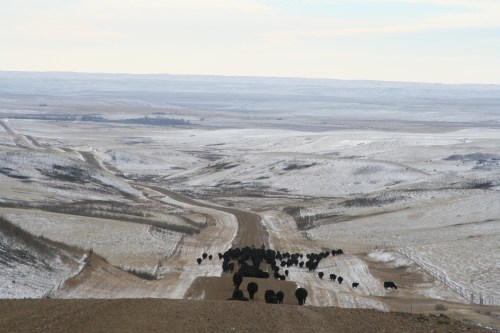
    When heading south to move lumber or check on cows it looked as though the clouds that rested on the hills that enclose the badlands were the end of the world, which in my own way, is the truth. The badlands are dead land and past them is a barbed wire pasture fence that is patrolled with drones and satellites of the American border guard. Other border-adjacent land is sold off to multinational companies scavenging for oil whose only identity in the land they own is corporate identity. The end of the world and the end of identity exists in deserts and robots and contracts.

    I have a vested interest in preserving this land from such ominous ends because I feel connected to it in some vague, flaky kind of way. My friend who has lived here his whole life and whose family has farmed it for a century offers the same. Giving up his land would be the last thing he would do, and because of his connection to the land he acknowledges that he knows to some extent what it might have felt like when the settlers came. I identify with the land that sits atop the badlands because of personal history, but this land does not identify with me any more than it identifies with the farmers or ranchers or indigenous peoples or the Queen who leases it out or that rock west of the yard.

    The connection felt from being on the land, from spending time caring for it and working it, is universal and real. I am not entitled to this land, nor is any one person or group of people. Instead the land has an entitlement to be inhabited by people who identify with it, because those who identify with the land are more apt to treat it as it ought to be treated.

    To be an asset to the land, to be the type of person that the land is entitled to, I learn as much as I can about how it works and how to live well on it. About all its intricacies of connectedness, which offer lessons of how to exist and how to relate. Like the rock west of the yard, I am not out of place standing alone on the prairie, I only look that way when I am dug up from the city and thrown naked in a field. Like the rock, my ancestral composition lies in the soil, just as everyone else.

    Each time I visit the badlands and hills adjacent I seek out the highest geographical point possible——to feel the wind’s unmitigated power or to fully realize the thunderstorm that approaches. Monuments that mark time, the carvings and effigies and buttes of the area, are locations of height for a reason. They are standing points that we revisit to watch the thunderstorm of the future steadily move in. The easiest place to keep your feet grounded for change and resistance is in community and identity. Strengthening our connection with these highest places is the only way to ensure the thunderstorm doesn’t come in and drown us all out and to ensure that when we are walking home, we see the pits of quicksand that would otherwise swallow us up.

    I drove out of the yard and left the farm behind with a year of vagrancy and foreign experiences on the horizon. The rock west of the yard sat silent with the ice fog painted low in the background. The rock will quite likely be there when I get back.

    To look just on the surface, and think that what you see from horizon to horizon is all that is needed to survive, is to misunderstand your place on the ground which you stand. To scale its heights-to learn its lessons—one must be alive to the underlying structures that support the visible and not-so-visible world around you.

    -John Borrows (Kegedonce), Drawing Out Law: A Spirit’s Guide (University of Toronto Press, 2010, p72)
  • James E. Harper: 2 (Lyrics of the Month: April 2015)

    “A story has got to have a beginning, a middle, and an end,” James told me over the phone from his care home in his small city in Arkansas. “That’s it. I don’t care if it’s a song, a novel, or just a story you’re telling your friend.” He coached me even though we’d essentially known each other for three minutes.

    I met James E. Harper (a.k.a. Poet) nearly four years ago with a friend in downtown San Francisco. James was introducing himself to people on the street, selling his book of poems, three or four roughly photocopied pieces of gold-coloured paper, so he could afford to grab a meal or some hygiene products for his wife. He mentioned that more of his work was available if you searched his name on the internet. In doing so, I couldn’t find any writings, so I transcribed what he sold me and posted it here. He deserves credit for his work. His poems are powerful and real. Read them.

    As simple as it sounds, this is the writing advice I’ve needed for months, years perhaps. James’ advice, to simplify and be natural, speaks to why I find his writing to be worth noting. Honesty. No bullshit. I spend hours at the Bernal Heights Library, staring into the eyes of Antonio Banderas encouraging me to read, while I try to sort out the several dozen metaphors I have choking every story. When really, all the story needs is a beginning, middle, and end. I am mid-read of Crash Landing on Iduna by Arthur Tofte, a sci-fi paperback I found in a Wyoming truckstop for $2.99 with incredible cover art. In contrast to my overcomplicated way of thinking, it is the perfect example of oversimplified writing. Now to find the middle.

    Comments have been posted regularly to James’ poems on Balls of Rice over the past three years by people who also stopped to chat with James and searched his name upon arriving home. A comment arrived in February stating that James now lived in a care home, and included a contact number.

    “When you write something, you want to strike the chord. There’s a tuning fork in all of us, and you want it to feel like you’ve hit that,” he said. “If you haven’t lived it, you can’t write it.”

    I told him that I am a writer and that I was in San Francisco to finish a few stories, which were giving me some trouble. “It sounds like you are forcing it. You heard of that song, If It Don’t Fit, Don’t Force It? Well, that’s just it.”

    I hadn’t heard of the song. Now it is in my head when I need it most.

    Just waiting to hear the end of the story.

    If it don’t fit, don’t force it
    If it don’t fit, nah, don’t force it
    If it don’t fit, don’t force it
    Just relax and let it go
    Just ’cause that’s how you want it
    Doesn’t mean it will be so

    I’m givin’ up, I’m leavin’
    Yes, I’m ready to be free
    The thrill is gone, I’m movin on
    ‘Cause you’ve stopped pleasin’ me

    I can’t stand bein’ handled
    I’ve exhausted each excuse
    I’ve even stooped to fakin’ it
    But tell me what’s the use

    You’re tryin’ hard to shame me
    ‘Cause you wanna make me stay
    But all it does is bring to mind
    What Mama used to say

    I know there’ll be no changin’
    We’ve been through all that before
    I’m all worn out from talkin’
    And now I’m a-headin’ for the door

    C’mon stop your complainin’
    Someone else will come along
    You can start your life all over
    Sing her your brand new song

    You’re tryin’ hard to shame me
    ‘Cause you wanna make me stay
    But all it does is bring to mind
    What Mama used to say

    -Kellee Patterson, Turn On The Lights/Be Happy, If It Don’t Fit, Don’t Force It

  • World Crokinole Championships – The Great Paternal Experiment

    The following piece was featured on Ominocity.com out of Saskatoon, Saskatchewan.

    Crokinole 4

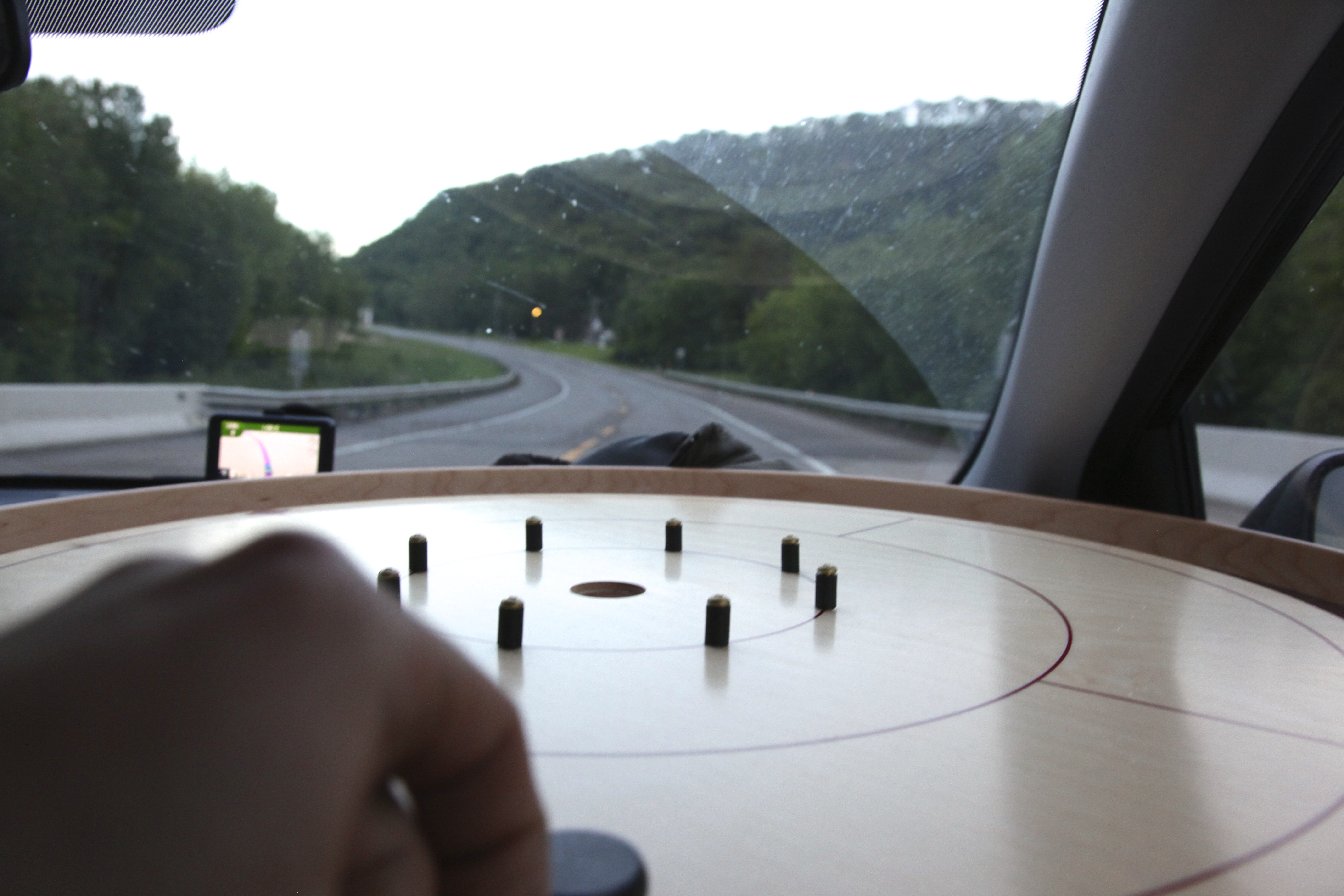
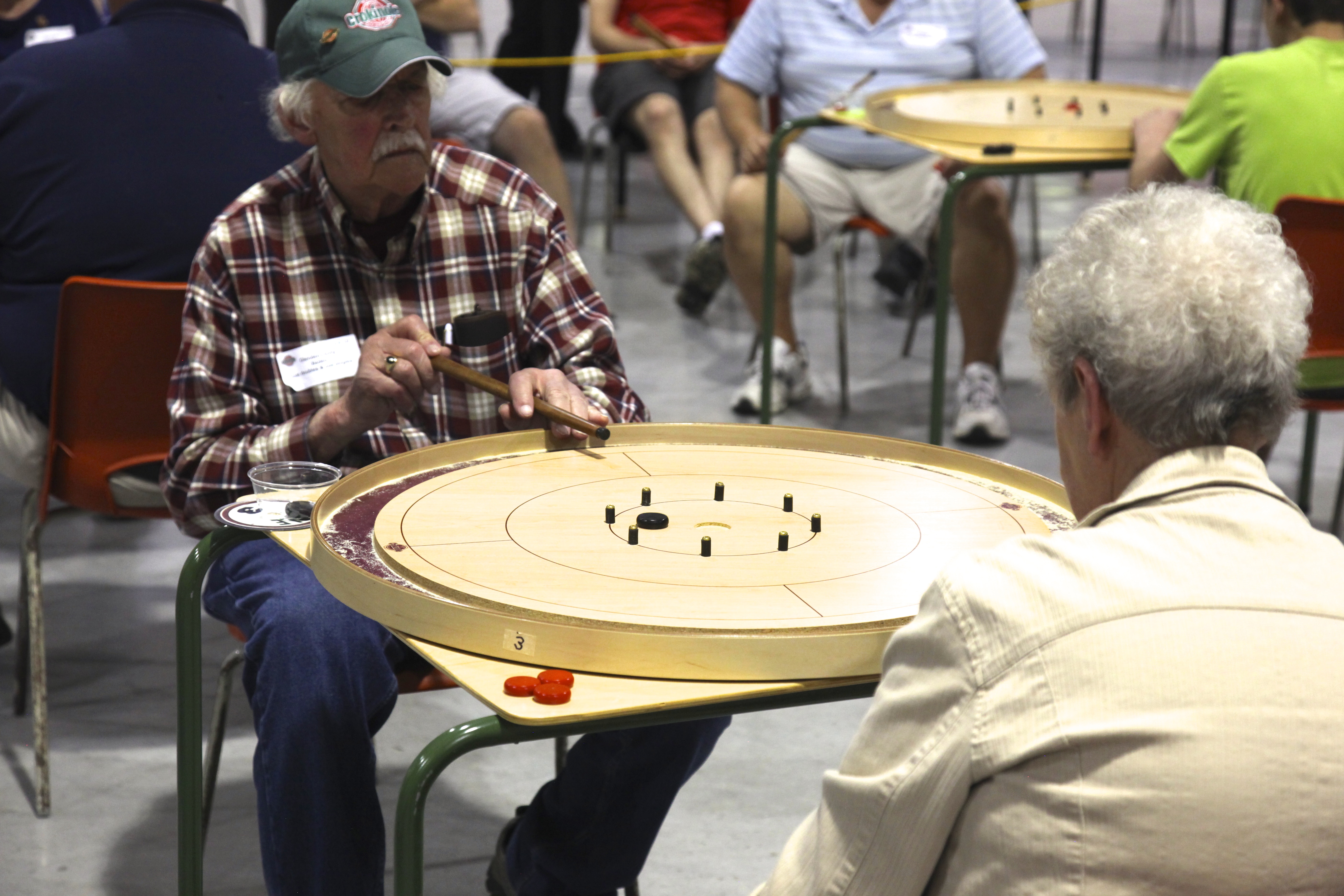
    If you’ve never heard of crokinole, you’re likely not a citizen of the disintegrating Canadian countryside. If you are from the North of 49 and you still haven’t heard of crokinole, you either a) are from a city, b) didn’t grow up in a church, c) grew up with a Nintendo, or d) had unloving parents. Crokinole is a two or four person game played on a 66cm-diameter circular board, in which each player has a determined number of discs made of lathed wood. Each player purposefully flicks these buttons with a finger or wooden cue towards a hole in the centre of the board a quarter-of-an-inch deep and only slightly larger than the button itself, attempting to avoid the eight stationary pegs that guard it like pawns on a chess board.

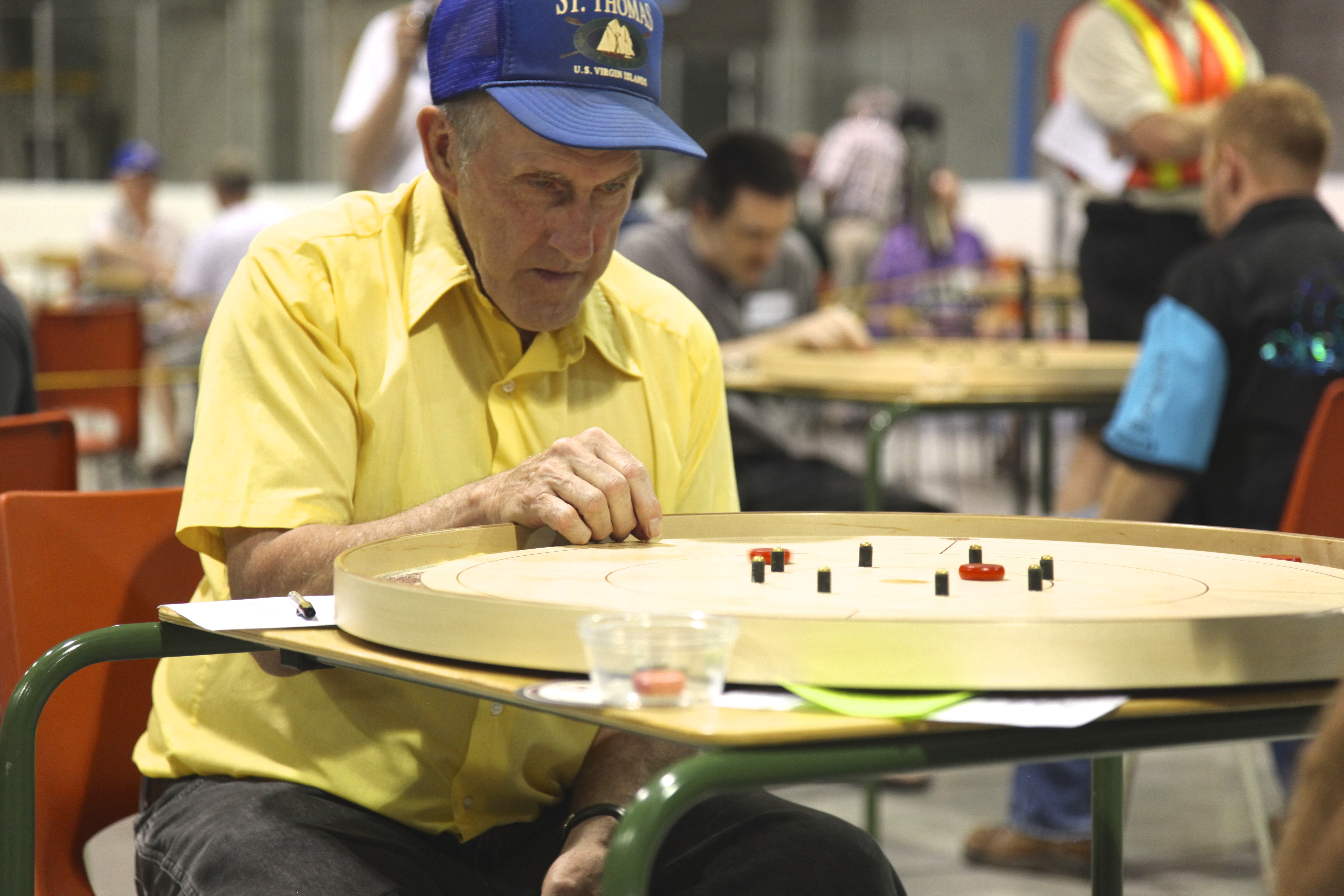
    It is a game you may have played with your loud uncle and your wrinkly aunt before Christmas dinner. A game in which your grandpa is likely indomitable in between heavy naps in a dusty cardigan on an itchy couch. It is a game you may have tinkered with not knowing the rules (of which there are perhaps three), or, as previously determined, a game you may not have ever even heard of. For myself and my father, it is the game in which we competed at the World Championship in Tavistock, Ontario on June 1, 2013. The World Crokinole Championship, widely revered as the Stanley Cup of crokinole tournaments, the Kentucky Derby of the forefinger stallions, centre stage of peculiar rural males aged 39-88, was obscurity and sportsmanship perfectly defined.

    Crokinole 3

    After driving straight through six U.S. states and two Canadian provinces, we pulled into Tavistock, home of the oldest known crokinole board dating back to 1876. During the drive, when our periods of silence (often reaching four or five hours at a time) were broken, we discussed religion in many contexts; traditional theology, silage and dairy production in devout farming lives, and most importantly, righteousness through crokinole techniques. We made our ecclesiastical pilgrimage, fasting from sleep and whole foods in the goal of reuniting westerly disciples with the holy land of immaculate wooden conception. We were pilgrims for the board of life. The home of crokinole was like I had dreamed it would be as a kid of twenty-four years old. An established farming community of dairy producers with a Main Street that boasted a two-decade old Chinese Restaurant, local credit union, and butcher shop. As one might expect, side streets were dotted with various forms of seniors’ homes.

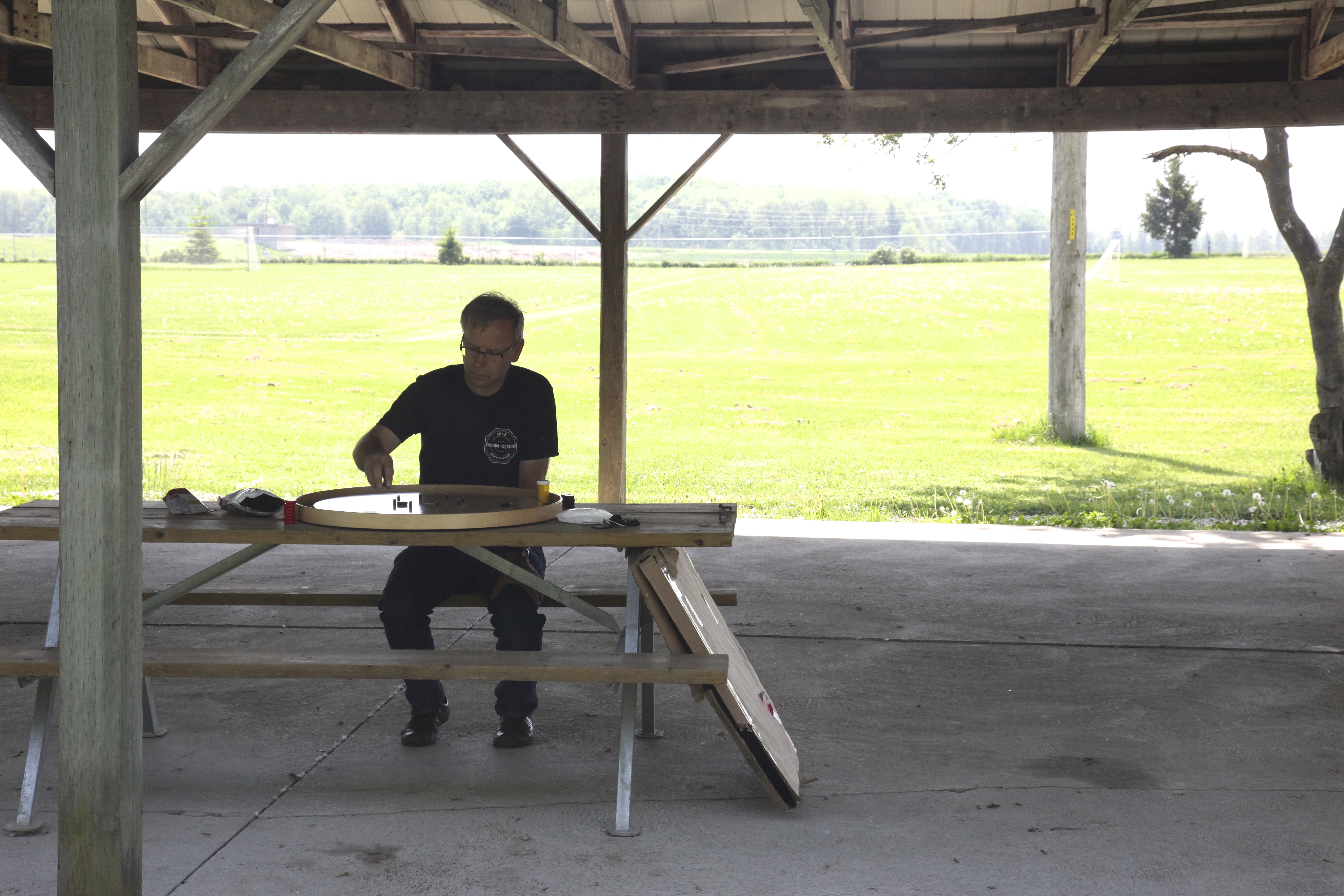
    Upon arrival, silence was broken by John Schultz, the bald, wiry, extremely pleasant chairman of the World Croknole Championship, asking, “Are you folks here for the crokinole tournament?” He woke us napping in the park—our first hours of horizontal sleep in two days—and it finally occurred to me what we’d done. We drove twenty-two hours for crokinole. In the same amount of time I could’ve driven to the flawless forests of northern California. I could’ve driven to Nunavut. “Holy shit,” I thought, “I could’ve just travelled an hour and played a game of crokinole with my grandpa.” But instead I drove twenty-two hours to play with all of the grandpas of southern Ontario. John Schultz continued to tell us that other folks drove in from Michigan, New York, Ohio, P.E.I.. We cleaned up, grabbed our board, and began our pre-tournament practice on a picnic table in the shade of Queens Park.

    Crokinole 2

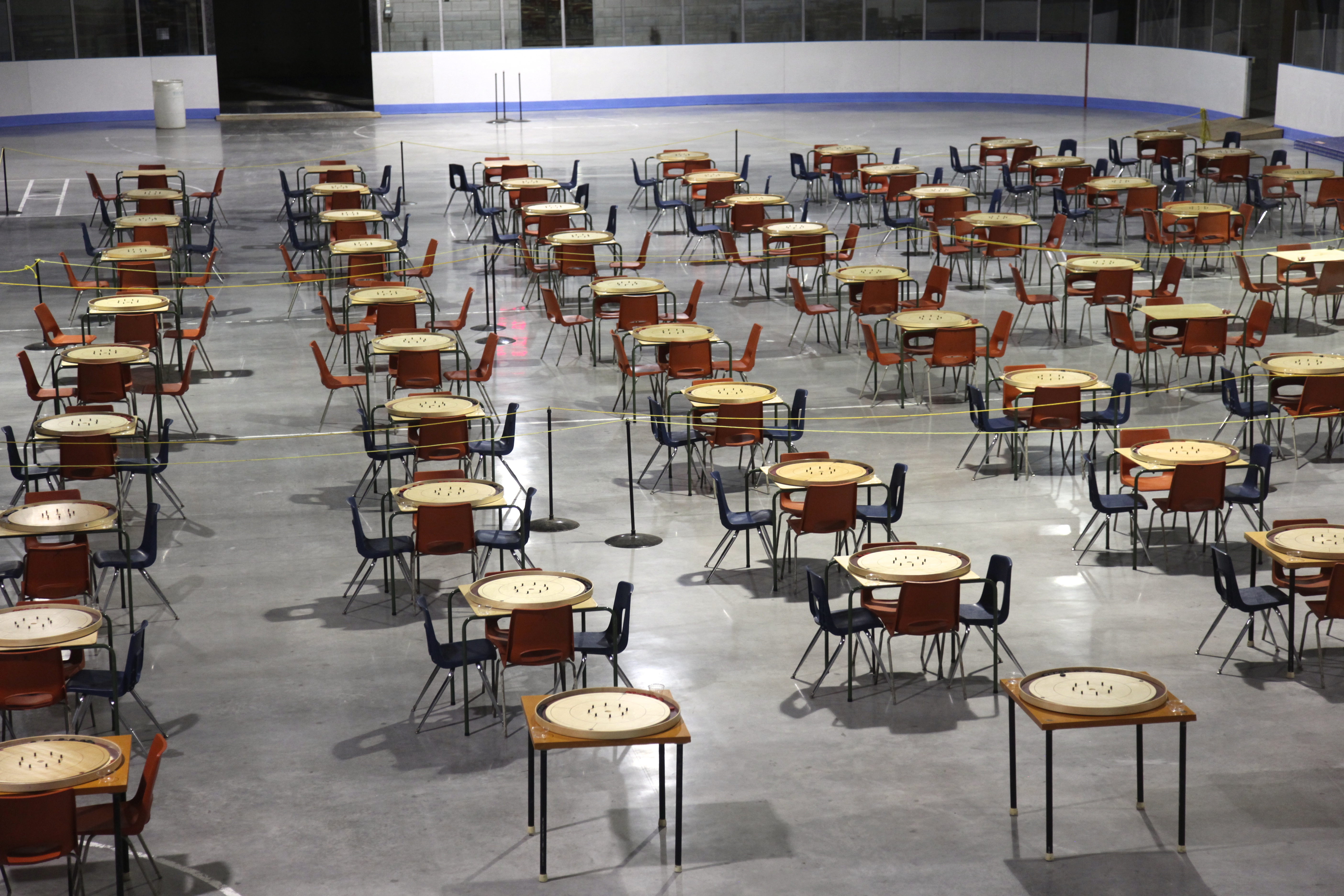
    On Saturday morning when I woke up at dawn to practice before competition began at 8:30, the Ontario air was thick. The humidity weighed down the crokinole buttons as if Mother Nature rubbed each one on her sweaty chest. After a breakfast fine-tuned for finger endurance I followed my father into the arena which housed over 64 freshly waxed, previously untouched boards set up in a grid on the concrete slab of the dried up hockey ice, all partitioned by yellow rope. Competitors and spectators in jean shorts and agriculturally branded caps floated around the merchandise on the perimeter of the rink. Those keen on capitalizing on the lucrative crokinole market sold World Championship t-shirts, ballcaps, boards and board accessories. People competed in the skill shot competition and captured photos of the trophies which were handmade for the event (it is difficult to find a golden plastic figurine of a man playing crokinole to fix to the top of a regular trophy). When tournament competition began, over 280 competitors showed their masterly applied-geometry skills and muscle memory. Each competitor sat down at a table with ten strangers for eight minutes at a time until the horn sounded, shaking hands and wishing luck to people they hoped to blank eight points to zero. Saturated in Canadian politeness, if crokinole isn’t a game of true sportsmanship, it isn’t anything at all.

    Crokinole

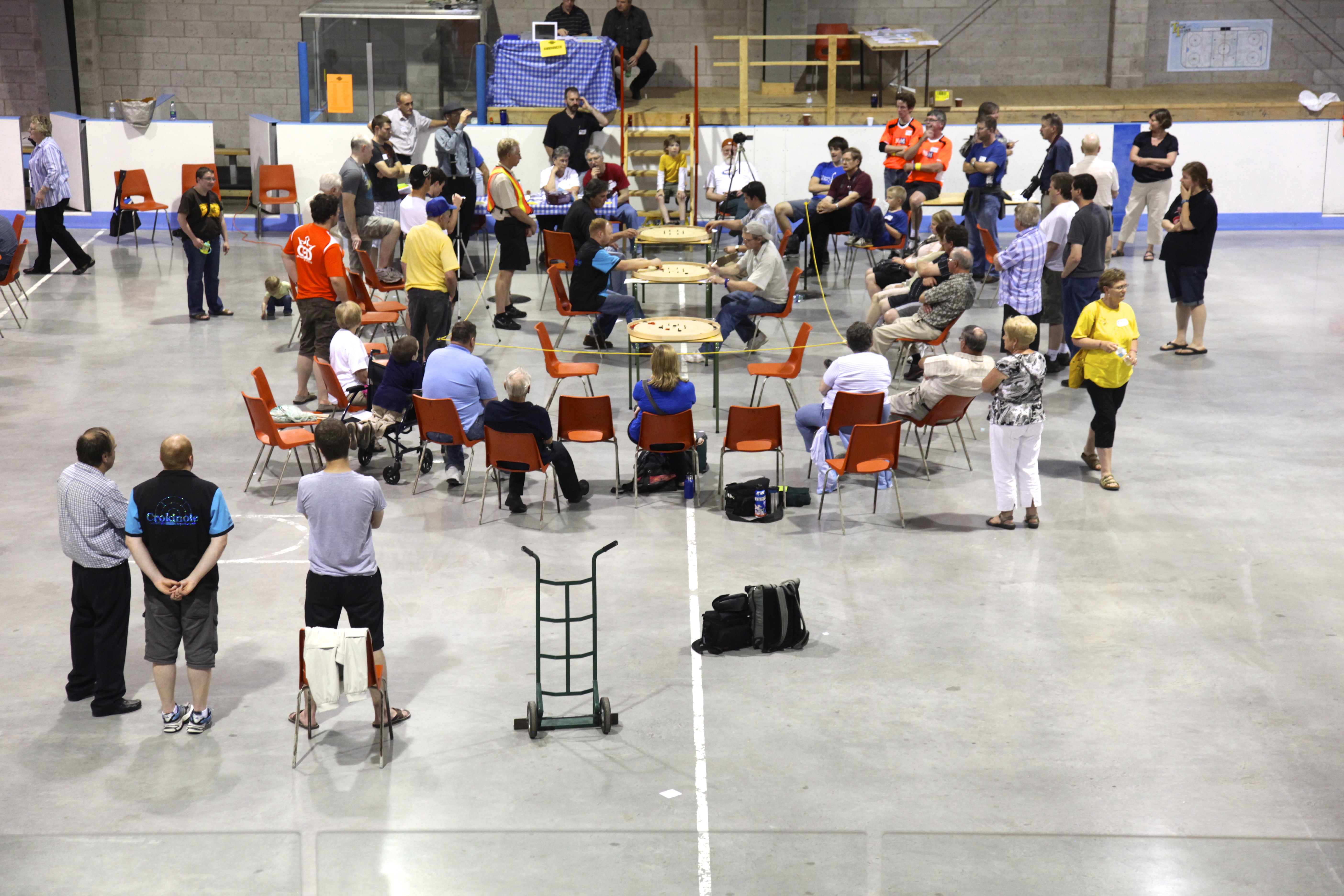
    As for the competition, unfortunately the prophesy from aged-competitor Dave Skipper that, “people with beards and moustaches shoot better on these boards,” didn’t prove true. I, one of the few participants with a gnarly beard, didn’t even place in the top half of the draw, and the eventual singles champion, John Conrad, had the hairless face of a teenager, although he was surely approaching his golden years. My father proved to be worthy competition, scaling the ranks of eleventh of 86 participants in the main draw, making the playoff round with the true elites. The final match drew crowds upwards of forty, those who had already sweat through their crokinole team jerseys and sweat bands, groaning and whispering with the final shots of the game. Hands become shaky with such pressure. For one of his final shots, Conrad made an incredible triple take-out. Someone in the crowd said in praise, “I think that was a statement.” In the finals, fathers sat behind the yellow rope, watching sons in competition, offering familial support. My father and I participated in the great paternal experiment that is crokinole.

    While discussing board consistency during the final round, a man who placed third in the doubles category, making no excuses, commented: “The heat, the humidity—we have been battling the elements all day long,” as though it were an Ironman competition, which, in a way it was. The oldest participant was 88-years old, and was celebrating his 50th wedding anniversary at the tournament. He had competed in all previous fifteen World Championships that had been held.

    If it were a televised event, and if the champions were interviewed and asked to describe their feelings, I imagine that like any other world final, they would stumble and mumble in speechlessness. There is no way to properly explain a world championship of any sport, and it only becomes more grueling when it is a celebration of nearly-perfected obscurity. We travelled knowing full-well that we were participating in an antiquated parlour game that itself was competing against screen-bright technologies for space in the family room. What we didn’t know was that our hands would shake and that we would miss shots from fried nerves in a game usually as relaxing as a free massage. We didn’t know that we’d have to practice for another year to make even a dent in the crokinole kingdom.

    Back to the grind. Back to the board.


    Crokinole 1

    Crokinole, The Finals

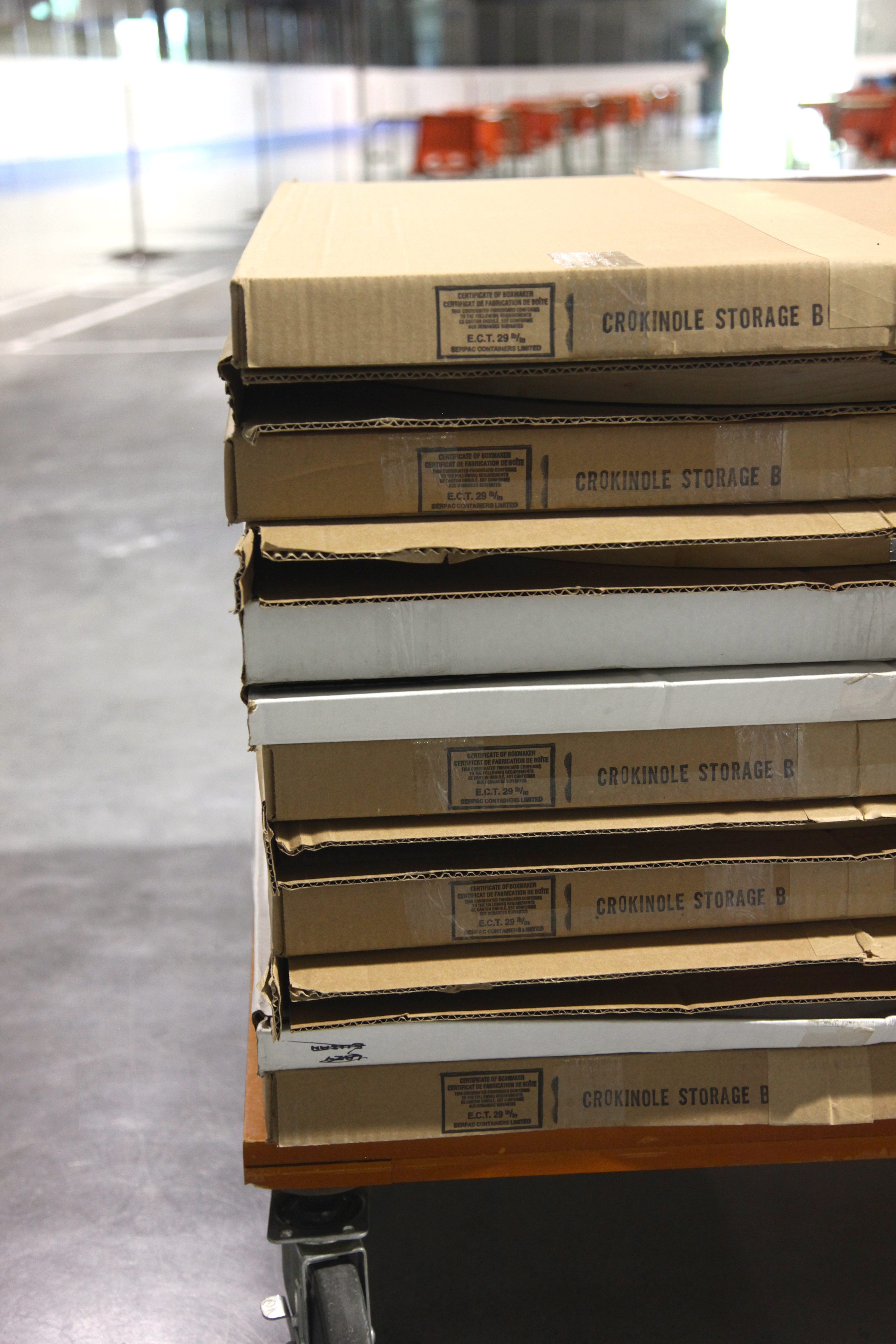
    Crokinole Boxes

    Crokinole Cues