Category: Non-University

  • Blog Action Day 2012 – The Power of We


    In my career as an eligible voter I have celebrated no victories. Not a single representative I have voted for has been elected, not a single party I have supported has won. On the contrary, they have usually lost quite successfully. I am well aware that my beliefs and values do not reflect those of the majority, Balls of Rice and my voting record reflect that quite well. This has all led me to a familiar cynical place where I have found myself many times before, for many different life issues. The Underdog Syndrome, where whenever I cheer for the underdog, they are doomed to fail. Sports, nerdy gentlemen in a bar, elections. The principle is the same, and my support seems to kill it.

    Because of my lack of success in democracy, I have been debating whether it is worth my time to vote at all, not out of apathy or resignation, but as a form of protest. Because the voting system is off, and democracy is nothing more than choosing between egotistic businessmen who are often charismatic beings, but not exceptional people who love people—the wealthy who are already in positions of power, but want greater power to create greater wealth, and yes, I have a hard time not seeing all political leaders in that way. I still do believe that one human being should not and cannot properly represent an entire population, and that it is possible for there to be order and progress with no single person in charge. I’m still stuck on this one, but until I decide, I will continue to vote.

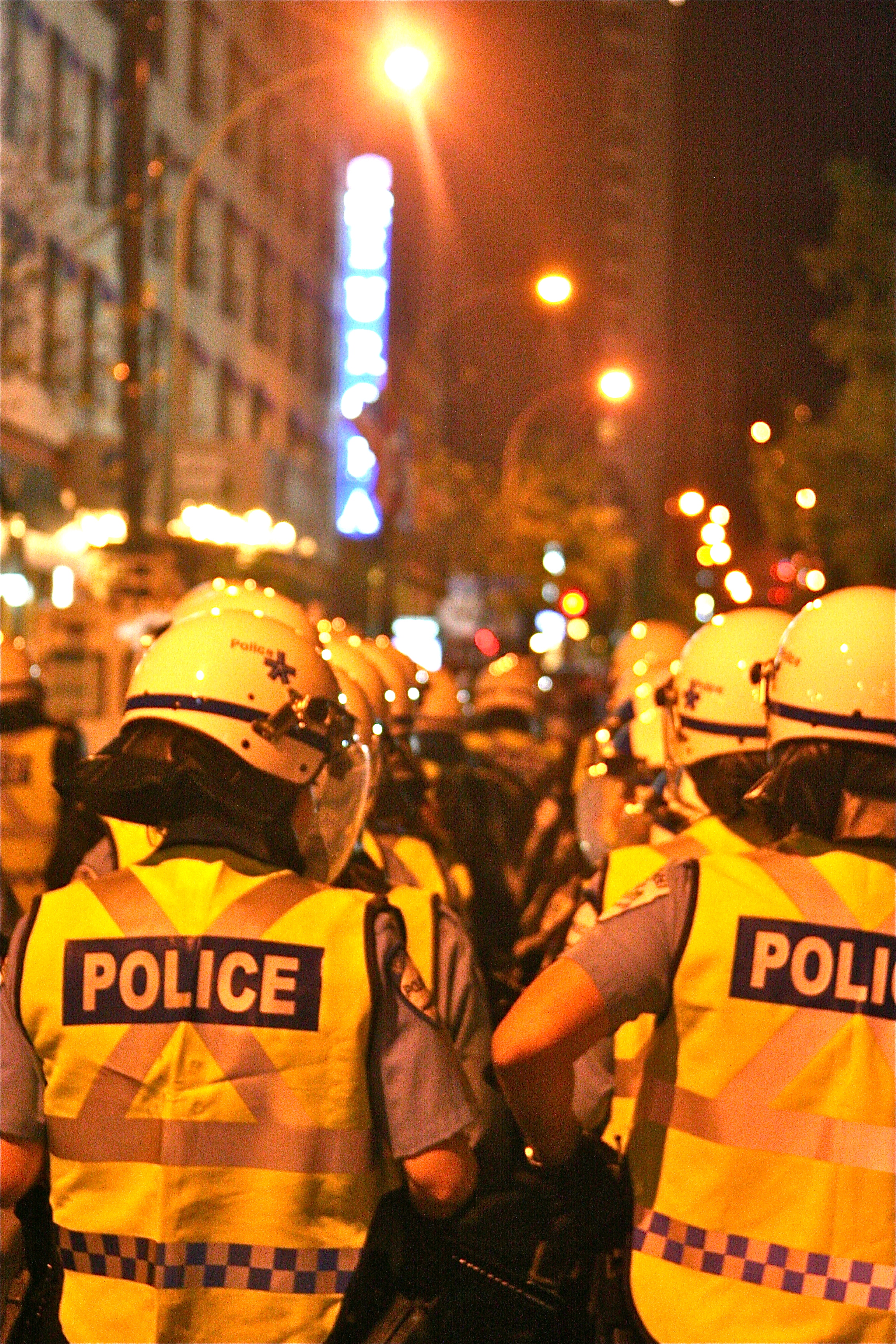
    Then I came to understand protest. Dissent. The Occupy Movement, which many see as a futile collection of hippies, bums, and anarchists who decided to join together in several groups around the world to be able to collect welfare and charity more easily. A group of undemocratic urchins who, if they really cared about the system, would pull themselves out of the mire and contribute to society in a pragmatic, businesslike way. And this is likely why it resonated. Groups of likeminded people gathered to express their dissatisfaction with the structure of the system, the inequality and corruption. My ability to relate to such a movement likely came from my upbringing and affinity with the punk scene. Coming together in hundreds of different communities with no clear goal apart from stoking the young flames of revolt. Disapproval shown in groups of people physically gathering together. It felt right.

    Despite the overly utopian seeming title of this year’s Blog Action Day, I have grown to understand the power of groups of people that come together with dissent, goals, and hope in common. The more I see the importance of participating in politics, the more I see that this means something greater than simply voting when an election is called. Although I will likely never in my lifetime see someone I voted for in a position of power, I can rest comfortably knowing that other actions can be taken. That groups of people outside of the realm of electoral politics can change policy, and are often necessary to do so. Regardless of whether or not my vote will ever be on the winning side or not, it is evident that the solidarity between groups of people is equally as important as being politically active. A group of people with a common goal may not make an obvious difference, but it always has the power to make a significant one.

    When the cops and the courts refuse to confess the sins of the few, what is there left to do? The answer’s there right before your eyes: rise.

    Propagandhi, Note to Self, Failed States

  • The Fury of the Dispossessed

    When I’m excited, I ride my bicycle very fast. After a day that lacks progress, one that sees no new knowledge or discovery, I bicycle home like a grandmother on a cruiser bike. Most days, average days, I ride home in the middle of my three gears, head up and feet wide. Today after starting a new job, and after a lecture by one of the greats, I biked home on the highest gear, bouncing on my low front tire, more excited than I’ve been in a long time to finally feel, for once in years, that I am where I am supposed to be.

    Chris Hedges, journalist and intellectual, lectured at the University of Regina. The writer that I will forever aspire to be, the thinker that I will undoubtedly never become, gave a rousing account of how we came to where we are now, stuck in an “inverted totalitarianism” where we are ruled by the faceless being of corporate capitalism. Where the cannibalization of nature exists for straight profit and greed. He spoke of how after World War I we were placed into the “psychosis of permanent war” where the masses would offer up their own slavery, and how we have now reached an age of the moral nihilist. (I am essentially just listing my notes in sentence form.) We have reached a point where food, water, air, and human beings themselves are being treated and sold as commodities and this has built a quality of self-annihilation.

    When he spoke of “sacrifice zones,” the places that were abandoned by unbridled capitalism, left in disrepair and a humiliating culture of dependency after being used and left behind because of their lack of monetary worth, I thought of Saskatchewan in fifty years. A place where natural resources are plentiful and long term thought is not. Accelerated environmental review processes that inhibit the ability for proper research and long-term preparedness have been put into place while Saskatchewan is in its infancy of exploiting these resources. I envisioned ghost towns, alien landscapes after plundering the earth and failed nature reclamation projects. I saw people abandoned by the elite that they once, for some reason, loved and trusted. I could see the future because of what has happened in other parts of North America. The current policy makers refuse or are unable to see what Hedges has shared in his latest book, Days of Destruction, Days of Revolt, and because of the propaganda of the elite, the people are often unable to see it either.

    One might ask how I could be so excited, riding home banging my head with a bike-lane-wide grin after a night of being pummelled with the desperately depressing truths that we find ourselves facing. All of Hedges books that I have read deal with these deflating facts, hundreds of pages of them, but always end in a short breath of hope that the elite will fall. I cycled home feeling like I’ve finally found even a small piece of a greater purpose, directly assisting those the system left behind. Feeling like I’ve found the inspiration and motivation to create, to think, to encourage others to think, and to practice dissent. Knowing that the “fury of the dispossessed” can eventually bring enough fear into those mediocre in positions of power, and will see reform because of it. “The formal systems of power are no longer capable of reform,” he said. We need acts of resistance. This excites me.

    “You can’t use the word “hope” if you don’t carry out acts of resistance…But we have a moral obligation to the world the corporate state is bequeathing to our children. We have betrayed their future. At least that generation will be able to look back on those of us, hopefully their parents, and say that they tried, even if we fail. Not to try is to be complicit in what is happening.”

    -Hedges in Katherine Norton’s article.

    Someday, as I told my father, I hope to be smart enough to be able to ask a coherent question at a lecture to a man such as Hedges. Instead, for now, I will continue to skim off of his brilliant works to make mine look greater than they are. But I’m trying, and I guess you have to try.

    For more Hedges go here, for more Balls of Rice articles that ride on the coattails of Hedges go here.

  • The Dumbening

    If you aren’t getting smarter, you’re getting dumber. There is no in-between. There isn’t a place where you sit content with the exact amount of knowledge that you have, where you remember it all and where it feels good. You will forget the things you’ve learnt unless you continue to use them. If you continue to use them, you can continue to learn new things that relate to the things you already know. If you don’t try to learn more, you are getting dumber. Getting dumber is easy, maybe easier than anything else in the world.

    The last month I got dumber. I didn’t read. I didn’t write. I didn’t think. I drank. Likely no more than an average man of my age, but more than what I usually do. I went to watch my brother’s band at The Fez in Saskatoon, bussing both there and back on the STC. In the true spirit of youth, camaraderie, and a sense of defeatism, I drank too much. The bus ride home consisted of a nap, but the work day consisted of simple profit margin calculations that trudged in my brain like graduate-school mathematics. Like rubber boots in a foot of mud. Someone told me that alcoholism inhibits the ability to learn new things. You can function properly, like a normal human being, but you cannot progress. You plateau, and then you get dumber.

    Since I am not attending a place of ‘higher learning,’ I force myself to learn on my own. I read as often as I can. I write when I’m not reading. I think of reading and writing when I cannot do either. I consider these as study, not as leisure. I watch as little television as possible. I attempt to regulate my time spent in front of a screen. I take notes. I write down quotes. If I don’t do these things, I am not getting smarter, and if that is the case, we know what is happening. Then I get depressed. I try to self-educate. Smart men were taught by smart men. Smarter men taught themselves.

    But when you can’t teach yourself because you are too busy trying to enjoy yourself, or forget the past, or be social, you get dumber. You may make more friends, more inebriated memories, more checks off of the list of movies you need to watch, but your brain is rotting into a sludge that is of no use other than feeding and fattening livestock.

    I am slowly pulling myself back together from a month of self-pity, drink, and becoming dumber. It didn’t work out. I cleaned, I baked, I did laundry, and I now sit in a beanbag chair. The greatest minds of all were nurtured in beanbag chairs, so this is where I begin.

  • Realistic Ideas

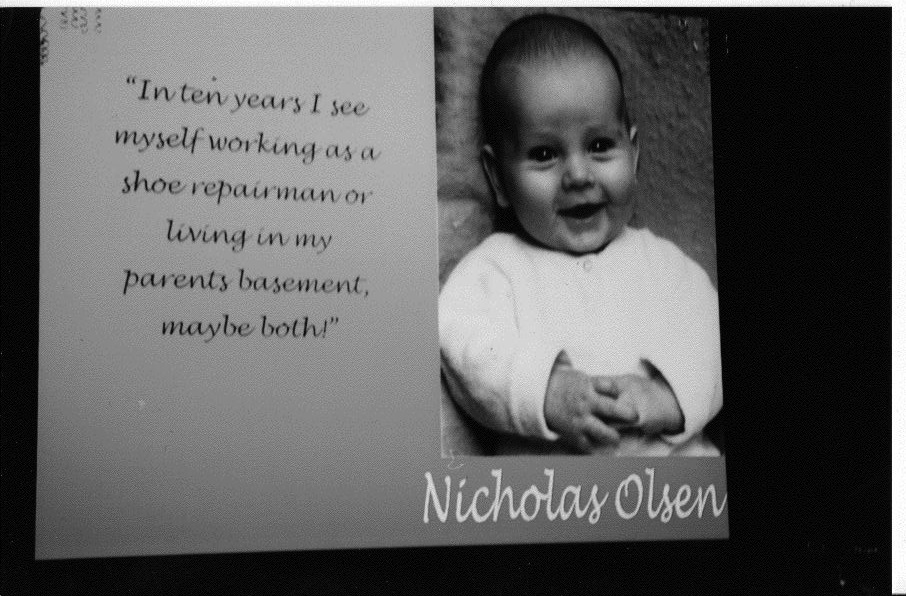
    I was pretty damn close. I don’t repair other people’s shoes, but I sell them. And I repair my own sometimes. And up until fairly recently, I inhabited my parent’s basement. It has almost been ten years since I wrote that in preparation for my Grade Nine Farewell, looking forward to the horny days of high school, when I would fool the masses into thinking I’d amount to something.

    I mean, at least I was realistic. However I know for a fact that my Grade Nine graduating class includes several doctors, dentists, optometrists, teenage pregnancies and rich suburban lifestyles, and they likely wrote exactly that on their one powerpoint slide at our Farewell. I mean, it is hard not to be realistic when you live in a rich ‘bedroom community’ of a booming city, especially when your position in life and your family’s affluence could give you anything you wanted. Such was the White City way.

    If it is that simple to predict what life will be like in ten years, and if my prediction has any weight on what actually happens, it looks like I will indeed be that long-haired dude that lives in your back alley under the pile of old plywood that the city won’t collect. That jaded and stubborn ass-of-a-man that always talks about how he could’ve been earning six figures a year but didn’t want to sell out to the man, then the booze got ahold of him.

    Six years ago today, when I started this pathetic attempt at expression originally called ‘Partying since 1988’ and more recently but no less childishly named ‘Balls of Rice,’ I expected to end up being an Engineer by now, this blog simply as an outlet to stumble through as I learned my maths and sciences. Instead, this blog nurtured a trade that I have grown to love, and instead, I am unable to get a job distributing food and washing dishes because of my lack of experience in anything that apparently matters.

    I’ve often lamented at my life of a well-to-do Canadian, with opportunity bowing to me, getting essentially everything I’d ever tried for, and now that I got what I wanted in the form of not getting what I applied for, it was the wrong time.

    I picked beets and carrots today at the garden. Good carrots. One great carrot, photo worthy and sweet. Sitting in the vinyl chair and chewing on carrots still covered in dirt I watched cream-coloured butterflies rise and fall. I used to think those were moths, simply because they hadn’t the pattern of the Monarch. But I didn’t realize the difference between the flight of a butterfly and that of their night-dwelling cousins. Moths with the straggly bearded bodies, the combative flight patterns, the ability to strike unwarranted fear into humans four-thousand times the size. Moths are moths and butterflies aren’t, and if they were silly enough to sit in the cocoon thinking they could come out as whatever they wished, then I feel sorry for them. And us.

    I obviously knew that I’d be a shoe repairman. I was as realistic as a caterpillar, just waiting for his day.

  • The Deadlifts of Success

    My person has been threatened. By another person that is greater, more successful, wittier than I. I mean, a clever writer that also enjoys spending time on the floor? Goddamn. Talk about identity theft, man. If only I had been lucky enough to get a useless arts degree and have to move home to my parents’ farm, where hilarious, pathetic, obstacle-surpassing events could have occurred. I got dealt a shit hand in the world of semi-original writers of essays.

    My roommate Bryce, the one who spends his days doing ‘dead-lifts’ (whatever the hell those are), weighing his turkey bacon, the household vegetable, down to the gram, and bench-pressing pizza pops, a very motivated and determined man, told me that the best thing we can all do is to give up. Several times in a day, even. If this is what a soon-to-be provincial record-holder says, then what on earth would an unmotivated wiener like me do? He would agree, of course.

    Once we hit seven billion, I knew it was over. The chances of being an original, one-of-a-kind individual when there are that many people in the world are slim. Not-worth-putting-a-dollar-on-it slim. There is someone out there that looks a lot like you, only with smaller ears and a nicer gum line. There is someone out there with your exact mannerisms, only far easier to tolerate and definitely more charming. There is someone out there that wrote what you wrote only with bigger words, less swears and more marketable jokes. So you might as well give up. So says Bryce, my personal trainer in the game of life.

    My dad gave me a copy of The Globe and Mail, “a newspaper with decent writing”, he said as he looked at the copy of the Leader Post in our mailbox. Compared to our local publications I would tend to agree with him. However, compared to real, actual, impartial, worthwhile writing, I would disagree. Regardless, there was a section on CanLit, he told me, and being a potential part of the CanLit scene, albeit an unestablished, unimportant, mostly inutile one, I figured I’d look it over. One of the ‘up-and-comers’ (a term I loathe) that the article mentioned, Iain Reid, author of ‘One Bird’s Choice‘, seemed like that one-or-two-out-of-seven-billion successful versions of myself. Published as opposed to self-published. Writing a second book in the shadow of success and already under contract, instead of writing a second book already planning on how much money I will lose in self-publishing again. Looking good with short hair instead of like a fresh-out-of-juvie gang member. And I guess I’m jealous. Of his accolades. Of his ability. Of his newspaper-worthiness.

    But I don’t want to give up. I write because I enjoy it, at least that is I tell myself when I am editing/staring at the wall trying to distinguish between the off-putting odours arising from my body. I do it because, although I cannot make everything happen that I want to happen in life, despite what real life-coaches and the successful tell you, I can make it happen on paper. (Only the successful tell you that you can do anything you put your mind to, when I bet most of them just got really fucking lucky.) The day I discovered that writing can be absolutely anything, that it doesn’t have to be done to please a teacher, that it doesn’t have to be real, logical, simple, or formatted, was maybe the day that instead of giving up on writing, I gave up on writing for others.

    And I’ve finally learned exactly what my life-teacher meant. That I should give up so much, that I give up on giving up. I’ve given up on mostly everything I’ve started, so why not try giving up on that. Goddamn Bryce, you genius.

  • Pro-Protest

    Giving a shit is not easy. This is made obvious when you begin to do so. It is exhausting and abrasive. It is uncomfortably hot and smells bad. It is judged unfairly and looked upon as naive or unnecessary.

    But it is necessary.

    Apathy sets in quite easily when you live in comfort. When your meals are covered and you have clothes and can afford salad spinners and a fridge full of beer. Apathy is easy when you are not directly affected.

    The only thing close to rioting that I ever witnessed had to do with hockey. Giving a shit about hockey is easy. You sit on your couch or in the stands and stress about something completely out of your hands. When you realize that a sports loss isn’t everything that ever mattered and that you are still breathing and the earth is still in existence, you go home and eat a nice meal and go to bed. Easy.

    The peoples’ right to protest is the peoples’ right to disagree. When this is taken, so is one of the main tenets of democracy. Canada’s West often does not understand the motivations of Quebecois protesters. They are seen as the troublemakers causing unnecessary violence. Socialists spoiled with low tuition, cheap booze and thirty flavours of real poutine. They should learn to live with it, like we do, especially when our oil and potash are paying for their province’s existence. These opinions make it seem as if we have been beaten down and embarrassed enough to accept our ‘fate’ of high tuition, cuts to the arts, a resource raped land and expensive liquor, as if it is something that we had no control over. Considering the fact that post secondary education can and should be free, we have been conditioned to accept the ‘inevitability’ of incredible debt. Like a well-trained child at the supper table, we eat what we are told and we don’t ask why. When the government won’t listen to the reason of the people, we should begin to question the purpose, worth and effectiveness of such a system of leaders with nothing more than financial agendas. The people shouldn’t simply learn to live with the decisions of the lawmakers that they elected. They shouldn’t have to put up with the decisions of the ruling elite. The people are why they exist. The lawmakers need to properly represent the people.

    One hundred days and half a million people. A battle for accessible education turned into a battle for equality. Students joined by the general public in their dislike of how the government has been handling the tuition debate, highlighted by an agreement in the undemocratic quality of new anti-protest bills. Breaking laws which are made to stifle the population is not an irresponsible action. Challenging those in power through protest and defiance should not be looked upon as counterproductive or disruptive, but needs to be understood as a necessary sign of democracy, thought and human progression.

    The more we care about the issues that affect others more than ourselves, the more we put thought, effort, time, and support into these issues, the better humans we will be, the better cities and towns we will live in, and the better, more equal, more human world we will have. Our future greatly depends on how much we give a shit.

    “Acts of resistance are moral acts. They take place because people of conscience understand the moral, rather than the practical, imperative of rebellion. They should be carried out not because they are effective, but because they are right. Those who begin these acts are always few. They are dismissed by those in the liberal class, who hide their cowardice behind their cynicism. Resistance, however marginal, affirms the sanctity of individual life in a world awash in death. It is the supreme act of faith, the highest form of spirituality.”

    -Chris Hedges, Death of the Liberal Class, Chapter 6, p205

    Check CUTV for coverage on the protests in Montreal.

    For English translations of French articles: translatingtheprintempserable.tumblr.com/

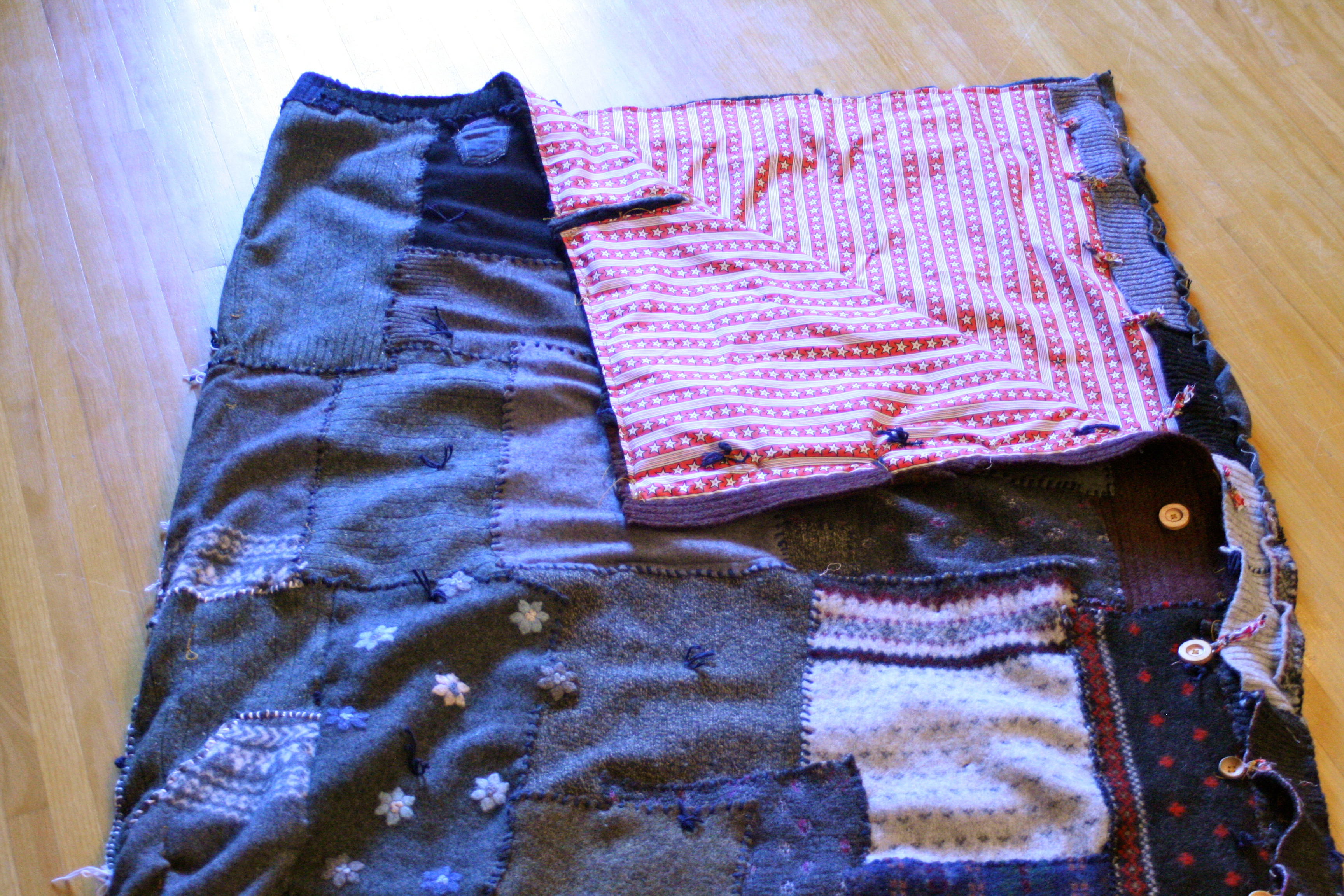
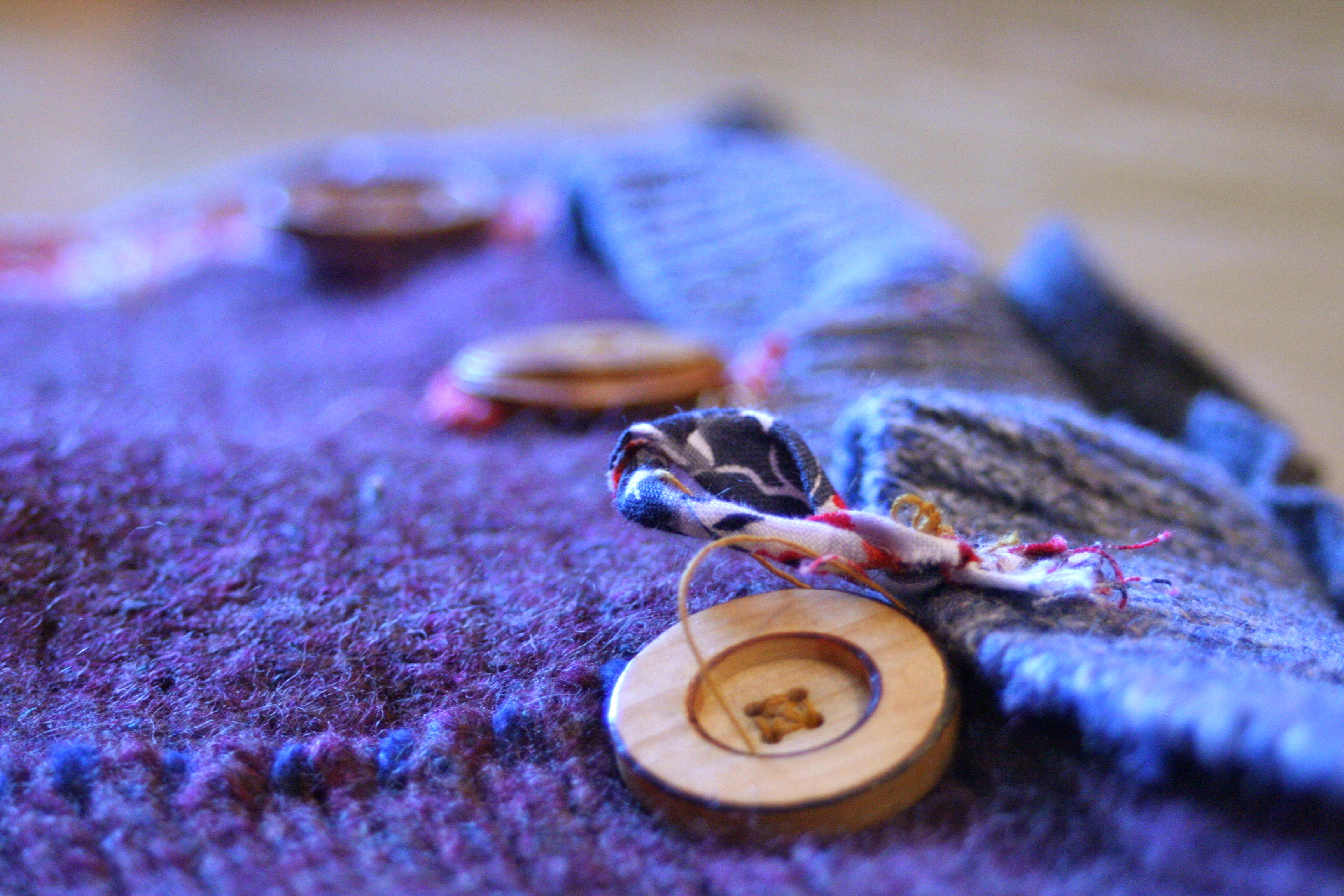
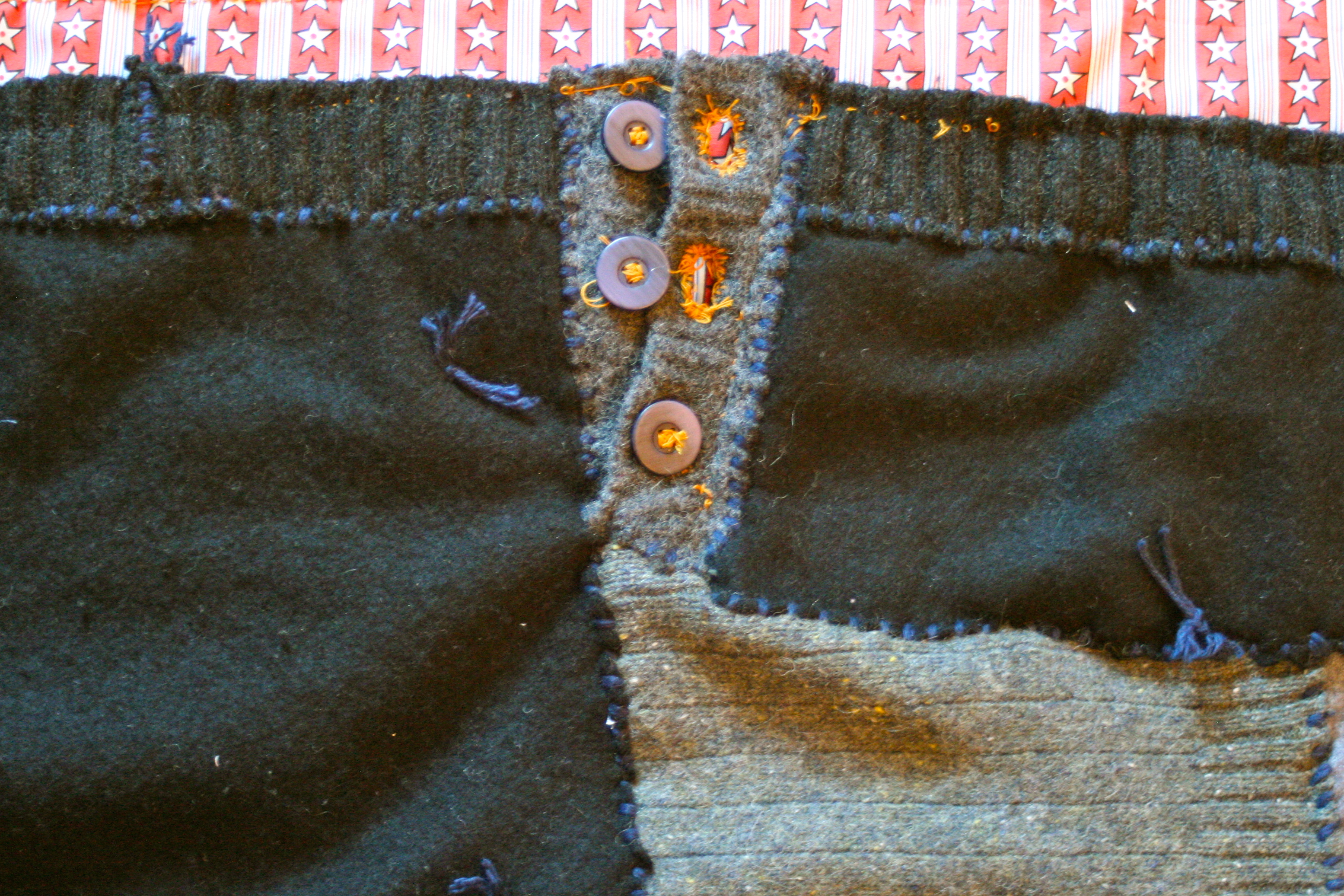
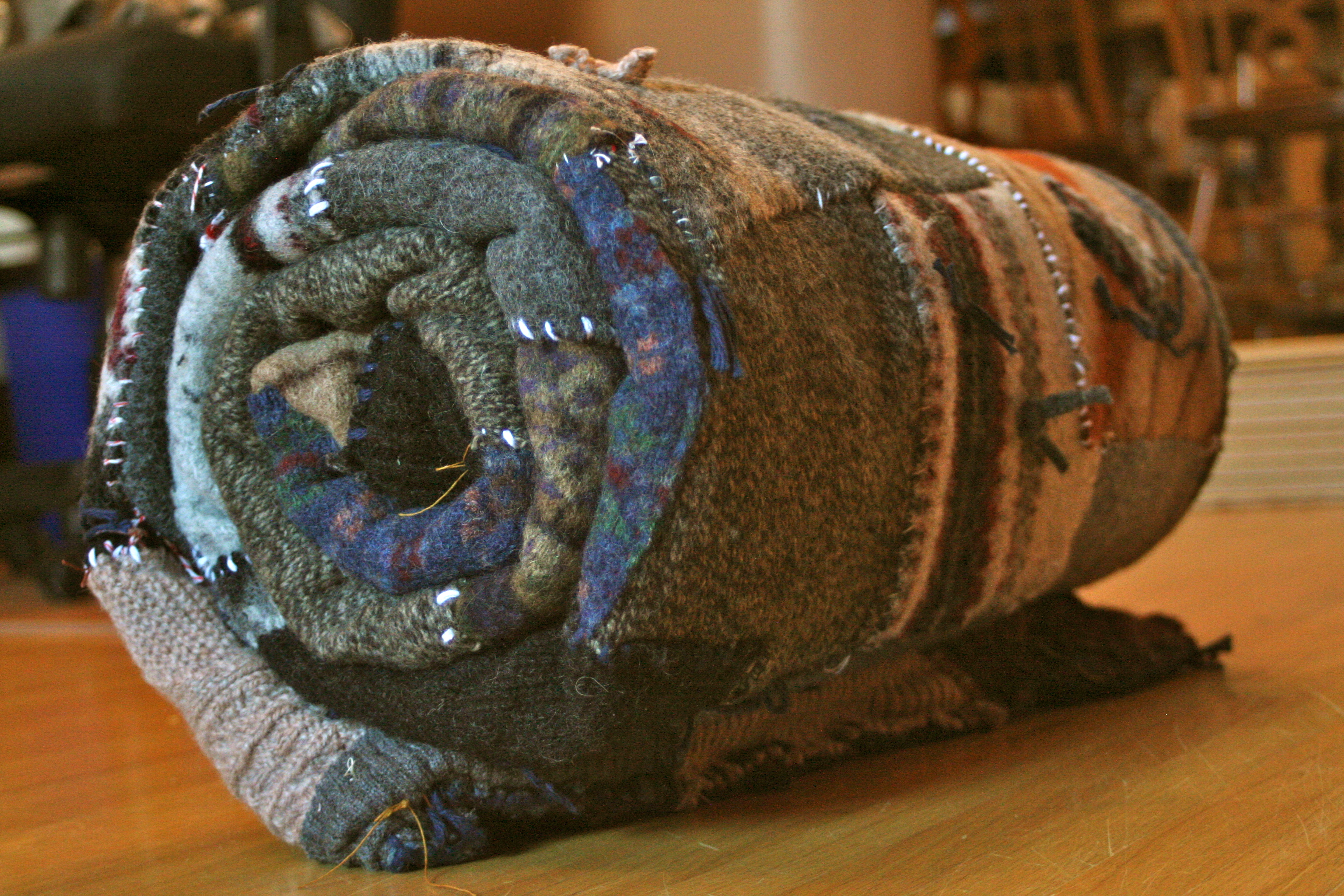
  • I made a sleeping bag.

    Breaking my ankle yielded this. Finished one hour before my cast was officially removed. Thanks to Corny for the bags of cut up sweaters.

  • PostPostSecondary: 3

    Assignment 3: Choose an object. Use the object to develop a character. Use the character to develop a story. The object must change hands in the story.

    Snooz

    The items were spread across a sheet of plywood that balanced on two wooden sawhorses. Other items were beside this makeshift table in cardboard boxes and on end tables and TV trays. Some of the larger items were just placed along the edge of the driveway, the taller items standing in the trimmed green grass, the shorter heavier items like dumbbells and car parts rested on the concrete slab itself. Rick sat on a lawn chair near the opened garage, dutifully writing numbers on tiny circular yellow stickers that he was placing on each and every object on his driveway and in his garage. The most expensive item, a Honda GL 400 motorcycle was going for $1800, it needed some work. Rick had placed a yellow sticker on its leather seat. The least expensive items included a spool of brake cable for pedal bikes, pink and green wicker baskets used for Easter egg hunts and decorations, a black plastic cassette tape rack, and other objects that the regular observer, including Rick, couldn’t be sure what they were for. These items were in a box labelled, “Free” on which Rick did not put any yellow stickers, to avoid confusion with the garage-sailers, the dumb load of cheapskates, he thought.

    On the plywood table were other artifacts that at one time had been the most useful items in Rick’s home but with renovations and time, had rendered them pointless, at least to Rick and his wife. Doorknobs, light switches, toothbrush holders, steel-toe work boots. Rick had priced all these fairly, he thought, with numbers that screamed, “Get rid of me but at least leave my former owner with something to remember me by.” Rick came upon his alarm clock radio, the size of a large box of chocolates, and considered its prospective price. For nearly twenty years that alarm clock woke Rick up at 6:15am every morning even if the power went out, thanks to the nine-volt battery inserted in the bottom. This clock electrified Rick to to start his routine, which was unchanged for almost as long as he owned the clock. He would eat breakfast—Corn Flakes, an apple and a cup of black coffee—flip through the Obits section of the newspaper, listen to talk radio for weather reports and then head to the city garage where he would pick up a city bus and drive his route, Route 18-Greenwood Village, until 4pm when he headed home again. Now, in his first two weeks of retirement, the alarm clock seemed nonessential since he had formed the habit of waking up every morning at 6:14 in anticipation of the breathy squeals of the alarm. He could buy a new one if he ever had a reason to wake up before then, he thought. Canadian Tire was bound to have one on sale. Ever since Canadian Tire introduced their own form of paper currency, Rick had never shopped anywhere else. His XL plaid shirts and size 36 blue jeans came from Canadian Tire, as did his socks and underwear, his toilet paper, toiletries and cleaning supplies, his car care and household items, and when Canadian Tire offered, modest food items and condiments.

    Also in the garage sale were some of Rick’s wife’s items. There was a box of folded tea towels with prints of smiling ducks and pioneer children on them, fifty-cents each. There was a wire magazine rack, wrapped completely by thin plastic cord, which was fraying and unravelling, for one dollar. She also had a stack of books, each for twenty-five cents, which included quite a selection of James Patterson paperbacks, a few assorted romance novels, one or two by Steinbeck and one by Vonnegut. The Vonnegut was a gift from her daughter, already read and scored, but unread by Rick or his wife. The Vonnegut novel sat at the bottom of the pile of books which sat on top of one of two octagonal particle board end-tables, the set on sale for ten dollars. Inside, on a dog-eared page, these words, which Rick or his wife would never read since they would sell the book to a young lady later that day, were underlined with red pen:

    “In time, almost all men and women will become worthless as producers of goods, food, services, and more machines, as sources of practical ideas in the areas of economics, engineering, and probably medicine, too. So—if we can’t find reasons and methods for treasuring human beings because they are human beings, then we might as well, as has so often been suggested, rub them out. Poverty is a relatively mild disease for even a very flimsy American soul, but uselessness will kill strong and weak souls alike, and kill every time. We must find a cure.”

    At fifty-eight, Rick was bald and likely weighed about thirty pounds more than he had throughout most of his life. In his last few months before retirement he had noticed this increase in weight and attributed it to his wife baking more often to accommodate the increased amount of time that Rick spent at home. The more time he spent at home, the more jam-jams and snickerdoodles he ate, the more he felt like a burden. Rick was structured and reliable. Routine looked to Rick to see if it was running properly. Now without work to attend to, without his regular regimen, Rick was beginning to suffocate in his uselessness. He sat on the couch in the mornings, from 7:15 to 9:00, looking out the front window while his wife baked more than the two of them could eat in a year, and he cursed time. He had asked his wife how she had passed the last forty years as a housewife without going insane. She asked how he knew she hadn’t gone insane. By the first Monday afternoon of his retirement he had run out of things to do. His yard was pristine, his house had no real issues. He spent six hours fixing the air conditioner, something that he had never attempted before but committed to the project since he was now retired. The eavestroughs were clean, the compost was stirred, the gutters were swept, the garden was weeded. So, to pass some time, he decided to host a garage sale.

    He priced the alarm clock at four dollars, and next to the cost he placed another yellow sticker that read, “Still works!”

    #

    Sam stepped out of her Pontiac Sunfire, placed her foot on a steel sewer grate that was clogged with leaves and paper coffee cups. She saw to the bottom of the sewer, brown water and sludge and shiny garbage was swallowed by the sewer, something that she never really noticed, but was thankful for, otherwise she would be standing in a puddle of muck. She headed towards the driveway that had the small red sign posted at the end, accented with a bunch of balloons that clumsily bumped each other in the wind. It was a garage sale, and she was a garage sailer, perusing the open seas of peoples’ once useful junk, looking for cheap alternatives to bringing new plastic and cardboard into the world. She had just got a job, the first job that she’d ever had, she realized, where she had to wake up before twelve noon. Almost ten years of bars and bistros and restaurants and clubs and lounges and dives and she had finally decided to somewhat grow up and get an office job. To put her party days to a rest and to settle, save, and become what her father would tell her was ‘a valued member of society.’ Sam was twenty-eight, had shoulder-length envelope-coloured brown hair, a face which resembled that of a chinchilla, and was pudgy but not fat. She was hoping that her new lifestyle, a 9-to-5, would allow her to join a gym and get in shape, make her body a tool or weapon instead of a soft inanimate object.

    It was Sunday and at a party the night before, her last party before starting her data-entry job on Monday, she lost her phone. Her phone had the internet, and Sam had gone the two hours since she woke up without it. She was going through withdrawal. She needed an update from the party last night. She had come to rely heavily on the internet and her phone but never noticed her reliance until she had lost them both. All in one, she had lost her contact list, including the phone number for her new job, her camera, her day planner, her computer, her calculator and her alarm clock. It was the last of these that had caused her to stop at several garage sales on her drive from the mall to pick up new business appropriate clothing. Even if she still had her phone, she needed an alarm clock to wake her up since it had become a subconscious and sometimes even unconscious reaction to touch the phone’s off button anytime it made a sound, either that or every fifteen seconds.

    The man working the garage sale sat against the brick house near the open garage door, writing on stickers and surveying to find items without prices. Sam took inventory. A miniature bag of plastic tooth-flossing picks, hopefully unused she thought, for a quarter. A box of unopened Gillette Mach3 replacement razorblades for a toonie. She was in the bathroom section, an unusual one for a garage sale, but essential items nonetheless. She came upon the plywood table with dishes and plates and household appliances. In the centre was an alarm clock radio priced at four dollars, emphatically announcing that it still functioned.

    “Excuse me, may I plug this in to see if it still works?”

    “Of course you can. Just bring it on over here.”

    Sam grabbed the clock, which was about the size of an encyclopedia. It had a faux-wood finish, sleek angular buttons, brown tuning wheel that protruded off the side. The man plugged it in to the exterior outlet and the clock flashed ’12:00′ in sharp red digits, blinking every second. He flipped the switch from ‘Alarm’ to ‘Radio’ and the crackle of an AM station of talk radio blasted through its mono-speaker. She affirmed that she would take it, browsed the tables again, found a Vonnegut book and a pink porcelain toothbrush holder and gave the man six dollars in change, the total for her three items. Sam thanked the man and walked back to her car.

    Sam knew how difficult it was going to be to transition between jobs and between lifestyles. She stopped her bar tending job on Friday and was slated to wake up at seven in the morning on Monday. Her new alarm clock was her insurance that she make the transition, even if it was guaranteed to be ugly. Without it, she would surely wake up late and continue to be ineffective. She opened the driver-side door and threw her items on the passenger seat of her car. The alarm clock bounced to the floor of the car, landing upside down with the cord caught under the seat. She reached down to grab it, felt something small and plastic under the seat just beside it, and pulled out her cellphone. She breathed in relief, left the alarm clock upside down on the floor, checked her messages and drove away.
  • PostPostSecondary: 2

    Assignment 2: take an article, advertisement, or event from a newspaper 50 years ago and develop a short story, telling it subjectively as if it were a family story. 

    Also see the slightly edited version of PostPostSecondary: 1

    Blondy

    “How did what? Birds? What’re you rambling about? You’ve only been here four hours and I’m already tired of your questions. What’d you want to hear? You mean, you want to know why your mother is afraid of birds? How the hell should I know?

    Well, if it’ll keep you quiet, I could come up with something… I suppose it musta been about forty years ago, the way she’d tell the story. I remember that act. Christ be damned, that old hypnotist, I can’t remember his name for the life of me. Anyhow, he was an oaf. No better than a sideshow. Shoulda been caged up next to a gorilla or bearded lady. The folks there believed what they wanted to believe, and hypnotized themselves. You don’t need another man to do it for you, if you sit quietly long enough, you’ll convince yourself that you want to lay on a bed of nails or bark like a cotton-pickin’ dog.

    What’s that? Oh, right, the story. Well, your mother musta been your age, about ten-years old, when that two-bit gypsy rolled on through. Reveen, his name mighta been, come to think of it. She saw the write-up in the Post and saw the bills all over lamp posts in town. His grubby moustache and goddamn bow-tie—he was dressed like a snake-oil salesman, and I guess it makes sense, ‘cause that is exactly what he was. Her brother, your uncle Ernest, was courting some dame at the time, and they both decided that they wanted to go see this quack too. Your grandmother got it in her head that it might be a nice family function for us to attend, as long as the ladies from the church didn’t hear that we were going, but I still opposed. I held off as long as I could—the show was in Regina for only six days, said the write-up, although it was in Moose Jaw for nearly two weeks. Supposed to be heading off to Honolulu or some damn thing. I eventually gave in when your mother told me that she heard that the man had made an 8-year-old drive a car blindfolded in Moose Jaw, which somewhat sparked my interest. Thought he might get arrested at least. So I went and took $7.50 out of the tin tea box in the compartment beneath the floor boards, to take them all to this crock-show in downtown Regina. We took the old Crestliner to the theatre, which, if I remember correctly, was on 12th and Scarth. Well, no, maybe it was Hamilton. Helen, where was that old Capitol Theatre, back when we lived on Coventry there? Scarth? Yes, it was Scarth wasn’t it.

    Well, we got there and your mother was so excited that her eyes were big like the moon. She had never been in Capitol Theatre before, and I hadn’t been there since I was courting your grandmother. We took our seats, high up in the back where one could barely make out the moustache on that rat-face swindler.

    So this fellow got ahold of some of the audience. They were planted there by the theatre boosters, no doubt. They got on stage and acted like chickens or sang songs like that shameless Elvis Presley. Eventually it got to a point where he was picking from the audience in the back of the theatre. His eyes kept creeping closer to our corner, and your mother was standing on my knee, waving her hand in the air like the damn thing was on fire. Then he had these assistants, in these flashy tight dresses… I mean, this man claimed to be a man of science, that he wasn’t a magician, that he was a genius of the mind, but he had these ladies running around in cocktail dresses, goddammit… Anywhow, they chose your mother, and she went up on stage, ready to believe anything this man told her. Ready to jump off a bridge, or at least pretend to. He put his hands on her temples, rubbed them softly, told her to close her eyes, chanted some voodoo, and he told her that she would wake up and there would be a thousand pigeons flying around the theatre. She opened her eyes and they were blank as a brick wall, staring straight forward. She pointed out towards the back of the audience, where me and your grandmother and uncle were sitting, and her finger led her arm around like it was following a single bird flying in the theatre. The invisible pigeon eventually reached the stage, and she ducked and swatted and screamed and swung her chair around her head. It was the most enjoyed part of the night by most of the crowd, but your grandmother didn’t much like it.

    The show ended up staying in Regina for ten more nights, goddammit. People flocked to the theatre as if he were the second coming of Christ Almighty.

    That is how your mother would tell you the story, anyway. She still thinks that this caused her fear of birds, that it somehow planted a real fear in her head, or some foolishness. I don’t believe in that sort of nonsense, myself, but I do believe that she convinced herself that it was happening. This Reveen fellow was merely an idol that took away from what the audience really believed in, which was the power of their own damned brains.

    I believe that your mother became afraid of birds when she was six. Her cat had caught a robin in the backyard, broken its wing and left it to die. Your mother went up to it, convinced that she could nurse it back to health, then keep it as a pet. When she bent down in front of it, the cotton pickin’ thing started flapping around as if it were demon-possessed, and scared your mother half to death. She fell right on her backside and cried for a few hours. Right on her ass!”

    Calvin coughed out a laugh and his granddaughter Megan dropped a crumb of bread in the cage of the white cockatoo stationed on a card-table in the corner of the living room. Megan kept repeating the bird’s name, Blondy, with her nose close to the cage, in hopes that it would someday be able to say its own name. She was sure that it was possible if she really believed.

  • PostPostSecondary: 1 (Edited)

    Although fate/the admissions department did not permit me to enrol in English 252 at the University of Regina, I haven’t lost all hope. I still have the desire to practice writing, to try new methods and styles, and to walk through the same exercises as those students who are lucky enough to pay $700. Since I no longer have a group of peers to ‘workshop’ my writing, I thought that I would use this forum to present my works and encourage readers to workshop with me through comments, criticisms, and suggestions, while I try my best to keep up with university due dates. Preceding each post I may explain the exercise to clarify what exactly I am doing. But I may not. Thank you for bearing with me and my childish dream to become decent at something.

    Assignment 1 put simply: describe the photo below in a prose-paragraph. A mini-plot is permitted. Use imagery.

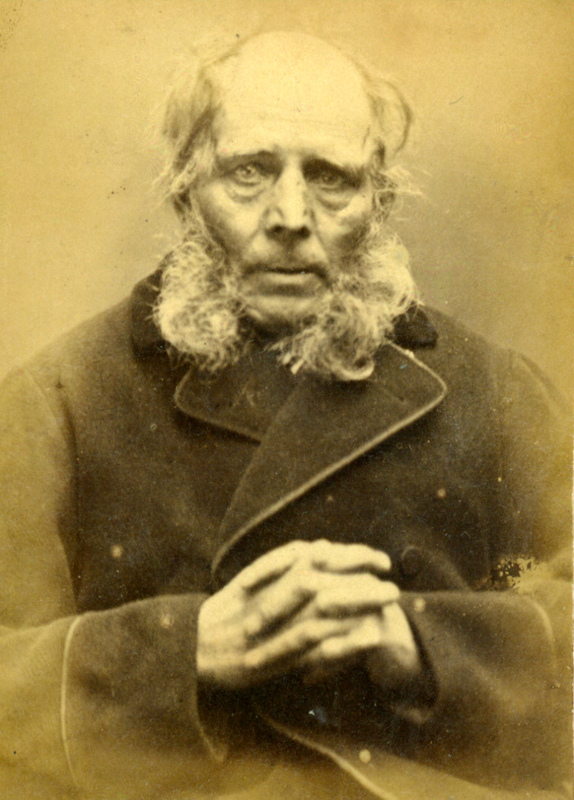
    Please take a seat. He sits square to the stool, causing his shoulders to push up like a wooden frame. His neck ducks under his dusty wool jacket, drawing in to hide from the blade of punishment. Under a swelled coat he hides his his long-known theft. It professes extravagance with a wide lapel and heavy fur collar, but mirrors destitution—too large, with dust and holes. He has seen, stolen his share and his face shows that his mind hasn’t let him forget it. His body, however, still holds, unwavering. Hands higher, please. In reverence, his hands are clasped. Wrists shackled like his ankles, yet the chains are concealed by the coat’s deep cuffs. It wasn’t I who imprisoned him. It was those hands. Still limber. Unfocused. Chin down. Through the viewfinder his chin and lips seem to become bald and the sides of his face become bushier, scruffier—the winter coat of a wolf. A glance at the frame suggests anger and hatred, as his tough/tucked upper lip represses appeals to my human goodness. A longer look. His right eye pleads, although content. His left eye loathes in the shadow of his angled eyebrows that pray to God. There is a modesty there, a humility, but I cannot tell if it is natural or inflicted. There is wisdom when one reaches the depths. Now look at the camera. 3, 2, 1. Flash. Snap. Next.

    Photograph of John Roman. Photographer unknown.
    Collection: Tyne and Wear Archives and Museums, “Prisoners 1871-1873”

Is this your new site? Log in to activate admin features and dismiss this message
Log In